Scaling the Creative Studio
Strategy Over Practice
Beyond Billable Hours
Many creatives find themselves in the without even realising it. Your income is directly tied to your time. More work means more hours, and there's a hard ceiling on both. You become a highly skilled pair of hands, executing tasks for clients. Your value is measured by what you produce: the logo, the website, the presentation deck. To grow your revenue, you must work more, faster, or charge a higher hourly rate. It’s a linear game, and it leads to burnout.
This model is becoming more precarious. The skills that once formed the core of a creative service—the meticulous crafting in Figma, the pixel-perfect slide designs—are rapidly being commoditised. The value is shifting from execution to strategy.
The AI Shift
The creative landscape of 2025 and beyond will be defined by AI's ability to handle execution. AI can generate variations, build components, and automate repetitive tasks with incredible speed. This doesn't make designers obsolete; it changes their role entirely. When the 'how' becomes automated, the 'why' becomes priceless.
Your competitive advantage is no longer your technical skill. It's your conceptual depth—your ability to understand a client's business, synthesise complex problems, and develop a strategic vision that AI can then help execute. The focus moves from creating assets to creating impact.
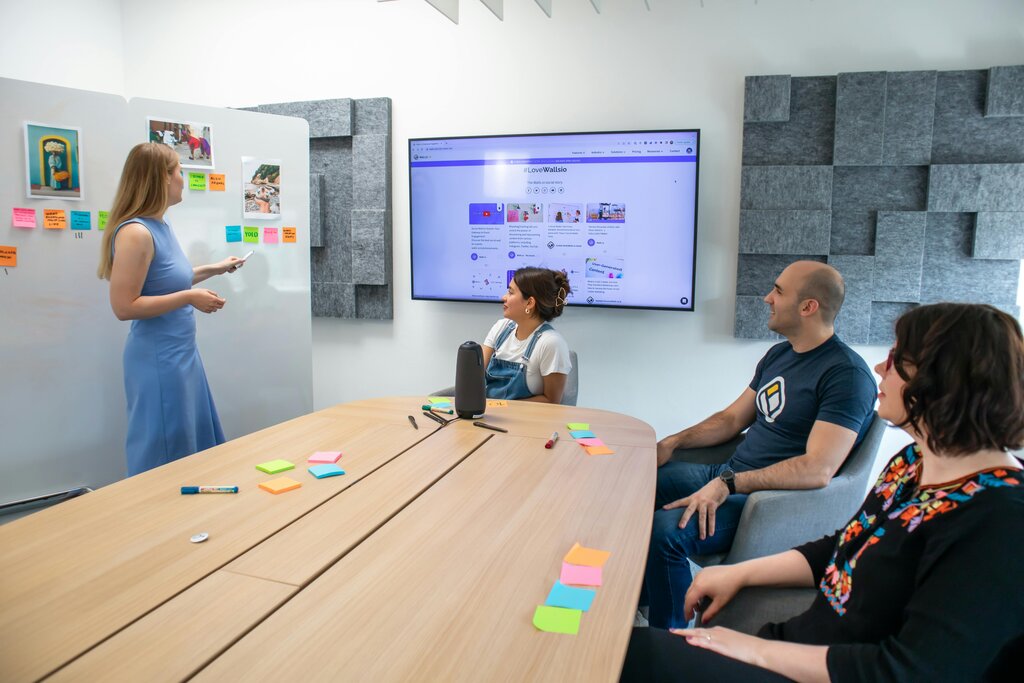
Think of it as the difference between being a chef and being a restaurateur. A chef cooks the food. A restaurateur designs the entire dining experience—the menu, the ambiance, the service, the business model. One executes a craft; the other orchestrates a system for value.
Becoming a Value Multiplier
Escaping the trap means transitioning from practitioner to strategist. You must adopt a 'Value Multiplier' mindset. This means decoupling your studio's worth from manual labour and re-aligning it with client outcomes. You're not selling hours; you're selling results. A new brand identity isn't a collection of logos and fonts; it's a tool for increasing market share by 10%.
This is the shift from execution to orchestration. As a studio leader, your job is to direct the tools, including AI and your team, towards a strategic goal. You define the problem, frame the solution, and guide the process. Your hands might be on the keyboard less, but your mind is more engaged than ever in creating true business value.
Understanding this distinction is the first step toward building a resilient, scalable creative business that thrives in an AI-powered world.
Time to check your understanding of these core strategic shifts.
What is the primary characteristic of the 'Freelancer Trap'?
According to the text, as AI handles more execution tasks, the creative professional's value shifts to their ability to provide what?
By moving your focus from the canvas to the client's balance sheet, you change the nature of your work and unlock new levels of growth.