Scaling Subscription Productivity Apps
Unit Economics Fundamentals
The Core Ratio
For any subscription app, the most important health metric isn't just user growth or total revenue. It’s the relationship between what you earn from a customer and what you spent to get them. This is the Lifetime Value (LTV) to Customer Acquisition Cost (CAC) ratio. Simply put, LTV is the total revenue a single customer generates before they cancel. CAC is the total sales and marketing cost required to sign up that one customer.
A healthy app makes significantly more from a customer than it costs to acquire them. A common benchmark for a sustainable subscription business is an LTV to CAC ratio of 3:1 or higher.
Anything lower, and you're essentially paying for users who don't stick around long enough to turn a profit. Much higher, and you might be underinvesting in marketing and growing too slowly. Let's break down how to calculate these values, starting with LTV.
For a productivity app with a £9.99 monthly subscription, the calculation starts after the platform cut. Apple and Google take a service fee, which is typically 30% for the first year of a subscription, dropping to 15% thereafter. For simplicity, we'll use a blended rate. Let’s assume a 20% effective platform fee. Your net ARPU is therefore £7.99.
If your monthly churn rate is 5%, your LTV would be £7.99 multiplied by (1 / 0.05), which equals £159.80. This figure represents the total net revenue you can expect from the average subscriber.
The Payback Clock
Now, let's figure out the other side: CAC. This is more straightforward. If you spend £5,000 on marketing in a month and acquire 500 new paying subscribers, your CAC is £10. This number, however, is influenced by your trial-to-paid conversion rate. If 1,000 people start a trial but only 500 convert, your marketing spend must account for all 1,000 initial sign-ups. A typical conversion rate for a 14-day trial on a productivity app is around 30-40%.
With an LTV of £159.80 and a CAC of £10, your LTV:CAC ratio is nearly 16:1. This looks fantastic, but there's a catch: you don't get that LTV upfront. You have to wait for it. This is where the payback period becomes critical. It tells you how many months it takes to earn back your acquisition cost.
Using our example: £10 / £7.99 = 1.25 months. This is an excellent result. It means you recoup your marketing costs in just over a month, freeing up cash to acquire the next wave of users. A payback period under 12 months is generally considered strong for a subscription app.
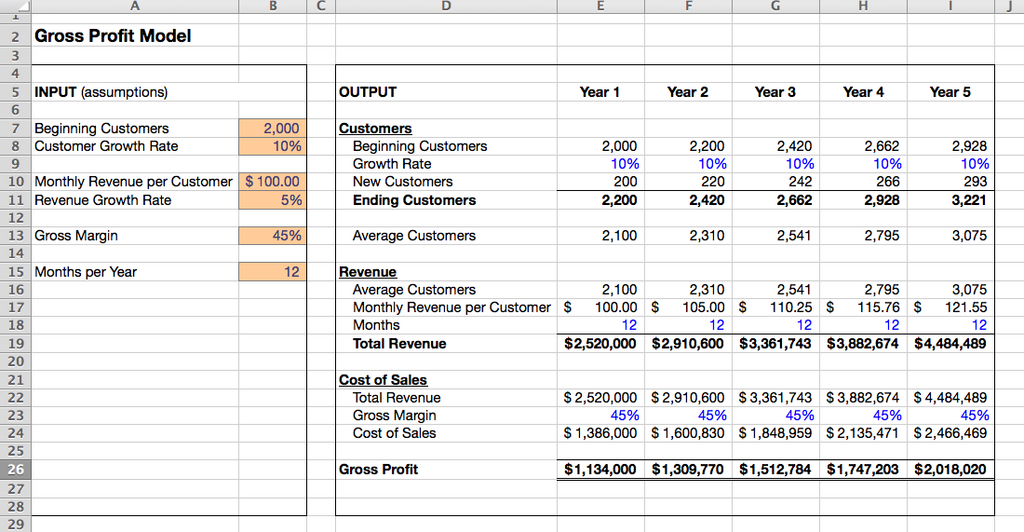
Annual vs Monthly Impact
Offering an annual plan changes the dynamics completely. Let's say you offer a yearly plan for £79.99 (a discount on the monthly rate). Your net revenue from this one transaction, after the 20% platform fee, is £63.99.
If a customer pays this upfront, your payback period for that £10 CAC becomes instant. You have £53.99 in immediate gross profit to reinvest. This is why many apps push for annual subscriptions. They solve the cash flow problem created by monthly plans.
Churn also behaves differently. Annual churn is measured year-over-year. A 20% annual churn is much better than a 5% monthly churn. Why? A 5% monthly churn compounds over the year. After 12 months, you would only have about 54% of your original cohort left. That’s an effective annual churn of 46%. It highlights how destructive even a small monthly churn rate can be over time.
The trade-off is clear: monthly plans offer lower friction for new users to sign up, but annual plans provide better cash flow and superior long-term retention. A successful strategy often involves converting monthly subscribers to an annual plan after they've experienced the app's value. Understanding these unit economics is the foundation for building a profitable, scalable productivity app.
Ready to test your knowledge? This quiz will cover the key metrics we've just discussed.
What is the primary purpose of the LTV:CAC ratio in a subscription app business?
A subscription app has a net ARPU (Average Revenue Per User) of £12 and a monthly churn rate of 4%. What is its estimated LTV?