Scaling Digital Product Ventures
Advanced Market Validation
From Interest to Commitment
You have an idea and you've confirmed people are interested. That's a great start, but it's not enough. Interest doesn't pay for servers or salaries. The critical next step is to distinguish between 'soft interest'—people saying your idea is cool—and 'hard demand,' which is their willingness to actually pay for it.
Advanced market validation is about gathering empirical evidence of this demand before you invest significant resources. It's the process of replacing assumptions with data, ensuring you're building a business, not just a product.
Gauging Product-Market Fit
The first major hurdle is achieving product-market fit. This means you've built something that a well-defined market truly needs. But how do you measure such an abstract concept? A simple yet powerful tool is the Sean Ellis Test, also known as the Product-Market Fit Survey.
The premise is straightforward. You ask your current users a single, critical question: "How would you feel if you could no longer use this product?" Their answer reveals just how essential your product has become to them.
| Key Question | Answer Options |
|---|---|
| How would you feel if you could no longer use [Product Name]? | A) Very disappointed |
| B) Somewhat disappointed | |
| C) Not disappointed | |
| D) N/A - I no longer use the product. |
The benchmark is clear: if at least 40% of your users select "Very disappointed," you have likely achieved strong product-market fit. This segment of your user base represents your core supporters who see immense value in what you've built.
If you fall short of 40%, it’s not a failure. It's a signal. The next step is to analyze the feedback from those who answered "Somewhat disappointed." Understanding what would turn their mild satisfaction into deep-seated need is the key to your next product iteration.
Sizing Your Market
Once you have evidence that your product is valued, you need to understand the size of the opportunity. This is done by calculating three key metrics: TAM, SAM, and SOM.
- (TAM): The total market demand for a product or service. This is the biggest possible slice of the pie.
- Serviceable Addressable Market (SAM): The segment of the TAM targeted by your products and services which is within your geographical reach.
- Serviceable Obtainable Market (SOM): The portion of SAM that you can realistically capture, considering your competition, resources, and strategy.
Think of it like opening a vegan coffee shop. Your TAM is everyone who drinks coffee. Your SAM is all the coffee drinkers in your city. Your SOM is the share of local coffee drinkers you can realistically attract in the next few years, given the other cafes in the area.
Traditionally, calculating these figures required expensive market research reports. Today, AI-enhanced analysis can provide deep insights. You can use AI tools to analyze public data, scrape competitor websites for pricing and feature sets, and monitor social media and forums for trends. This allows you to build a data-driven model of your market with greater speed and precision.
Testing Willingness to Pay
The final bridge to cross is from need to purchase. You need to prove that customers will actually pay. Two effective methods for this are high-fidelity landing page tests and pre-sale pilot programs.
A goes beyond a simple email signup. You create two versions of a detailed landing page. Both pages describe the product, its features, and, crucially, its price. The only difference might be the headline or a key feature's description. When a user clicks "Buy Now" or "Sign Up," instead of processing a payment, you can show a message like, "We're not quite ready yet, but you're on our priority list!" The conversion rate on this click is a powerful indicator of demand at a specific price point.
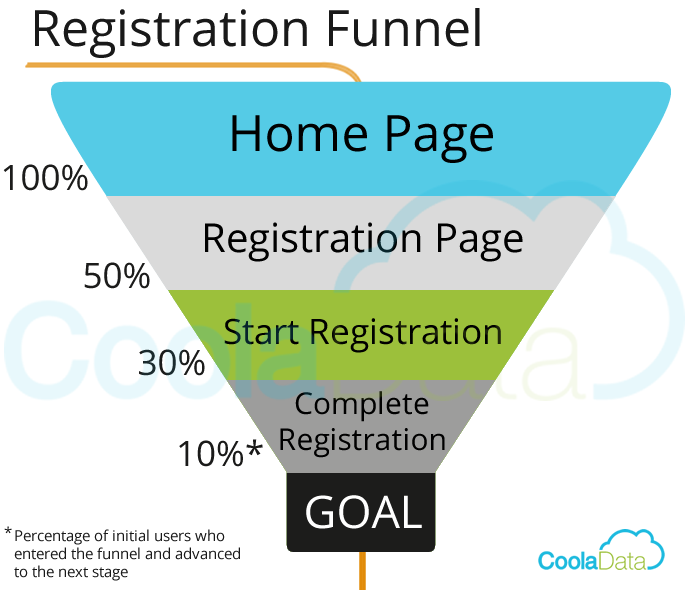
For more complex or B2B products, a pre-sale pilot program is the gold standard. You recruit a small cohort of ideal customers and ask them to pay for a limited, early version of your product. This isn't just a beta test; it's a paid engagement.
This approach validates demand and provides you with your first paying customers. Their feedback is invaluable, as it comes from a place of investment, not just casual interest. It helps you build a product that solves real, validated problems for people who are willing to pay for the solution.
Startup idea validation isn’t just a nice-to-have step - it’s the critical difference between launching a successful business and wasting months building something that never gains traction.
Transitioning from an idea to a scalable business requires moving past assumptions. By using these advanced validation frameworks, you can build a strong, evidence-based foundation for growth.