Scaling AI Model Training Infrastructure
Introduction to AI Compute Infrastructure
The Power Behind AI
Artificial intelligence models, especially the large language models we hear about today, are incredibly demanding. Training them requires sifting through enormous amounts of data and performing trillions of calculations. This process needs more than just a powerful laptop; it requires specialized hardware and massive infrastructure. At the heart of this revolution is a crucial physical requirement: computing power.
AI infrastructure consists of the combination of the underlying hardware, software, networking, and system processes needed to develop, deploy, and maintain AI applications.
But the hardware that powers AI today is very different from the computers of the past. The journey to build machines capable of training complex AI models involved a significant shift in how we think about processing information.
From CPUs to GPUs
For decades, the Central Processing Unit (CPU) was the undisputed brain of every computer. It's a general-purpose processor designed to handle a wide variety of tasks one after another, very quickly. Think of a CPU as a master chef in a kitchen. This chef is brilliant and can cook any dish you ask for, from a complex soufflé to a simple salad. However, they can only focus on one recipe at a time.
This sequential approach is great for running your operating system, web browser, and most everyday applications. But training an AI model involves performing the same simple calculation millions or billions of times over on different pieces of data. For our master chef, this is like being asked to chop 10,000 onions one by one. They could do it, but it would be incredibly inefficient.
This is where the Graphics Processing Unit (GPU) comes in. Originally designed to render graphics for video games—a task that also involves performing millions of similar calculations simultaneously to create images on your screen—GPUs have a different architecture. They are built for parallel processing.
Instead of one master chef, a GPU is like an army of 10,000 kitchen assistants who can only chop onions. They can't make a soufflé, but they can all work at the same time, chopping their own onion. For the massive, repetitive calculations needed in AI, this parallel approach is a game-changer. It allows models to be trained in a fraction of the time it would take with a CPU.
Specialized Accelerators
The success of GPUs for AI led to an even bigger idea: if we can design chips for graphics, why not design them specifically for AI calculations? This led to the creation of AI accelerators, such as Google's Tensor Processing Units (TPUs) and other Application-Specific Integrated Circuits (ASICs).
These chips are hyper-specialized. They don't do general tasks like a CPU or even graphics like a GPU. They are designed from the ground up to do one thing with extreme efficiency: the mathematical operations that are the building blocks of neural networks. To use our kitchen analogy again, an AI accelerator is a custom-built, industrial-grade onion-chopping machine. It's faster and more energy-efficient than anything else for its specific job, but it's completely useless for making a soufflé.
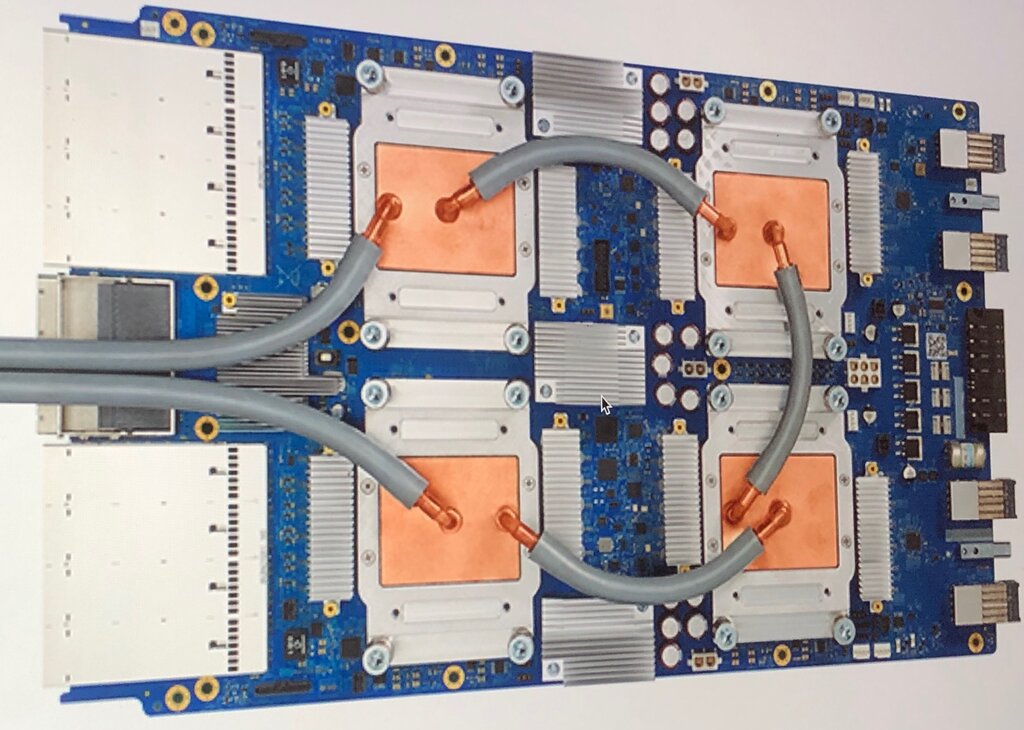
This specialization allows companies to train massive AI models faster and more cost-effectively than they could with GPUs alone. The trade-off is a loss of flexibility, but for large-scale AI development, the performance gains are often worth it.
The Role of Data Centers
A single GPU or TPU, no matter how powerful, isn't enough to train a state-of-the-art AI model. These tasks require thousands of these processors working together for weeks or even months. This is where data centers come in.
A data center is a massive, dedicated facility that houses thousands of computer servers, networking equipment, and storage systems. For AI, these aren't just any data centers. They are specialized facilities packed with racks upon racks of servers, each containing multiple GPUs or AI accelerators.
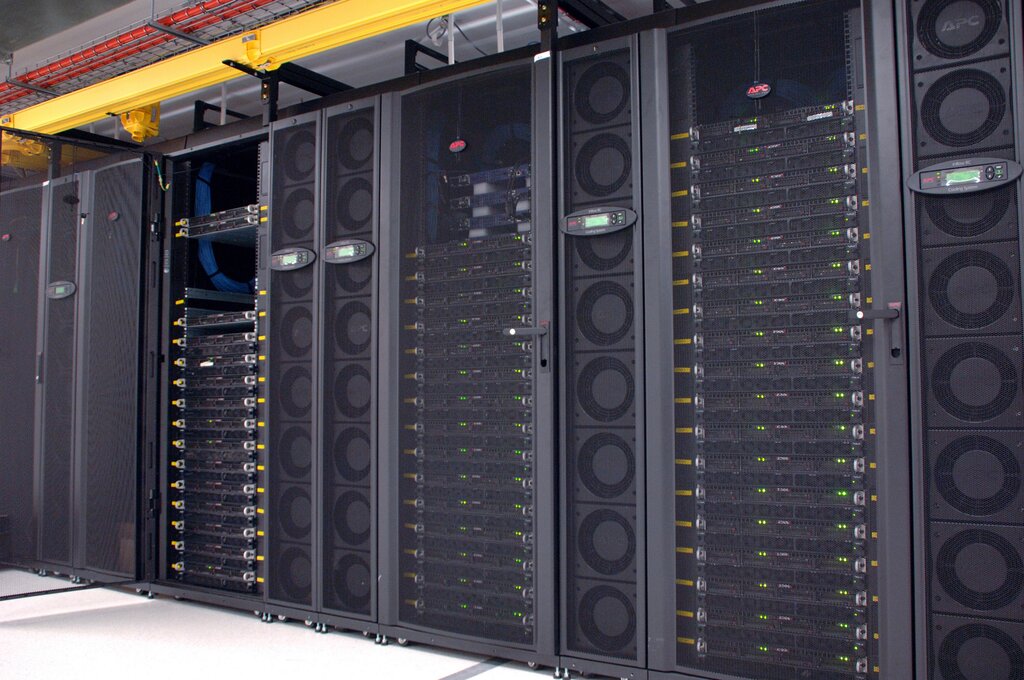
These data centers are the factories of the AI era. They provide the enormous, scalable computing power needed to process petabytes of data. They also have sophisticated cooling systems to manage the intense heat generated by thousands of chips running at full tilt, plus high-speed networking to ensure data flows quickly between all the processors.
Without these massive, centralized hubs of computational power, the AI models that are transforming our world simply wouldn't exist.
Quality data and scalable infrastructure are foundational to AI success.
Now that you have a sense of the hardware involved, let's test your knowledge.
Using the "master chef" analogy from the text, why is a Central Processing Unit (CPU) less efficient than a Graphics Processing Unit (GPU) for training large AI models?
What is the primary trade-off when using a specialized AI accelerator like a Tensor Processing Unit (TPU) instead of a more general-purpose GPU?
Understanding the hardware is the first step. From the versatile CPU to the parallel-processing GPU and the hyper-specialized AI accelerator, each component plays a role in the evolution of artificial intelligence. These powerful chips, housed in massive data centers, form the physical foundation of the AI revolution.