Saving Your Curriculum
Introduction to Digital Curriculum Management
Managing Your Curriculum Digitally
Think of all the materials that make up a course: lesson plans, assignments, readings, videos, and quizzes. Digital curriculum management is simply the process of organizing, storing, and sharing all of that content using online tools. Instead of relying on physical binders or scattered files on a hard drive, everything lives in one central, accessible place.
This isn't just about tidiness. It’s about creating a more efficient and consistent educational experience. When your curriculum is managed digitally, you create a single source of truth. Everyone involved, from instructors to students, knows where to find what they need, ensuring the material being taught is the correct and most up-to-date version.
Why Go Digital?
Storing curriculum on a digital platform has several clear advantages. First, it’s accessible from anywhere with an internet connection. An instructor can update a lesson plan from home, and a student can access readings on the bus. This flexibility is a huge benefit.
Updating content is also much simpler. Instead of printing and distributing new handouts for a small change, you can edit the master file in seconds. This ensures that every student instantly has the latest version of the material. It saves time, paper, and prevents confusion.
Digital platforms make it easy for multiple educators to collaborate on the same curriculum, ensuring consistency across different classes or even different schools.
The tools that make this possible are called Learning Management Systems, or LMS for short. These platforms are the command centers for online education.
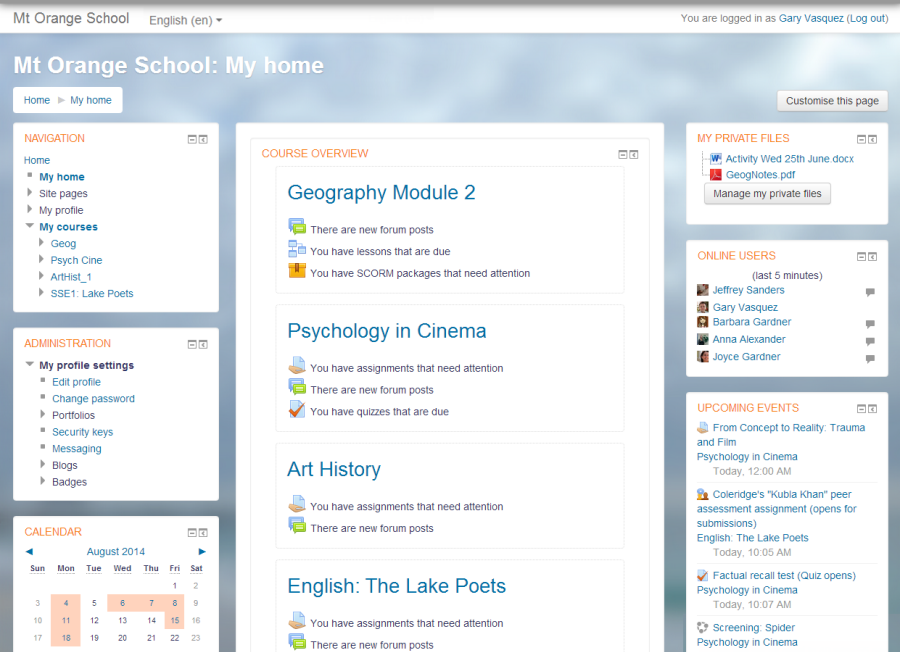
LMS
noun
A Learning Management System (LMS) is a software application for the administration, documentation, tracking, reporting, automation, and delivery of educational courses or training programs.
An LMS is designed to handle everything from hosting course content to tracking student progress and facilitating communication. You've likely heard of some of the most common ones, such as Canvas, Blackboard, Moodle, and Google Classroom. While they each have unique features, their core purpose is the same: to provide a structured environment for teaching and learning online.
| Feature | Traditional Method | Digital Management (LMS) |
|---|---|---|
| Storage | Physical binders, local computer files | Centralized cloud-based platform |
| Updates | Re-printing and manual distribution | Instant updates for all users |
| Access | Limited to physical location | Anywhere with an internet connection |
| Collaboration | Difficult and slow | Seamless and in real-time |
These platforms provide the foundation for effective curriculum management. Now, let's test your understanding of these core concepts.
What is the primary purpose of digital curriculum management?
The tools used to organize, store, and share digital curriculum, such as Canvas and Google Classroom, are known as __________.
Understanding these fundamentals sets the stage for saving and organizing your own curriculum content effectively.