Saving the Adorable Red Panda
Red Panda Basics
Meet the Red Panda
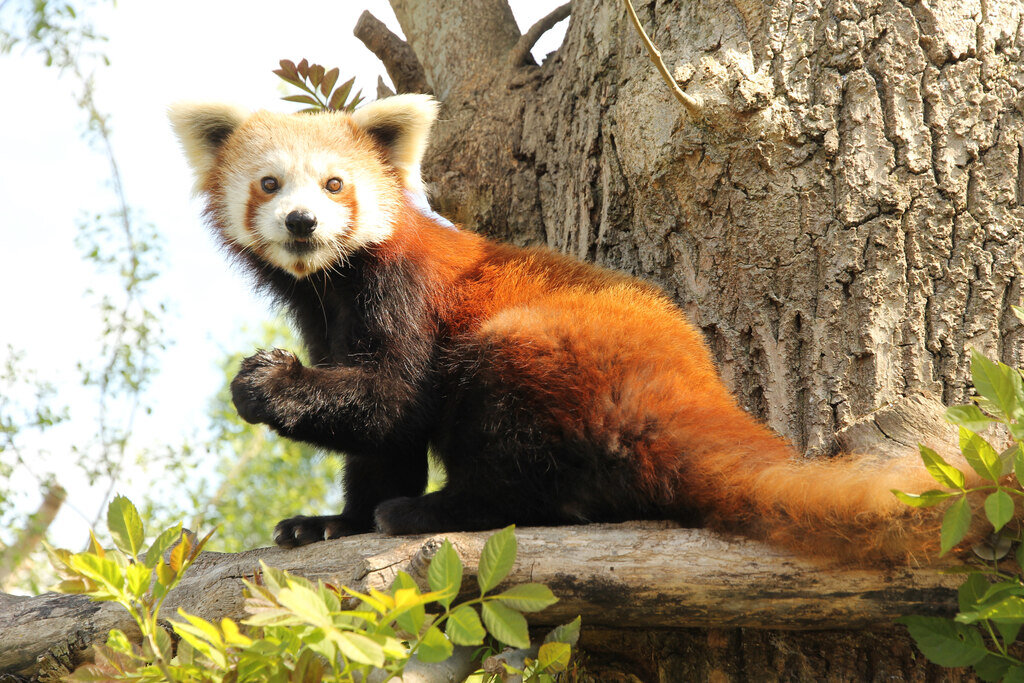
The red panda, with its fiery fur and long, bushy tail, is one of the most distinctive mammals in the world. Known scientifically as Ailurus fulgens, which means "fire-colored cat," this small creature is a master of camouflage and agility, perfectly adapted to its treetop life.
A Family of Its Own
Despite its name and bamboo-heavy diet, the red panda is not a close relative of the giant panda. For a long time, scientists weren't sure where it belonged. Was it related to bears? Or raccoons? Genetic studies eventually revealed the truth: the red panda is in a category all its own.
The red panda is the only living species in its entire family, the Ailuridae.
It belongs to the order Carnivora, a group that includes bears, dogs, and cats, but its evolutionary path diverged millions of years ago. There are two recognized subspecies: the Himalayan red panda (Ailurus fulgens fulgens) and the slightly larger Chinese red panda (Ailurus fulgens styani), which also tends to have a darker, redder coat.
Built for the Trees
A red panda is roughly the size of a large house cat, with a body length of about 50 to 64 centimeters (20 to 25 inches) and a tail that adds another 28 to 48 centimeters (11 to 19 inches). Its coat is a striking mix of colors. The upper body is a reddish-brown, which helps it blend in with the reddish moss and lichens that grow on the trees in its habitat. Its belly and legs are a glossy black, making it harder for predators to spot from below.
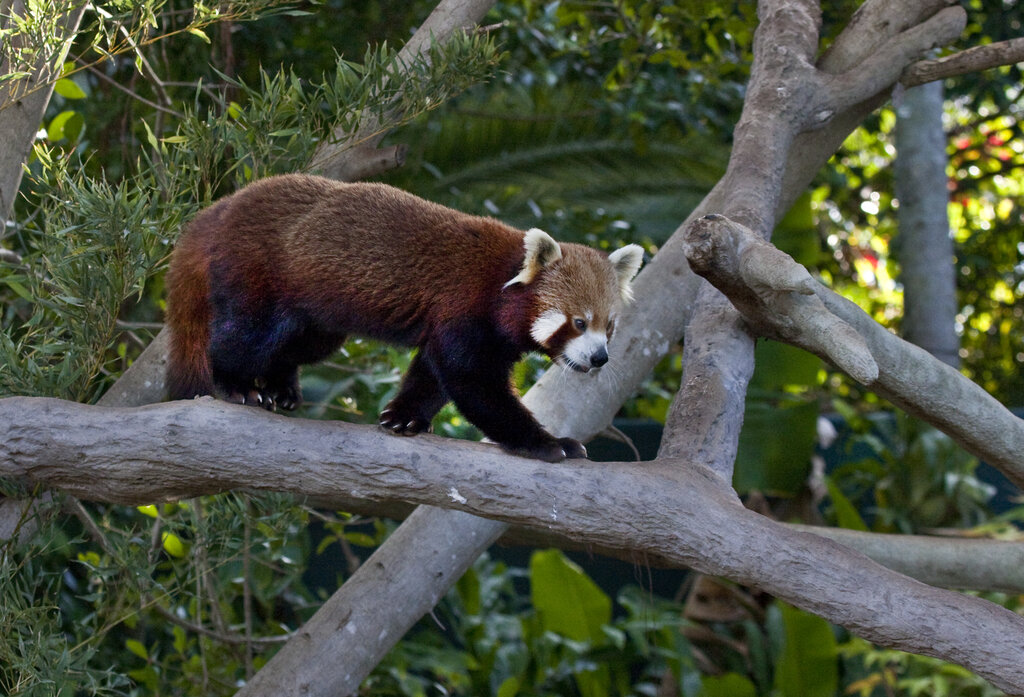
The long, bushy tail is more than just an accessory. It acts as a crucial tool for balance while navigating narrow, slippery branches. In the cold mountain air, the red panda also uses its tail like a thick blanket, wrapping it around its body for warmth while sleeping.
To aid its treetop lifestyle, the red panda has sharp, semi-retractable claws perfect for gripping bark. It also possesses a unique anatomical feature: a modified wrist bone that acts like a "false thumb." This allows it to get a better grip on branches and hold onto its primary food source, bamboo stalks.
Home in the Himalayas
Red pandas are native to the cool, temperate forests of the Eastern Himalayas and southwestern China. Their habitat is a narrow band of mountainous territory stretching through Nepal, India, Bhutan, Myanmar, and the Chinese provinces of Sichuan and Yunnan.
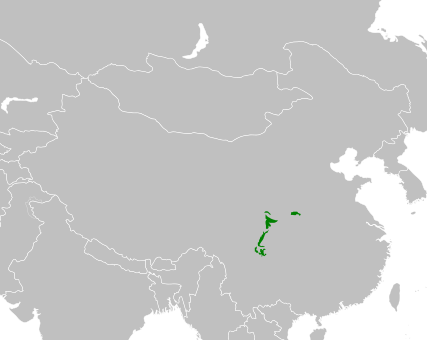
They thrive at high altitudes, typically between 2,200 and 4,800 meters (about 7,200 to 15,700 feet). These forests are characterized by a mix of deciduous and coniferous trees, with a dense understory of bamboo—the red panda's staple food. The steep slopes, abundant rainfall, and cool temperatures of this region create the perfect environment for this unique animal to live and forage.
According to genetic studies, how is the red panda classified?
What is the primary function of the red panda's long, bushy tail?