Satellites for Space-Based Data Centers and Internet
Introduction to LEO Satellites
What Are LEO Satellites?
A satellite in orbit is constantly falling toward Earth. But because it's also moving sideways at an incredible speed, it continuously misses. This balancing act between gravity and momentum keeps it circling the planet.
A Low Earth Orbit (LEO) is the first orbital lane around our planet, typically between 160 and 2,000 kilometers (about 100 to 1,200 miles) up. Satellites here are screaming fast, completing a full trip around the Earth in 90 to 120 minutes. That means a LEO satellite can pass over the North Pole, the South Pole, and everywhere in between in just a couple of hours.
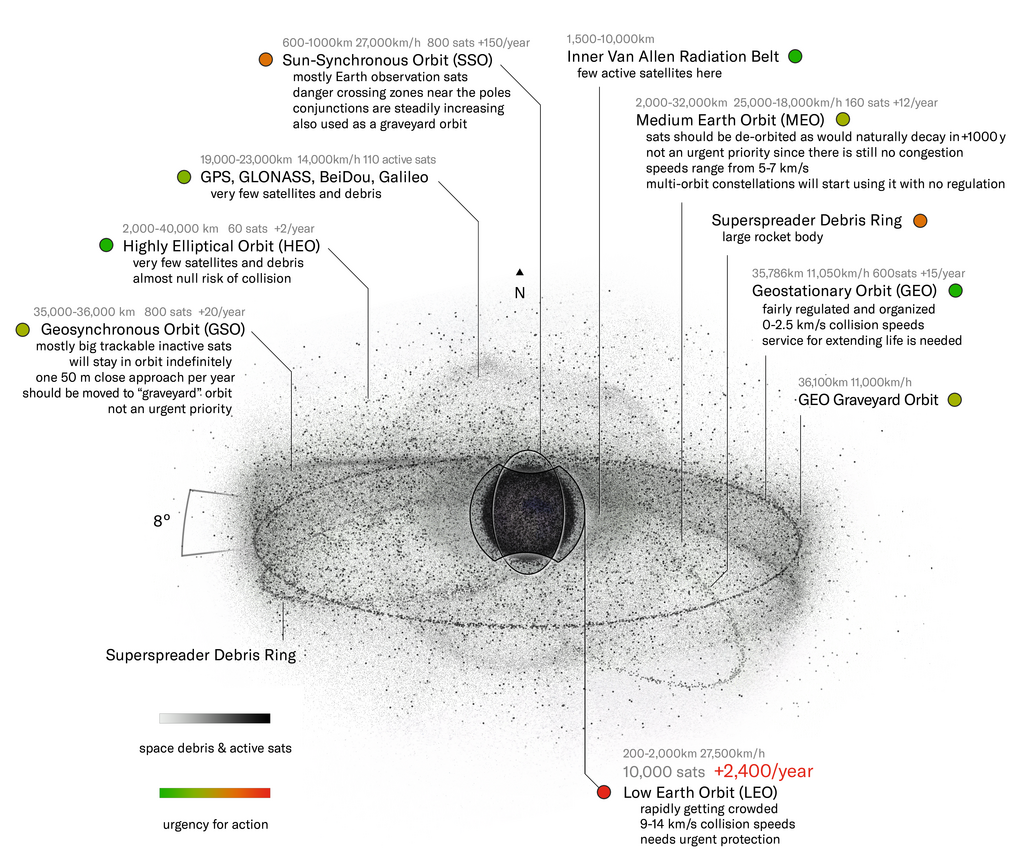
While LEO is close, other orbits are much, much farther out. Geostationary Orbit (GEO), for instance, is a distant 35,786 kilometers (22,236 miles) away. A satellite in GEO takes a full 24 hours to circle the Earth. Because this matches Earth's rotation, a GEO satellite appears to hang motionless over one spot.
This difference in altitude and speed is fundamental. A single GEO satellite can see almost half the planet at once, making it great for broadcasting TV signals. A LEO satellite, being so much closer, sees only a small patch of Earth at any given moment. This is why LEO satellites often work in large groups, or constellations, to provide continuous coverage.
| Orbit Type | Altitude (km) | Orbital Period | Key Characteristic |
|---|---|---|---|
| LEO (Low Earth Orbit) | 160 - 2,000 | 90 - 120 minutes | Close to Earth, fast-moving |
| MEO (Medium Earth Orbit) | 2,000 - 35,786 | 2 - 24 hours | A middle ground for navigation (like GPS) |
| GEO (Geostationary Orbit) | 35,786 | 24 hours | Appears stationary over one point |
Why Fly Low?
Being close to the action has two huge advantages: speed and cost.
First, let's talk about latency. This is the time it takes for a signal to travel from a source to a destination and back. Sending a signal to a GEO satellite and back is like shouting across a massive canyon and waiting for the echo. There's a noticeable delay, which is frustrating for video calls or online gaming.
LEO satellites are just next door in comparison. The signal travel time is much shorter, resulting in very low latency. This makes real-time communication smooth and responsive.
The second advantage is cost. Sending anything to space is expensive, and the farther you go, the more powerful (and costly) the rocket needs to be. Because LEO is a relatively short trip, it's cheaper to get there. This also means the satellites themselves can be smaller and lighter, further cutting down on launch costs. It's now feasible to launch hundreds or even thousands of them to form a constellation.
LEO in Action
The unique benefits of LEO satellites make them perfect for a range of modern applications.
One of the biggest is Earth observation. From their low vantage point, LEO satellites can capture incredibly detailed images of the planet's surface. This is vital for monitoring deforestation, tracking weather patterns, managing agricultural crops, and responding to natural disasters. Because they circle the globe so quickly, they can provide updated imagery of any location on Earth every few hours.
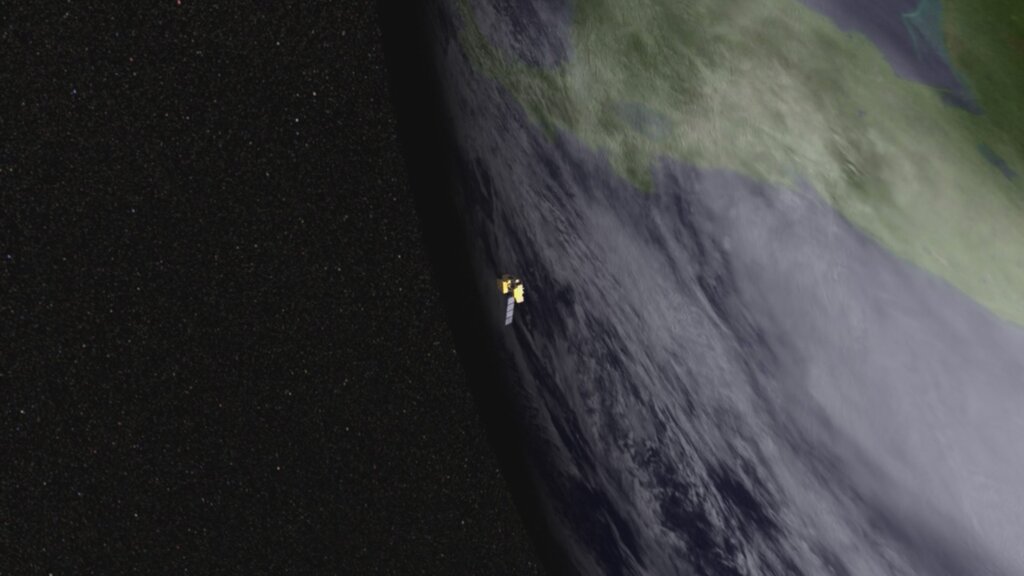
Communication is another key application, as seen with services like Starlink. By blanketing the globe with a network of LEO satellites, companies can deliver high-speed internet to rural, remote, and underserved areas that traditional ground infrastructure can't reach.
Finally, LEO is a hub for scientific research. The International Space Station is a LEO satellite. Other scientific satellites in this orbit study everything from Earth's magnetic field and upper atmosphere to the effects of microgravity, helping us better understand our planet and the space environment surrounding it.
Let's check your understanding of these orbital concepts.
What is the primary reason a satellite in orbit doesn't fall directly back to Earth?
A company wants to provide a low-latency, real-time communication service (like video calls or online gaming). Which orbital type is best suited for this application?