Satellite TV Installation Essentials
Introduction to Satellite TV Systems
Broadcasting from Space
Satellite television is a bit like having a broadcast tower in the sky. Instead of sending signals from a tower on a nearby hill, a broadcast center sends its signal thousands of miles up to a satellite orbiting the Earth. That satellite then beams the signal back down over a huge area, where it can be picked up by a small dish at your home.
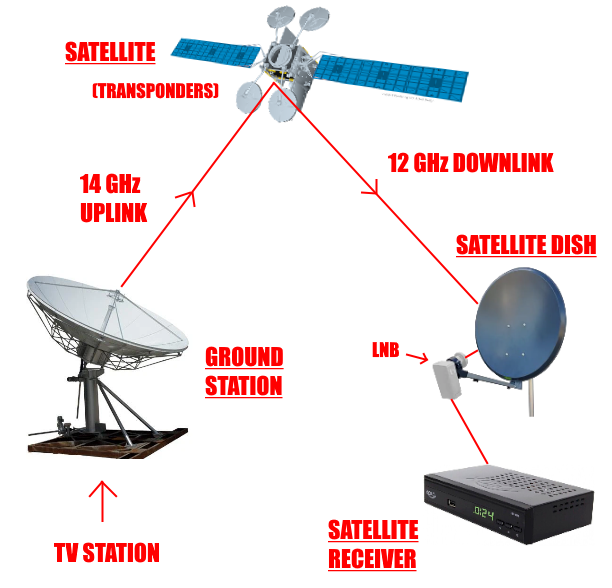
Most communication satellites are in what’s called a geostationary orbit. This means they orbit at the same speed the Earth rotates. From our perspective on the ground, the satellite appears to stay in the exact same spot in the sky, which is why your satellite dish doesn’t need to move once it’s aimed correctly.
The Key Components
A satellite TV system has several key parts that work together. It starts with the broadcaster, who creates the TV channels and content. They send these channels as a high-quality signal to a ground station.
The ground station, also called an uplink facility, uses a very large satellite dish to transmit the signal up to the correct satellite in orbit. This is the “uplink.”
The satellite itself is a sophisticated relay station. It receives the uplink signal, amplifies it to make it stronger, and then re-transmits it back towards Earth on a different frequency. This returning signal is the “downlink.”
At your home, the satellite dish is a parabolic antenna. Its curved shape is designed to collect the faint signals from the satellite and focus them onto a central point.
That central point is a crucial piece of hardware called the Low-Noise Block downconverter, or LNB.
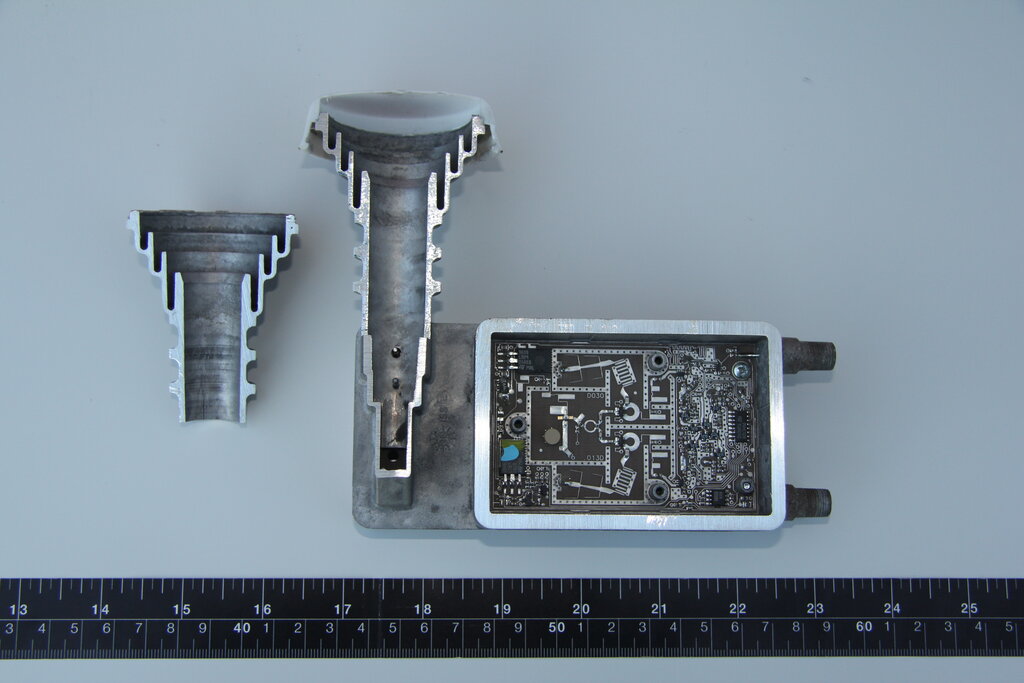
The LNB does two important jobs. First, it amplifies the weak signal collected by the dish. Second, it converts the high-frequency satellite signals to a lower frequency range that can be sent through a standard coaxial cable to the final component inside your house.
That final piece is the satellite receiver, or set-top box. This device receives the signal from the LNB, decodes the compressed digital information, and turns it into the video and audio you watch on your television.
Pros and Cons
The biggest advantage of satellite TV is its availability. Because the signal comes from the sky, it can reach rural and remote areas where laying cable is impossible or too expensive. It can also offer a wider variety of channels, including international programming, than some cable providers.
However, satellite TV has its limitations. The most well-known is its sensitivity to weather. Heavy rain, snow, or thick clouds can block the signal path between your dish and the satellite, causing a temporary outage. This is often called “rain fade.” The system also requires a clear line of sight to the satellite, so trees or tall buildings can block the signal and prevent installation.
What is the primary purpose of a satellite being in a geostationary orbit for television broadcasting?
In a satellite TV system, which component is responsible for amplifying the weak signal collected by the dish and converting it to a lower frequency?