Satellite Design Build and Integration
Satellite Fundamentals
What Is a Satellite?
At its core, an artificial satellite is any object made by humans that orbits a celestial body. Most orbit the Earth, but some orbit the Sun, other planets, or even asteroids. Think of them as moons we built ourselves. They stay in orbit by balancing two forces: their forward speed, which wants to fling them into space, and the gravitational pull of the body they're orbiting, which pulls them back.
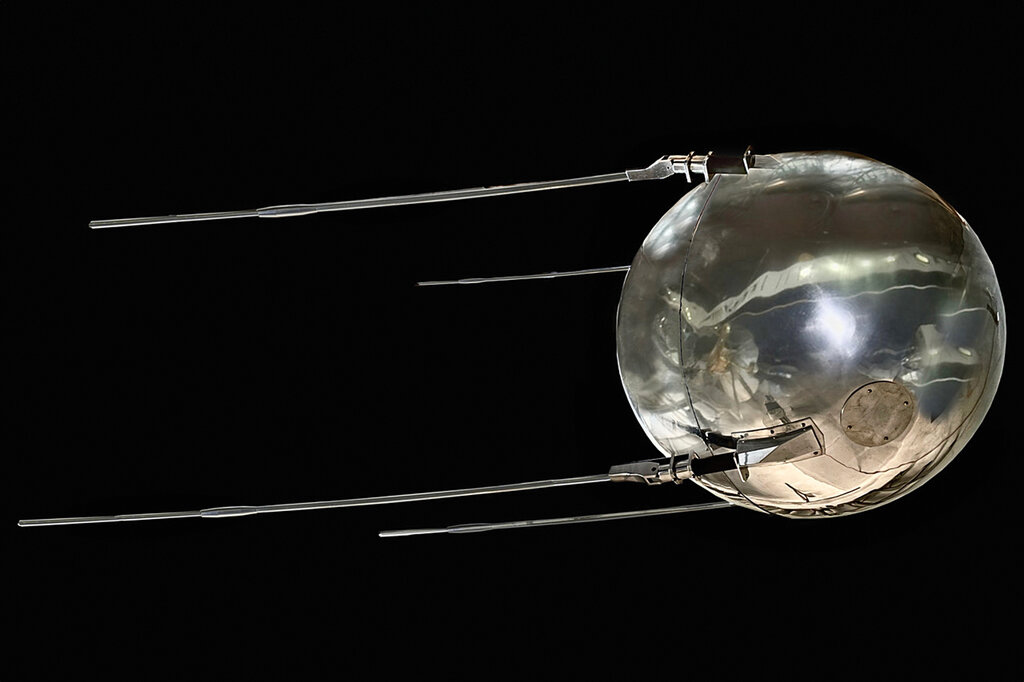
The story of satellites began on October 4, 1957, when the Soviet Union launched Sputnik 1. This beach-ball-sized sphere did little more than transmit a simple radio beep, but it changed the world. It marked the start of the Space Age and kicked off a technological revolution. Since then, thousands of satellites have been launched, becoming an invisible but essential part of modern life.
A Satellite's Job
Satellites aren't a one-size-fits-all technology. They are highly specialized tools designed for specific tasks. Their function dictates their design, their orbit, and the instruments they carry on board. Let's look at some of the most common types.
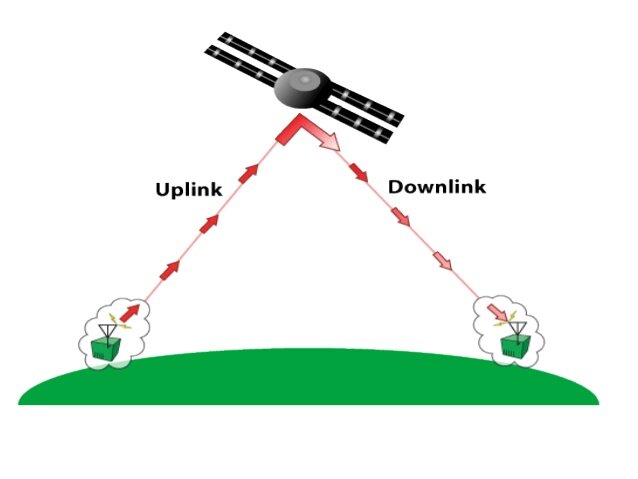
Communication satellites are the backbone of global connectivity. They relay signals for television, phone calls, and the internet across vast distances. A signal sent from a ground station, called an uplink, is received by the satellite, amplified, and then transmitted back down to a different location on Earth, called a downlink.
Weather satellites constantly monitor Earth's atmosphere and oceans. They provide the data that powers our daily weather forecasts, helps us track hurricanes, and monitors long-term climate change.
Navigation satellites are what make GPS possible. A network of these satellites broadcasts precise timing signals. Your phone or car's GPS receiver picks up signals from several satellites and calculates your exact location based on the time it took for each signal to arrive.
Scientific satellites are our eyes and ears in the cosmos. Some, like the Hubble Space Telescope, look outward to study distant stars and galaxies. Others look back at Earth to study everything from ice caps and deforestation to ocean currents, giving us a clearer picture of our own planet.
Small satellite systems enable whole new class of missions for navigation, communications, remote sensing and scientific research for both civilian and military purposes.
Finding the Right Path
A satellite's orbit is just as important as the technology it carries. The altitude and path of an orbit determine what a satellite can see and how it moves across the sky. Two of the most common orbits are Low Earth Orbit and Geostationary Orbit.
orbit
noun
The curved path of a celestial object or spacecraft around a star, planet, or moon, especially a periodic elliptical revolution.
Low Earth Orbit (LEO) is, as the name suggests, relatively close to the planet's surface, typically below 2,000 kilometers. Satellites in LEO travel at very high speeds, completing a full orbit in about 90 minutes. This makes LEO ideal for high-resolution Earth imaging and for projects like the International Space Station. However, their speed means a ground station can only communicate with them for a few minutes at a time as they pass overhead. Large networks, or 'constellations,' of LEO satellites are needed for continuous coverage.
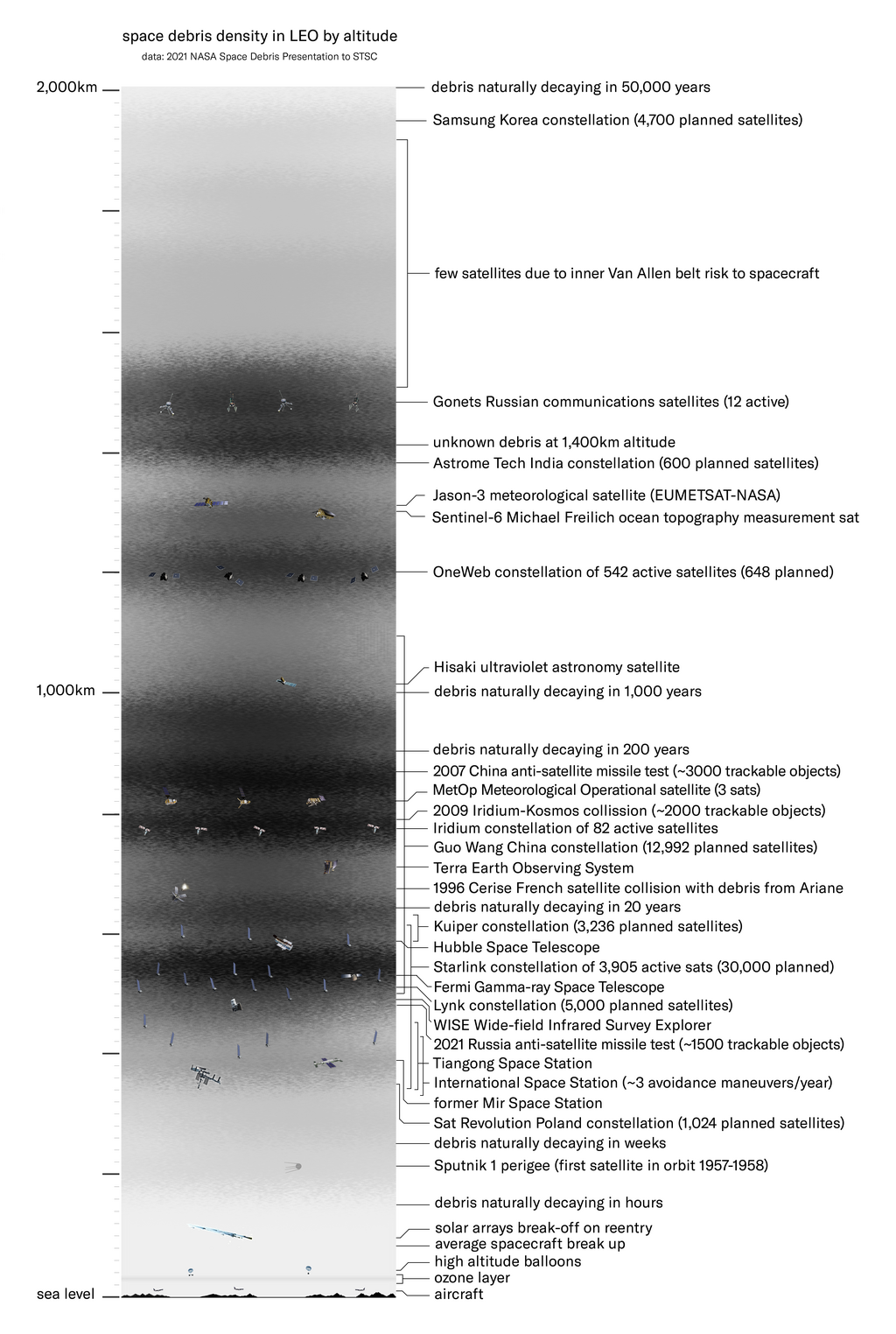
Geostationary Orbit (GEO) is much farther out, at a precise altitude of 35,786 kilometers directly above the equator. At this specific height, a satellite's orbital period matches Earth's rotation exactly. The result? The satellite appears to hang motionless over the same spot on the ground. This fixed position is perfect for communications and broadcasting, as ground antennas can be pointed at the satellite without needing to track its movement.
| Feature | Low Earth Orbit (LEO) | Geostationary Orbit (GEO) |
|---|---|---|
| Altitude | 200 - 2,000 km | 35,786 km |
| Orbital Period | ~90 minutes | 24 hours |
| View from Ground | Moves quickly across the sky | Appears stationary |
| Primary Use | Earth observation, ISS | Communications, broadcasting |
Ready to check your understanding of satellite basics?
What two forces are balanced to keep an artificial satellite in a stable orbit?
A company wants to launch a constellation of satellites to provide high-resolution Earth imagery, updated several times a day for any given location. Which orbit is best suited for this purpose?
From simple beeps to global connectivity, satellites have fundamentally reshaped our world. By understanding their basic types and the orbits they follow, we can appreciate the complex infrastructure floating silently above our heads.