Satellite Communication Systems
Introduction to Satellite Technology
From Beeps to Broadband
The story of satellites begins with a simple, persistent beep. In 1957, the Soviet Union launched Sputnik 1, the first artificial satellite. It was a metal sphere about the size of a beach ball, and for 21 days, it orbited Earth, transmitting a radio pulse that could be heard by amateur radio operators around the world. It didn't do much, but that beep signaled the start of the Space Age.
The United States responded a few months later in 1958, launching Explorer 1. This satellite was more than just a beeping ball; it carried scientific instruments that led to the discovery of the Van Allen radiation belts surrounding Earth. These early pioneers were small and had limited functions, but they proved that we could place objects in orbit and use them to learn about our world and the space around it.
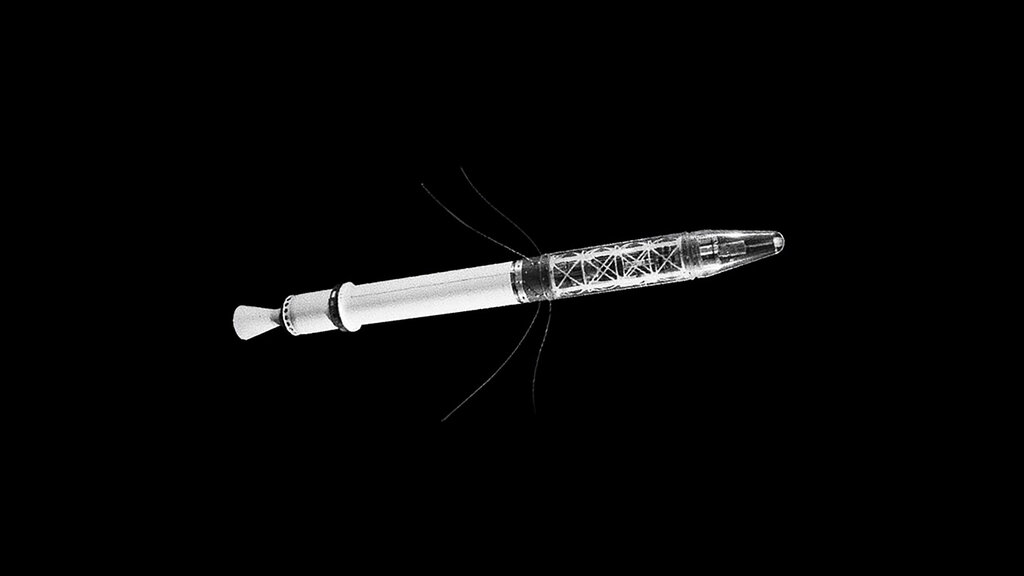
From those humble beginnings, satellite technology grew exponentially. Early satellites were simple transmitters. Modern satellites are complex hubs for communication, navigation, and observation, packed with sophisticated electronics and sensors.
Anatomy of a Satellite
Despite their varied missions, most satellites share a common structure. You can think of a satellite as having two main parts: the bus and the payload.
The bus is the satellite's chassis. It contains all the essential systems that keep the satellite running. This includes the structural frame, the power system (usually solar panels and batteries), the propulsion system for maneuvering in orbit, and the command and control system that allows it to communicate with ground stations. It's the standard equipment that makes the satellite a functional spacecraft.
The payload is the equipment that performs the satellite's specific mission. For a communications satellite, the payload is the set of transponders that receive and transmit signals. For a weather satellite, it's the cameras and sensors that observe Earth's atmosphere. The payload is what makes the satellite special and useful.
So how does a satellite stay up there? It’s a delicate balance between its forward speed and the pull of Earth's gravity. A satellite is essentially in a constant state of freefall. It's moving so fast horizontally that as gravity pulls it down, the Earth's surface curves away beneath it at the same rate. This is called an orbit.
The speed a satellite needs to maintain its orbit depends on its altitude. Satellites in Low Earth Orbit (LEO), just a few hundred kilometers up, must travel at about 28,000 km/h to avoid falling back to Earth. Further out, at about 36,000 km, is the geostationary orbit. Here, a satellite's orbital period matches Earth's rotation exactly. From the ground, it appears to hover in a fixed spot in the sky, which is ideal for communications.
Satellites in Daily Life
Satellites aren't just for scientists and spies. They play a huge role in our everyday lives. The most obvious application is communication. They act as giant relay stations in the sky, bouncing signals from one part of the world to another. This allows for live television broadcasts, long-distance phone calls, and internet access in remote areas.
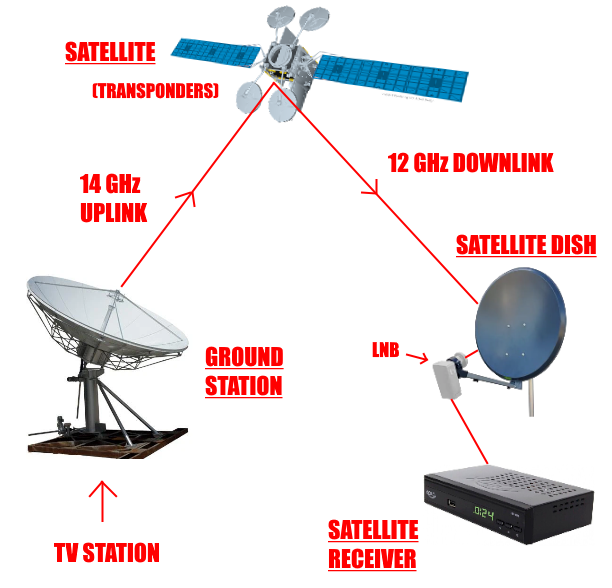
Navigation is another key function. The Global Positioning System (GPS) is a constellation of satellites that constantly broadcast timing signals. Your phone or car's GPS receiver picks up signals from several of these satellites and uses tiny differences in their arrival times to calculate your precise location.
Satellites also keep a constant watch over our planet. They track weather patterns, monitor for natural disasters like hurricanes and wildfires, map changes in land use, and help scientists study climate change. This Earth observation data is critical for everything from daily weather forecasts to long-term environmental planning.
From navigating a new city to watching a live event from across the globe, satellite technology works silently in the background of modern life.
Ready to review what you've learned?
Let's check your understanding.
What was the primary significance of Sputnik 1, the first artificial satellite launched in 1957?
In a satellite's design, the mission-specific equipment, such as cameras for a weather satellite or transponders for a communications satellite, is known as the __________.
In just a few decades, satellites have evolved from simple beeping spheres into indispensable tools that connect and protect our world. They are the unseen infrastructure of our globalized society.