Saraswati Veena Performance Foundations
Instrument Setup
Getting Started with the Veena
Before you can play the Saraswati Veena, you need to get comfortable with it. A proper setup is the foundation for good technique and sound. This involves understanding the instrument's parts, holding it correctly, and tuning its strings. Let's start by looking at the instrument itself.
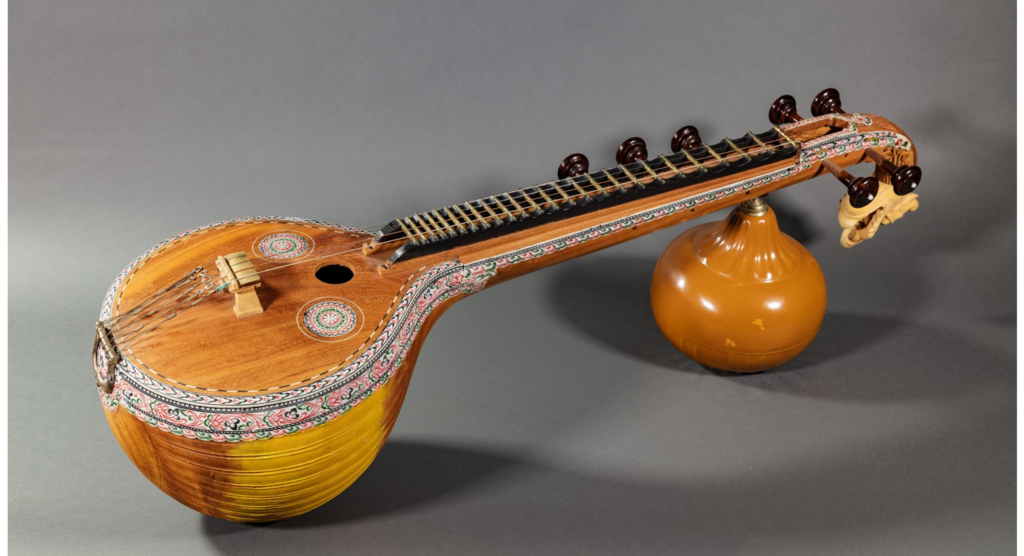
Anatomy and Posture
The Saraswati Veena has three main parts. The large resonator at the base is the kudam, which rests on the floor. The long neck is called the dandi, and it's where the frets are located. At the other end of the dandi is a smaller, often decorative resonator, which is sometimes shaped like the head of a mythical creature called the Yali.
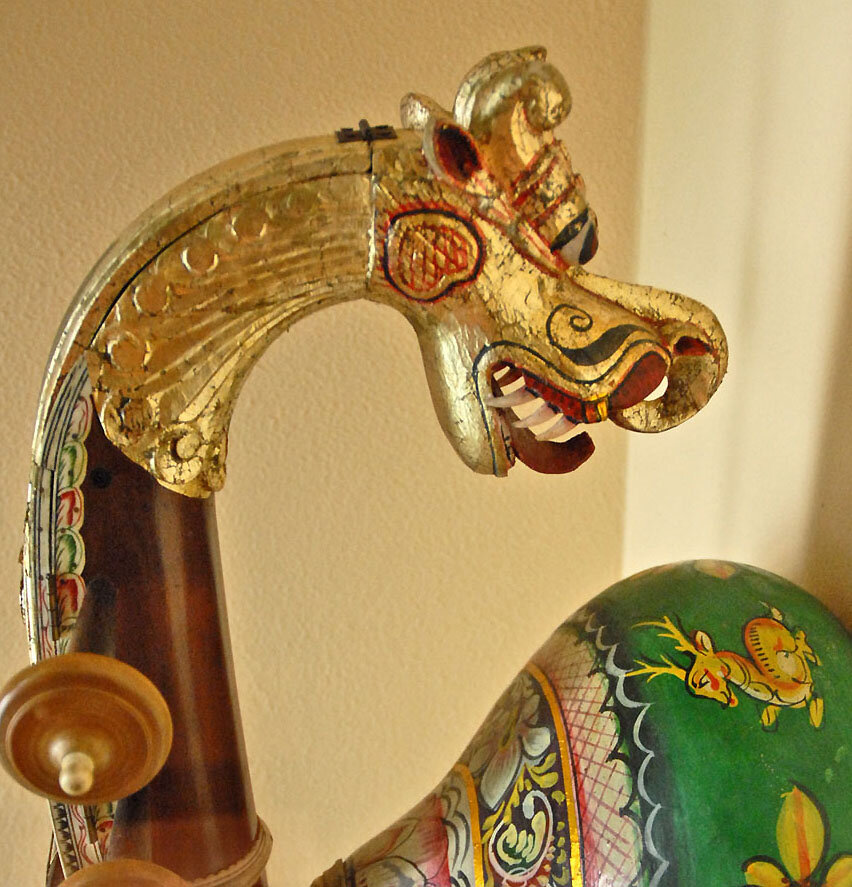
Your posture is crucial for both comfort and playability. Traditionally, you sit cross-legged on the floor. The kudam goes on the floor to your right. The dandi should rest across your left thigh, angled slightly upwards. Your left hand supports the neck from below, allowing your fingers to move freely across the frets. Your right arm should comfortably drape over the kudam, so your fingers can pluck the strings.
Tuning Your Instrument
The veena has two sets of strings. There are four main playing strings that run over the frets, and three auxiliary or tala strings on the side of the dandi. Tuning, or Sruti alignment, is the process of setting these strings to your base pitch, known as Sa.
The main strings are used for playing melodies, while the tala strings provide rhythmic accompaniment and a drone. The tuning is relative to your vocal range or the pitch of the lead performer.
| String Type | Name(s) | Typical Tuning (Relative to Sa) |
|---|---|---|
| Main Playing | Mandra Sarani (Sārani) | Lower Pa (Pa,) |
| Main Playing | Anumandra Sarani (Anusārani) | Lower Sa (Sa,) |
| Main Playing | Panchama (Panchamam) | Sa |
| Main Playing | Shadja (Mandaram) | Pa |
| Tala/Drone | Prakka Sarani (1) | Sa' (Higher Sa) |
| Tala/Drone | Prakka Sarani (2) | Pa |
| Tala/Drone | Prakka Sarani (3) | Sa |
The bridge, or Mélatara in Sanskrit, is a wide, slightly curved piece of wood or brass that lifts the strings off the dandi. Its precise placement and the way the strings rest on it are critical for the veena's characteristic rich, buzzing tone. Fine-tuning involves minute adjustments of string tension using the pegs and ensuring the strings are seated correctly on the bridge. This balance between tension and bridge contact is what creates the instrument's beautiful resonance.
With the veena in position and the strings tuned, you are ready to begin exploring its sounds. This initial setup creates the physical connection between you and the instrument, a relationship that deepens with every practice session.
What is the name of the large resonator at the base of the Saraswati Veena that rests on the floor?
According to traditional posture, how should the Saraswati Veena be positioned when playing?