SAP Jewels Unveiled
Introduction to Gemology
The Science of Precious Stones
Gemology is the science of gemstones. It's a field that blends geology, chemistry, and physics to understand the beautiful stones we value. But what exactly makes a mineral a "gemstone"?
It comes down to three key qualities: beauty, rarity, and durability. A gemstone must be visually appealing, scarce enough to be valuable, and hard enough to withstand being worn in jewelry. Gemologists study how these qualities arise, from a gem's creation deep within the Earth to the way it interacts with light.
Gemology
noun
The science and study of natural and artificial gemstone materials.
How Gems are Formed
Gemstones are forged under intense conditions inside the Earth. There are three main ways they form.
Igneous: Many gems crystallize from molten rock, or magma. As the magma cools, atoms arrange themselves into crystal structures. Diamonds, for example, form under extreme heat and pressure hundreds of kilometers below the surface and are brought up by volcanic eruptions. Peridot and zircon also form this way.
Metamorphic: This process involves transformation. Existing rocks are subjected to intense heat and pressure, causing the minerals within them to recrystallize. This is how some of the most famous colored stones are born, including sapphires, rubies, and garnets.
Sedimentary: These gems form at or near the Earth's surface. Water containing dissolved minerals seeps into cracks and cavities in other rocks. As the water evaporates over millions of years, the minerals are left behind, gradually building up a gemstone. Opals and turquoise are classic examples of this process.
A System of Classification
To bring order to the vast world of gems, gemologists use a classification system similar to biology. Each gemstone belongs to a species, which is defined by its chemical composition and crystal structure. Within a species, there can be different varieties, which are distinguished by their color.
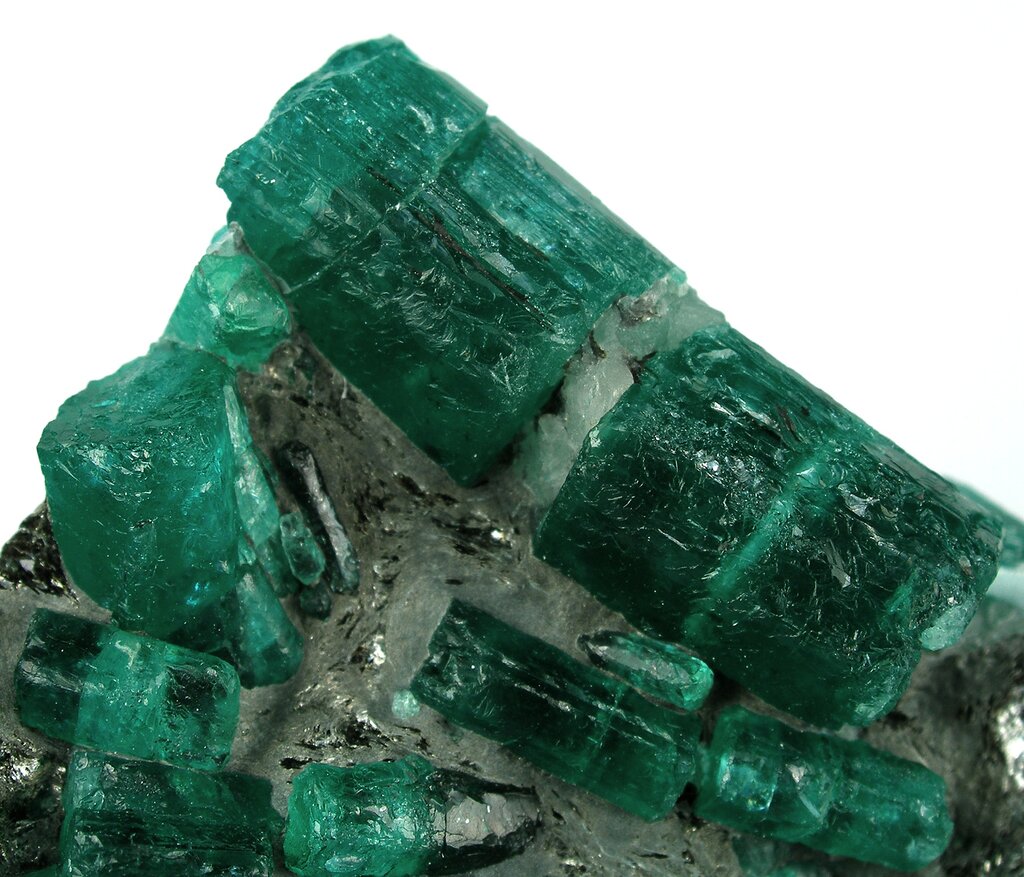
A great example is the mineral beryl. Its chemical formula is Be₃Al₂(SiO₃)₆. When trace amounts of chromium or vanadium are present, the beryl is green and we call it emerald. If iron is the trace element, the beryl is blue and we call it aquamarine.
| Species | Chemical Composition | Variety | Color |
|---|---|---|---|
| Beryl | Be₃Al₂(SiO₃)₆ | Emerald | Green |
| Beryl | Be₃Al₂(SiO₃)₆ | Aquamarine | Blue |
| Beryl | Be₃Al₂(SiO₃)₆ | Morganite | Pink |
| Corundum | Al₂O₃ | Ruby | Red |
| Corundum | Al₂O₃ | Sapphire | Any color but red |
You may have also heard the terms "precious" and "semi-precious." Traditionally, diamond, ruby, sapphire, and emerald were considered precious stones, with all others being semi-precious. Today, this distinction is less important. A high-quality garnet (traditionally semi-precious) can be far more valuable than a low-quality sapphire (traditionally precious).
Identifying Gemstones
Gemologists act like detectives, using a set of clues to identify a stone. They rely on a gem's unique physical and optical properties, which are constant and measurable.
Physical Properties One of the most important physical properties is hardness, or a gem's resistance to scratching. This is measured on the Mohs scale, from 1 (talc) to 10 (diamond). A harder mineral can scratch a softer one. This is why a diamond, at the top of the scale, can cut glass.
Another key property is specific gravity, which is a measure of a gem's density. It tells you how heavy a gemstone is in relation to an equal volume of water. Two gems that are the same size can have very different weights, helping a gemologist tell them apart.
Optical Properties Optical properties relate to how a gem interacts with light. The refractive index (RI) is one of the most crucial. It measures how much a light ray bends as it passes from the air into the gemstone. Every gem species has a characteristic RI, making it a reliable identification tool.
A gem's color is often its most striking feature, but it can be a tricky identifier. Color is caused by the way a gem's chemical structure absorbs certain wavelengths of light and reflects others. Sometimes, trace elements can create dramatic color variations within the same gem species, as we saw with beryl.
Some gems even exhibit pleochroism, meaning they show different colors when viewed from different directions. Other phenomena, like the star in a star sapphire or the color change in an alexandrite, are also distinctive optical clues that help in identification.
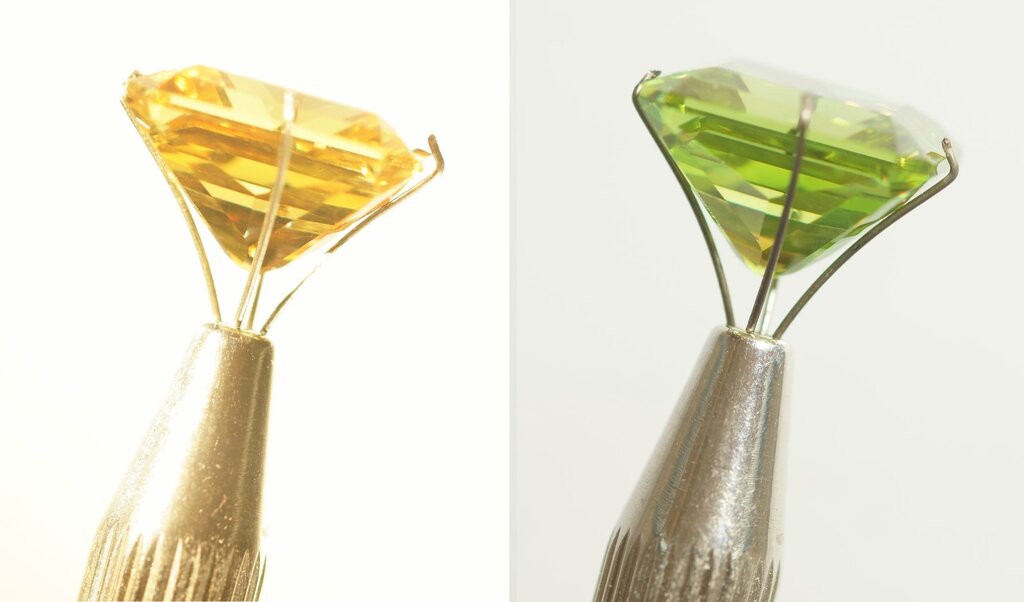
By carefully measuring and observing these properties, a gemologist can confidently identify almost any gemstone and distinguish it from imitations.
Ready to test your knowledge? This quiz will cover the fundamental concepts of gemology we've just explored.
Which three qualities are essential for a mineral to be considered a gemstone?
Diamonds, peridot, and zircon are all examples of gemstones formed through which process?
Understanding these basics of gem formation, classification, and identification provides the foundation for appreciating the value and rarity of all gemstones.