SAP Fundamentals Explained
Introduction to ERP
What Is an ERP System?
Think of a large company. It has a sales team closing deals, an accounting team managing finances, a warehouse team tracking inventory, and a human resources team handling payroll. In the past, each department often used its own separate software. The sales team had their customer list, but accounting couldn't easily see it. The warehouse knew what was on the shelves, but the sales team didn't always have real-time stock levels.
This separation creates confusion and slows things down. It's like having a team where no one talks to each other. An Enterprise Resource Planning (ERP) system solves this problem.
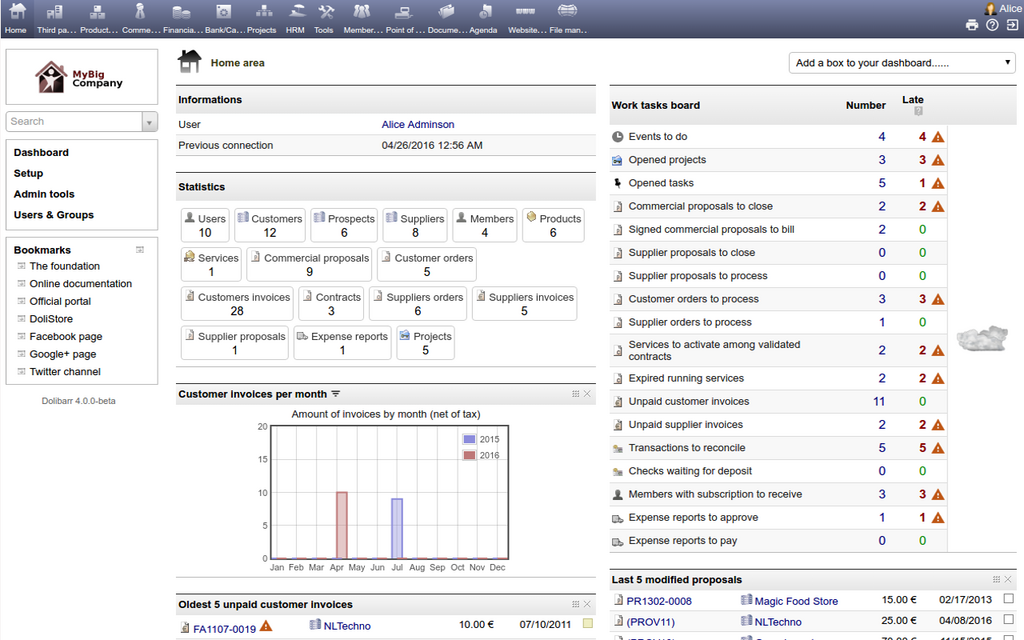
Enterprise Resource Planning (ERP) refers to a type of software system designed to help organizations manage and automate core business processes across various departments.
Essentially, an ERP system integrates all these different functions into a single, unified system. It creates one central database that every department uses. When the sales team makes a sale, the inventory is updated automatically, the accounting team can generate an invoice from the same data, and the shipping department knows what to pack. Everyone works from the same information, often called a "single source of truth."
This shared view eliminates redundant data entry, reduces errors, and gives leaders a clear, up-to-the-minute picture of the entire business.
A Quick Look Back
ERP systems didn't appear overnight. Their roots go back to the 1960s with the first computerized systems for manufacturing. These were called Material Requirements Planning (MRP) systems, and their job was simple: manage the raw materials needed for production.
By the 1980s, these systems evolved into MRP II. They did everything MRP did but also included financial planning and scheduling. It was a step toward integrating more than just manufacturing.
Finally, in the 1990s, the concept of ERP was born. The goal expanded from managing manufacturing resources to integrating every core process of an enterprise, from finance and HR to sales and supply chain management. This laid the foundation for the powerful, all-in-one systems businesses rely on today.
The Building Blocks of ERP
Modern ERP systems are typically modular. Think of it like a smartphone: you start with a base system and then add apps (modules) for the specific functions you need. This allows a company to implement the parts of the ERP that are most relevant to their business.
While the exact modules can vary, most ERP systems include a few core components.
| Module | Core Function |
|---|---|
| Finance & Accounting | Manages the general ledger, accounts payable/receivable, and financial reporting. |
| Human Resources (HR) | Handles payroll, employee records, benefits administration, and talent management. |
| Supply Chain Management (SCM) | Tracks goods from supplier to consumer, including inventory and order fulfillment. |
| Customer Relationship Management (CRM) | Manages interactions with current and potential customers, from sales leads to support. |
| Manufacturing | Oversees the production process, including scheduling, quality control, and shop floor management. |
Each module is designed to work seamlessly with the others. For instance, when a sales order is entered into the CRM module, it can automatically trigger an action in the SCM and Manufacturing modules to ensure the product is available and shipped on time.
Benefits and Hurdles
When implemented successfully, an ERP system can transform a business. By automating repetitive tasks, it frees up employees to focus on more strategic work.
By bringing all critical operations into a single system, ERP helps organizations eliminate data silos, reduce redundancies, and enhance decision-making through accurate and up-to-date information.
With all the company's data in one place, leaders can generate comprehensive reports and gain insights that were previously impossible. This leads to smarter, faster decisions. It also improves collaboration, as teams across the company have visibility into what other departments are doing.
However, adopting an ERP system is not a simple task. These systems are a significant financial investment. The implementation process can be complex and time-consuming, often requiring businesses to rethink their existing workflows. Perhaps the biggest challenge is change management, which involves training employees and getting them to embrace a new way of working.
Even the best software is ineffective if people don't use it properly. Successful ERP adoption requires buy-in from everyone in the organization, from top executives to frontline workers.
What is the primary purpose of an Enterprise Resource Planning (ERP) system?
Arrange the following systems in the correct order of their historical evolution.