SAP COGS Split Explained
Introduction to SAP COGS Split
Breaking Down Your Costs
When a company sells a product, the cost to produce that item is a crucial piece of financial information. This is known as the Cost of Goods Sold, or COGS. On a basic level, it’s a single number. For example, if it costs $50 to make a pair of shoes, and you sell them for $120, your gross profit is $70. Simple enough.
But what if you want a clearer picture? That single $50 figure hides a lot of detail. It’s made up of different cost components: raw materials, labor, and factory overhead. A COGS split in a system like SAP breaks down that single number into its individual parts. Instead of just seeing $50, you might see $20 for leather, $15 for labor, and $15 for factory expenses. The total is the same, but the story it tells is much richer.
Cost of Goods Sold (COGS)
noun
The direct costs of producing the goods sold by a company. This includes the cost of the materials and labor directly used to create the good.
The main purpose of a COGS split is to provide greater transparency in financial reporting. When costs are itemized, managers can analyze the company's performance with much more precision. It helps answer important questions. Are our raw material costs increasing? Is our production process becoming less efficient? Without a detailed breakdown, these trends can get lost in a single, aggregated number.
Benefits of a Clearer View
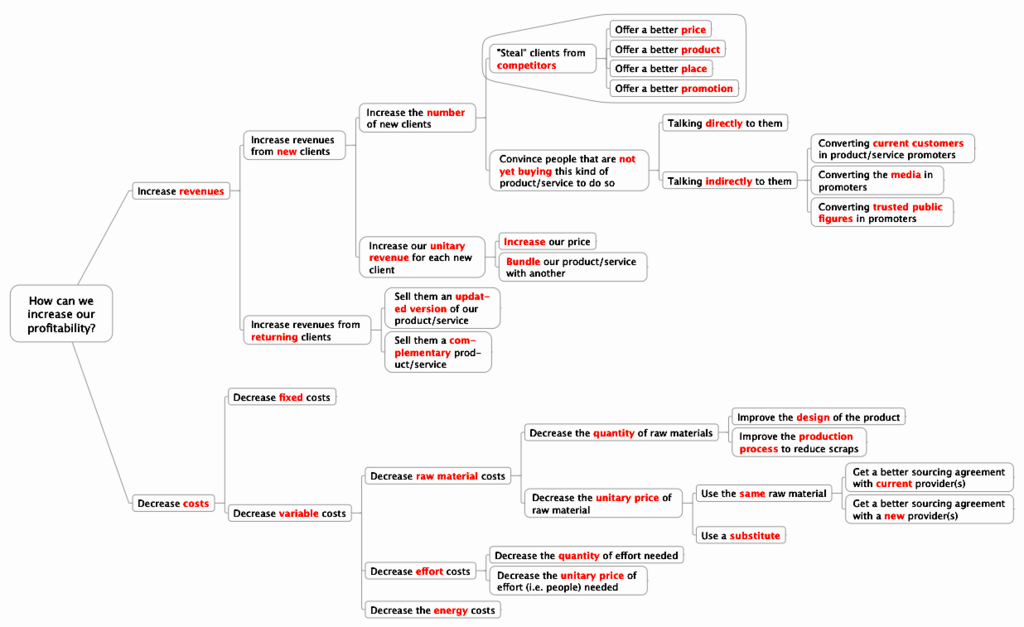
Splitting COGS enhances the accuracy of financial statements and empowers better business decisions. When each component of cost is visible, a company can pinpoint exactly where its money is going. This level of detail is invaluable for budgeting, forecasting, and setting prices.
Imagine a company's total COGS has increased by 10% over the last year. Without a split, executives might assume all costs went up equally. But with a split, they might discover that material costs actually decreased due to a new supplier, while labor costs skyrocketed because of overtime. This insight allows them to address the specific problem area instead of making broad, uninformed changes.
When is a COGS Split Used?
This detailed cost analysis is particularly useful in a few common business scenarios.
One is intercompany sales. This happens when different divisions of a large corporation sell goods to each other. For example, a manufacturing division might sell a component to an assembly division. A COGS split ensures that the costs are tracked accurately as the product moves between legal entities, which is critical for internal accounting and setting fair transfer prices.
Another scenario is stock transfers. This involves moving inventory from one company location to another, like from a central warehouse to a retail store. The cost of that inventory isn't just the product itself; it also includes expenses like freight and handling. A COGS split allows a company to capture these additional costs and see the true, total cost of getting an item onto a store shelf.
A COGS split transforms a single cost figure into a detailed narrative of how a product's value is built at each step of its journey.
Ultimately, the COGS split has a direct impact on profitability analysis. By understanding the precise cost structure of each product, a company can get a much clearer picture of its profit margins. It can identify which products are the most and least profitable, and why.
This detailed view helps management make strategic decisions. They might choose to discontinue a product with high, uncontrollable material costs or invest more in marketing for a product with a surprisingly high profit margin. It moves the conversation from "Are we profitable?" to "Where are we most profitable, and how can we do more of that?"