SAP BW Customized Programs
Introduction to SAP BW
What is SAP Business Warehouse?
Think of a large company. It has a sales department, a finance department, a marketing team, and a supply chain team. Each one uses different systems and generates tons of data every day. Sales tracks customer orders, finance monitors revenue, and marketing analyzes campaign results. How can a manager get a single, clear picture of the entire business?
That's where SAP Business Warehouse (BW) comes in. It's an enterprise data warehouse solution designed to act like a central library for all of a company's information. Instead of having data scattered across many different systems, SAP BW collects, cleans, and organizes it in one place. This allows decision-makers to run reports, analyze trends, and get insights that would be impossible to find when looking at each system individually.
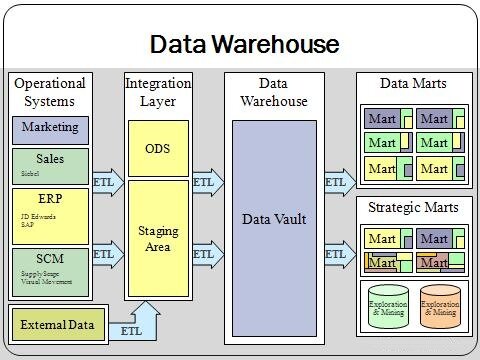
The Core Process ETL
At the heart of SAP BW is a process known as ETL, which stands for Extract, Transform, and Load. This three-step process is how BW gets data from source systems and prepares it for analysis.
-
Extract: First, BW pulls or extracts raw data from various source systems. This could be an SAP ERP system, a customer relationship management (CRM) tool, or even simple spreadsheets.
-
Transform: Raw data is often messy. One system might use 'USA' for the United States, while another uses 'US'. The transform step cleans this up. It standardizes formats, converts currencies, and combines data from different sources to create a consistent, reliable dataset.
-
Load: Once the data is transformed, it's loaded into the BW system. Here, it's stored in an optimized structure, like a well-organized library, ready to be accessed for reporting and analysis.
Architecture and Integration
One of SAP BW's biggest strengths is its tight integration with other SAP modules. It's designed to connect seamlessly with systems like Financial Accounting (FI), Sales and Distribution (SD), and Materials Management (MM). This pre-built integration simplifies the data extraction process significantly.
The architecture allows BW to be the central hub for business intelligence. Data flows from transactional systems, where daily operations occur, into BW, where the data is aggregated and stored for long-term analysis. This separation ensures that running complex reports in BW doesn't slow down the performance of the day-to-day operational systems.
The Evolution to SAP BW/4HANA
Technology is always moving forward, and data warehousing is no exception. The latest evolution of SAP BW is SAP BW/4HANA. The key to understanding this new version is SAP HANA.
SAP HANA is an in-memory database. Traditionally, data was stored on hard disks, and retrieving it was relatively slow. In-memory databases store data in the computer's main memory (RAM), which is drastically faster. This means data can be accessed and processed in real time.
SAP BW/4HANA runs exclusively on the SAP HANA database, leading to a massive boost in performance. Reports that once took hours to run can now be generated in seconds.
Beyond speed, BW/4HANA offers a more simplified architecture, less complex data models, and a modern user interface. It's designed for the age of big data, giving businesses the power to analyze vast amounts of information on the fly.
Let's check your understanding of these core concepts.
What is the primary role of SAP Business Warehouse (BW) within a large organization?
The process of cleaning data, standardizing formats (e.g., converting 'USA' to 'United States'), and combining sources is known as the __________ step in the ETL process.
Now you have a foundational understanding of what SAP BW is, its core processes, and how it has evolved to meet modern data challenges.