Santander and the Fracture of Gran Colombia
Ideological Divergence
From Alliance to Opposition
The partnership between Simón Bolívar and Francisco de Paula Santander was forged in the crucible of war. Bolívar, the charismatic general and visionary, led the armies that liberated northern South America from Spanish rule. Santander, the pragmatic organizer, built the logistical and political backbone that made those victories possible. While Bolívar was on the campaign trail, Santander was in Bogotá, managing the fledgling government of Gran Colombia. They were a perfect team, united by the singular goal of independence.
But winning a war and building a nation are two very different challenges. Once the Spanish were gone, the ideological cracks between the two leaders began to show. Their shared enemy had masked a fundamental disagreement about the future. The question was no longer how to win independence, but how to govern it.
Governing a New Republic
The new republic's foundation was the , ratified in 1821. This document established a centralized government, a choice intended to hold the vast and diverse territories of Venezuela, New Granada, and Ecuador together. Both men initially supported it, but they had starkly different interpretations of how it should be applied.
Their conflicting philosophies can be broken down into a few key areas.
| Issue | Simón Bolívar (Centralist) | Francisco de Paula Santander (Federalist) |
|---|---|---|
| Government Structure | A powerful, centralized government is needed to prevent regional fragmentation and anarchy. | Power should be distributed among the regions to respect local autonomy and prevent tyranny. |
| Executive Power | Favored a strong, almost monarchical executive, even a president for life, to ensure stability. | Believed in a limited executive, strictly bound by the constitution and the rule of law. |
| Guiding Principle | Order and stability are paramount, even if it requires authoritarian measures. | The rule of law and constitutional principles are sacred and must not be compromised. |
Bolívar, having witnessed the chaos of the First Republic of Venezuela, deeply feared disunity. He believed the new nations were too fragile and their people too inexperienced with self-government to handle a decentralized system. He saw strong, centralized authority as the only defense against civil war and foreign manipulation. His ideal was laid out in the constitution he wrote for Bolivia, which included the concept of a with the power to name a successor.
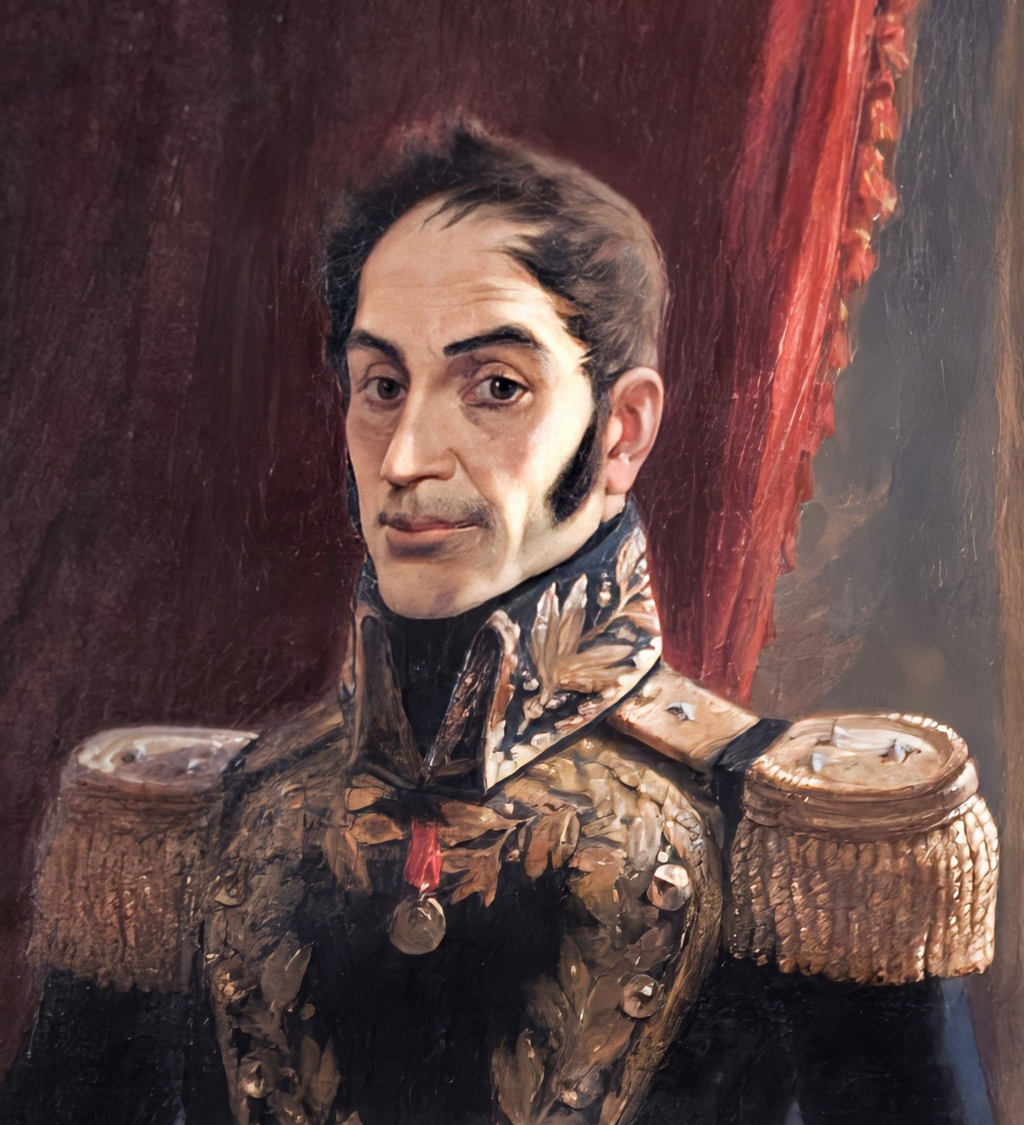
Santander stood in stark opposition. As Vice President, he was the one actually running the government day-to-day, and he put his faith in institutions, not individuals. He believed that the republic's survival depended on strict adherence to the law and the constitution. To him, Bolívar's desire for supreme power looked dangerously similar to the Spanish monarchy they had just overthrown. Santander earned the nickname '' for his unwavering insistence that no one, not even the Liberator himself, was above the constitution.
The Breaking Point
A philosophical disagreement about governance was becoming a personal and political rivalry.
The rift widened while Bolívar was away campaigning in Peru and Bolivia. Santander, governing from Bogotá, implemented policies that promoted federalism and civilian control. He clashed with Bolívar's loyal military officers, who saw his actions as a betrayal of their leader. When Bolívar returned in 1826, he viewed Santander's administration as an attempt to undermine his authority and dismantle the unified state he had fought to create. He used his emergency powers to override Santander's policies, effectively setting aside the Constitution of Cúcuta.
This act confirmed Santander's worst fears. The clash was no longer theoretical. Bolívar had chosen order over law, while Santander had chosen law over the authority of a single leader. This fundamental divergence set Gran Colombia on a path to dissolution, turning two heroes of independence into bitter political enemies.
What were the primary roles of Simón Bolívar and Francisco de Paula Santander during the war for independence?
The core of the political disagreement between Bolívar and Santander can be best described as a conflict between...