San Luis Potosi A Fascinating History
Pre-Colonial Era
The First Peoples of San Luis Potosí
Long before the arrival of Europeans, the land now known as San Luis Potosí was a dynamic crossroads of cultures. It was a region where the settled agricultural societies of Mesoamerica met the nomadic peoples of the arid northern plains. This created a complex tapestry of trade, conflict, and cultural exchange.
Warriors of the North
The most dominant groups in the central and northern parts of the region were collectively known as the Chichimeca. This wasn't a single tribe, but a term used by the peoples of central Mexico to describe a variety of independent, nomadic hunter-gatherer bands. The name itself carried a mix of fear and disdain, similar to how the Romans viewed
The Chichimeca didn't build cities of stone; their domain was the vast, arid landscape itself, which they knew intimately.
Among the most prominent Chichimeca groups were the Guachichiles, whose name meant
Settled Societies
In contrast to the nomadic Chichimeca, the southern and eastern parts of San Luis Potosí were home to settled agricultural peoples. The Otomi occupied parts of the south, living in established villages and practicing farming. They were part of the broader Mesoamerican cultural world, known for their weaving and religious practices.
To the east, in the lush, humid lowlands of the Huasteca region, lived the Huastec civilization. An early branch of the Mayan peoples, the Huastecs developed a unique culture over thousands of years. They were skilled farmers, cultivating corn, beans, and squash. They were also remarkable artists, famous for their shell ornaments and distinctive stone sculptures, particularly of figures that were often half-human, half-divine.
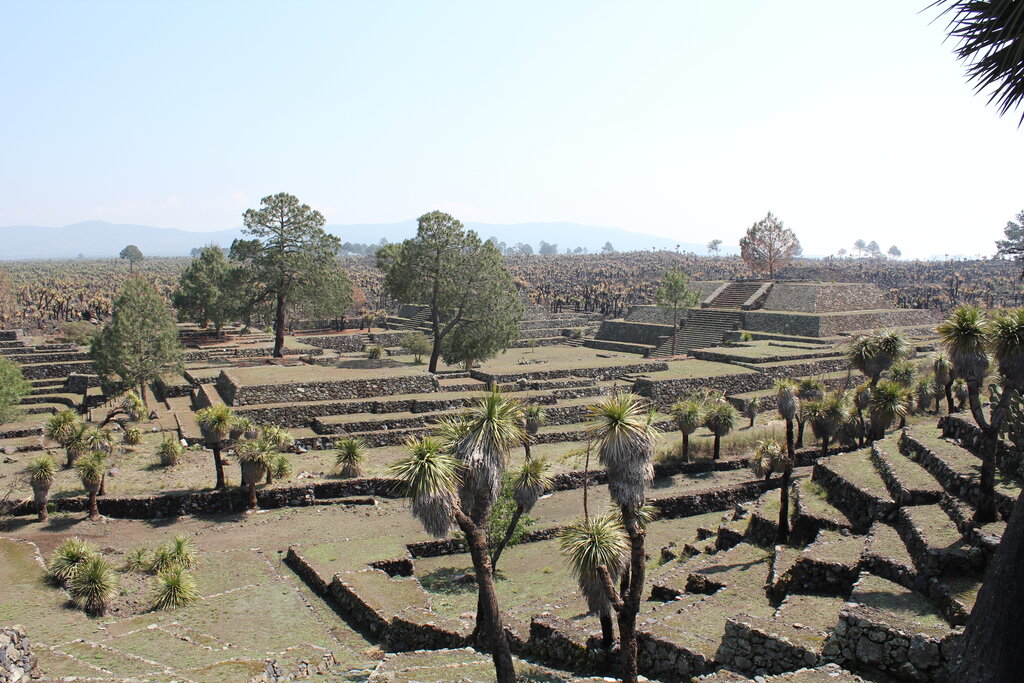
The Huastecs built ceremonial centers with platform mounds and plazas, reflecting a complex social and religious structure.
These different groups did not live in isolation. The arid highlands of the Chichimeca served as a buffer zone between the Huastecs and other powerful states to the west. Trade routes crisscrossed the region, allowing goods like salt, animal skins, and medicinal plants from the north to be exchanged for pottery, textiles, and agricultural products from the south and east. These interactions were not always peaceful, but they ensured that the region was a place of constant change and adaptation long before new arrivals changed it forever.
Time to check your understanding of the region's first inhabitants.
Which term best describes the Chichimeca people of ancient San Luis Potosí?
The Huastec civilization, located in the eastern lowlands, was culturally and artistically known for what?
These diverse indigenous societies formed the cultural foundation of San Luis Potosí, each adapting to the unique challenges and opportunities of their environment.