Samurai History
Warrior Origins
The Rise of the Warrior Class
When the imperial government could no longer secure the countryside, a new power structure emerged from the chaos. In this chapter, we will uncover how local landowners evolved into a professional military class and filled the resulting security vacuum. By exploring the shift from conscription to the gokenin system, you will understand how the samurai transformed from provincial guards into the architects of the Kamakura Shogunate.
The Collapse of the Imperial Draft
By the 8th century, the Japanese state relied on the , a centralized legal framework inspired by Chinese models. Under this code, the government attempted a massive project of military conscription. Every household was theoretically required to provide one healthy male for military service. These peasant-soldiers were tasked with guarding the capital or patrolling distant frontiers, but the reality on the ground was far different from the theory. For a peasant farmer, the trade-off was ruinous. Leaving the fields for months meant their crops failed and their families starved. Furthermore, the state expected these men to provide their own equipment and food, an impossible burden for most.
The peasant-soldier model failed because it demanded specialized skills from people who were busy surviving. True military power required time and money—two things farmers lacked.
The nature of warfare was also changing. Success on the battlefield increasingly depended on mounted archery and sophisticated cavalry maneuvers. Mastering these skills required years of dedicated training and the wealth to maintain horses and expensive armor. The average farmer could not simply pick up a bow and participate in such specialized violence. As a result, the imperial army became a hollow force, unable to suppress internal rebellions or defend against the rising threat of bandits in the provinces.
Provincial Power and Private Security
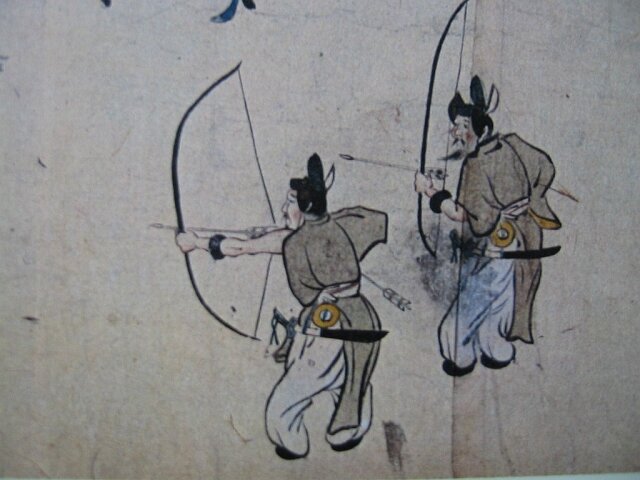
As the central government’s grip weakened, provincial landholders and local strongmen took matters into their own hands. These elites had the resources to train constantly and the wealth to own high-quality mounts. To protect their private estates, known as shoen, they began forming private militias. These bands of armed men were not motivated by imperial duty, but by the practical necessity of defending their own borders from rival clans and marauders. This was the organic birth of a new social class: the bushi, or professional warriors.
bushi
noun
A term for the emerging class of professional warriors in medieval Japan, who prioritized martial skill and local land defense over imperial service.
This transition was not a top-down military reform. It was a chaotic, bottom-up response to the state’s inability to govern. The imperial court eventually found it more efficient to outsource security to these local warriors rather than trying to maintain a national draft. By granting these strongmen legitimacy in exchange for keeping the peace, the state inadvertently began to dismantle its own central authority. Security was no longer a public service; it was a private commodity controlled by the families who lived on the land.
This shift marked the beginning of a decentralized Japan. Power followed the path of least resistance, moving from the polished halls of the imperial palace to the rugged provincial estates where the bushi lived. The state’s failure to adapt its military model to the realities of 8th-century life created the very vacuum that the warrior class would eventually use to seize control of the entire nation.