Salary Negotiation Mastery
Understanding Salary Negotiation
Why Negotiate Your Salary?
Salary negotiation is the discussion between you and a potential employer to agree on your compensation. It might sound intimidating, but it's a standard part of the hiring process. Most importantly, it has a massive impact on your financial future.
Failing to negotiate your starting wage can set the tone for the rest of your career—the difficulty of playing “catch up” grows exponentially over time, because the earnings impact is considerable.
Think about it this way. Imagine you get a job offer for $50,000. If you negotiate just a 10% increase to $55,000, that’s an extra $5,000 for your first year. But the effect snowballs. Future raises are often calculated as a percentage of your current salary. A 3% raise on $55,000 is more than a 3% raise on $50,000. Over a 30-year career, that single negotiation could be worth hundreds of thousands of dollars.
The Psychology of the Ask
Negotiation isn't about confrontation; it's about understanding human psychology. One of the most powerful principles at play is called anchoring.
Anchoring
noun
A cognitive bias where we rely too heavily on the first piece of information offered (the "anchor") when making decisions.
In a salary negotiation, the first number mentioned becomes the anchor for all following discussions. If an employer offers $60,000, that number anchors the conversation around $60,000. Any counteroffer you make will be viewed in relation to that initial anchor. This is why many negotiation experts advise you to let the employer name a number first. It reveals their anchor, giving you a clear starting point to negotiate from.
Your confidence and preparation also act as psychological signals. When you can clearly articulate your value and back it up with research, you shift the dynamic from asking for more money to demonstrating what you're worth.
Economic Factors at Play
A salary offer isn't pulled out of thin air. It’s determined by a few key economic factors that you need to understand. These factors create a salary range for the role, and your goal is to land at the higher end of it.
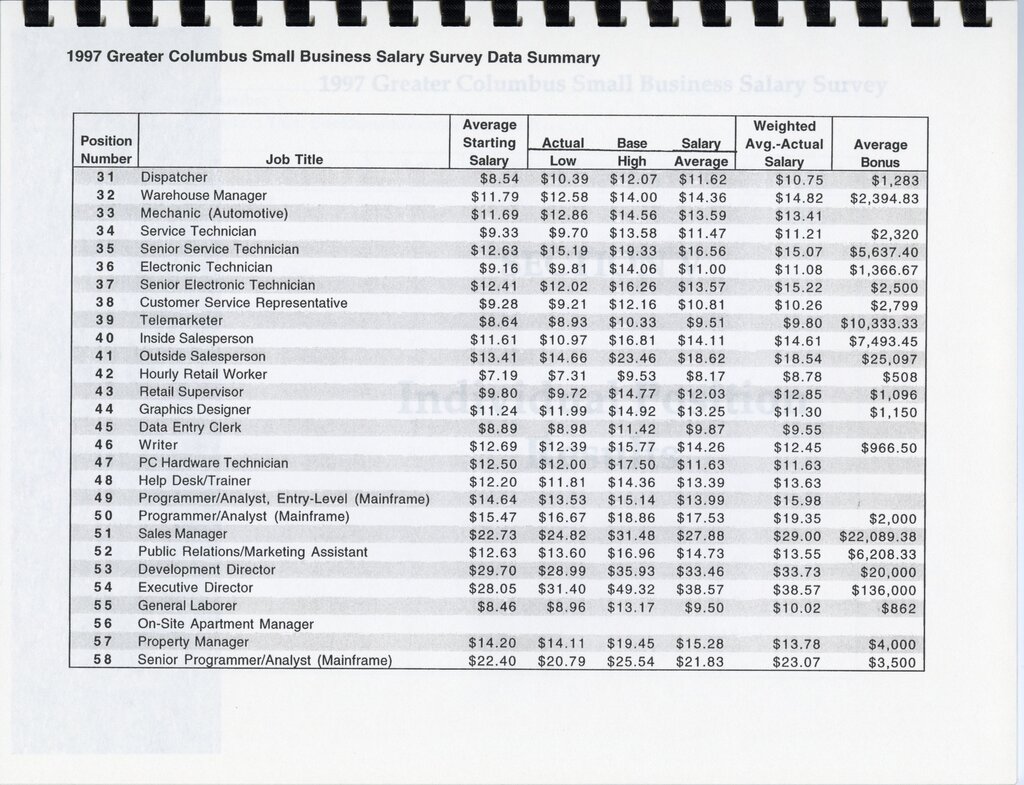
The company is balancing what the market demands, what they can afford, and what is fair to their current team. Here’s a breakdown of the main considerations:
| Factor | Description |
|---|---|
| Market Rate | The typical salary range for your role, experience level, and geographic location. This is the most important factor. |
| Company Budget | The company's financial health and the specific budget allocated for the position. A large, profitable company has more flexibility than a small startup. |
| Internal Equity | How the offer compares to the salaries of current employees in similar roles. Companies strive to maintain fairness and avoid large pay gaps. |
| Your Skills | Your unique skills, experience, and qualifications. If you bring something rare or highly valuable to the table, your leverage increases. |
Understanding these factors helps you frame your negotiation. You're not just asking for more money; you're making a case that your value aligns with the higher end of the range they've already established based on these economic realities.
What is the primary reason an initial salary negotiation has a significant long-term financial impact?
In negotiation, the first number mentioned in a discussion often becomes a cognitive bias known as a(n) __________, which influences all subsequent offers.