Saint Michael the Archangel
Introduction to Archangels
Chief Messengers
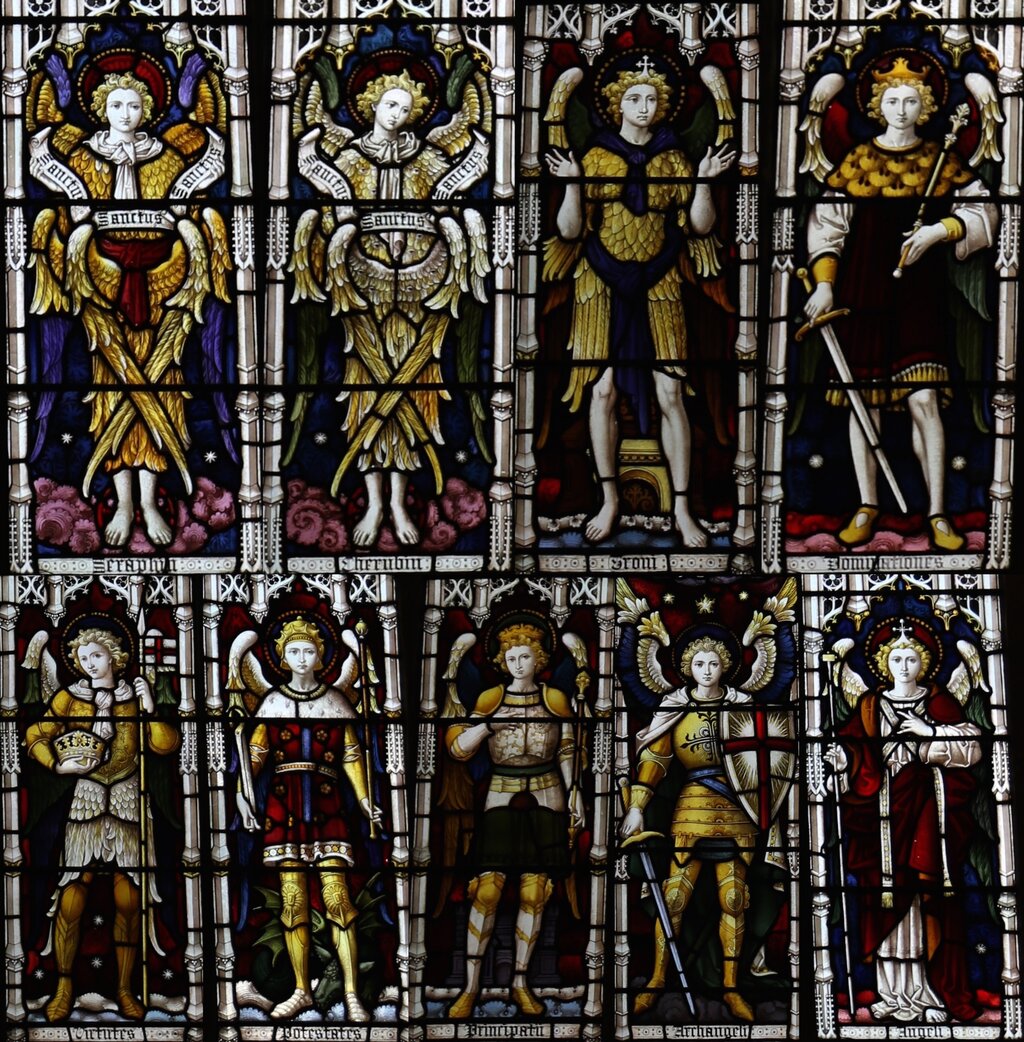
In many religious traditions, angels are spiritual beings who act as attendants or messengers of God. But not all angels are considered equal. Some hold a higher rank, a greater responsibility. These are the archangels.
Archangel
noun
A high-ranking angel. The prefix "arch-" comes from Greek and means "chief" or "principal."
Archangels serve as direct conduits between the divine and the human world. They deliver critical prophecies, command heavenly armies, and intervene in human affairs at pivotal moments. While the exact number and names of archangels can differ between faiths, they are a common feature in the sacred texts of Judaism, Christianity, and Islam.
The Four Key Figures
Across these traditions, four archangels are mentioned most frequently. Each has a distinct name, meaning, and purpose.
| Archangel | Name Meaning | Primary Role |
|---|---|---|
| Michael | "Who is like God?" | Warrior, Protector |
| Gabriel | "God is my strength" | Messenger |
| Raphael | "God has healed" | Healer |
| Uriel | "God is my light" | Wisdom, Illumination |
Michael is often seen as the commander of God's army, a powerful figure who fights against evil. He is a protector and a leader among the angels.
Gabriel is the divine messenger, entrusted with delivering some of the most important revelations. In Christian tradition, Gabriel announced the coming birth of Jesus to Mary. In Islam, Gabriel (known as Jibrīl) revealed the Quran to the Prophet Muhammad.
Raphael is known as the angel of healing. His story is told in the Book of Tobit, a text included in the Catholic and Orthodox Old Testaments, where he heals the blind and binds a demon.
Uriel is often associated with wisdom, prophecy, and insight. Though not mentioned by name in the canonical scriptures of all denominations, he is a prominent figure in some Jewish and Christian apocryphal texts.
Archangels Across Faiths
While the concept of archangels is shared, their specific roles and numbers vary.
In Judaism, only Michael and Gabriel are named in the Hebrew Bible. They are seen as special advocates for Israel. Other archangels like Raphael and Uriel are named in later texts, such as the deuterocanonical Book of Tobit and the apocryphal Book of Enoch.
In Christianity, the number of archangels is debated. Most Protestants recognize only Michael, as he is the only one explicitly called an archangel in the Bible. Catholic and Orthodox traditions also include Gabriel and Raphael. Some Eastern Orthodox traditions name seven or even eight archangels.
In Islam, four archangels are given special prominence. Jibrīl (Gabriel) is the angel of revelation. Mīkā'īl (Michael) is responsible for providing nourishment for bodies and souls and is associated with natural phenomena like rain. Isrāfīl will blow the trumpet on Judgment Day, and Azrā'īl is the angel of death, who separates souls from their bodies.
Despite the differences, the core idea remains: archangels are immensely powerful beings who carry out the divine will. They serve as guardians, messengers, and warriors, bridging the gap between heaven and earth.
Let's check your understanding of these heavenly figures.
Which archangel is primarily known as a divine messenger, responsible for delivering crucial revelations in both Christian and Islamic traditions?
According to the provided text, which two archangels are explicitly named in the canonical Hebrew Bible?