SailPoint IdentityIQ Fundamentals
Introduction to Identity and Access Management
The Digital Gatekeeper
Think about the security guard at an office building. Their job is to make sure only the right people get inside. Once you're in, your keycard might only open certain doors, like your office and the breakroom, but not the server room. The building's security system also keeps a log of when and where you use your card.
Identity and Access Management (IAM) is the digital version of this system. It’s a framework of policies and technologies that ensures the right users have the appropriate access to technology resources. It's the foundation of modern cybersecurity, helping organizations protect sensitive data, comply with regulations, and operate efficiently.
A robust IAM framework sits at the intersection of security, operational efficiency, and user experience-protecting sensitive assets while ensuring seamless access for legitimate users.
Without a solid IAM strategy, a company is vulnerable. Unauthorized users could access confidential information, leading to data breaches. On the flip side, employees might struggle to access the tools they need to do their jobs, hurting productivity. IAM solves this by managing who can do what, where, and when.
The Three Pillars of Access
IAM systems are built on a concept known as AAA, which stands for Authentication, Authorization, and Accounting. These three pillars work together to control and monitor access to resources.
Let's break each one down.
Authentication
noun
The process of verifying that a user is who they claim to be.
This is the first step. Before you can access anything, you have to prove your identity. The most common form is a username and password. Other methods include biometrics (like a fingerprint or face scan), security tokens, or a one-time code sent to your phone. This is the system asking, "Are you really you?"
Authorization
noun
The process of determining what permissions an authenticated user has.
Once the system knows who you are, it needs to figure out what you're allowed to do. Authorization is about setting and enforcing permissions. Just because you're an employee doesn't mean you can access the company's financial records. Your role (e.g., marketer, engineer, HR manager) determines your access rights. This is the system asking, "Now that I know who you are, what are you allowed to see and do?"
Accounting
noun
The process of logging and tracking user actions on a system.
Finally, accounting (or auditing) keeps a record of what a user does. It tracks which files were accessed, what changes were made, and when these actions occurred. This log is crucial for security investigations, troubleshooting issues, and ensuring compliance with regulations. It answers the question, "What did you do while you were here?"
Frameworks and Standards
Companies don't have to build their IAM systems from scratch. There are established frameworks and industry standards that provide a blueprint for managing digital identities securely and efficiently. These standards ensure that different systems can talk to each other and handle identities in a consistent way.
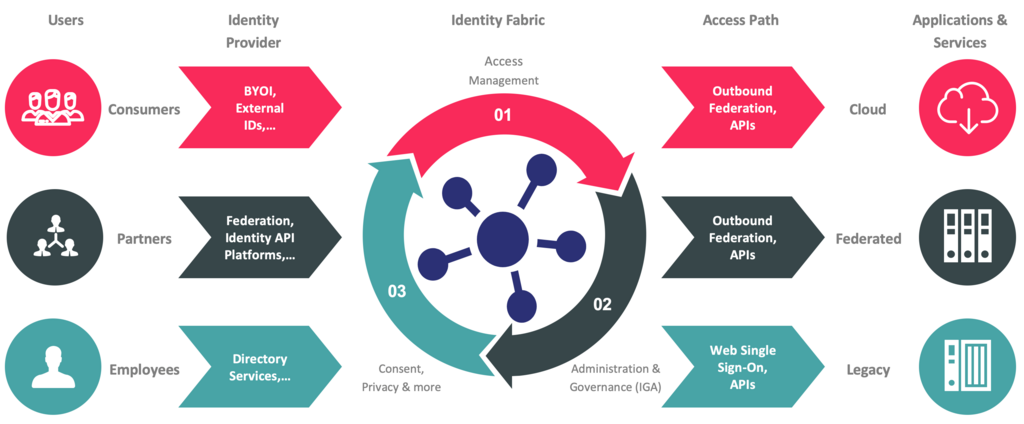
For example, you've likely used standards like SAML (Security Assertion Markup Language) or OAuth without even knowing it. When you use your Google account to log into a different service, that's often SAML or a similar protocol working behind the scenes. It allows one system (Google) to securely vouch for your identity to another system (the new service) without sharing your password.
These frameworks help create a structured approach to IAM, making it easier to manage complex environments, especially as organizations grow and adopt more cloud services.
Frameworks and standards provide the rules of the road for digital identity, ensuring interoperability and security across different platforms.
Understanding these core principles—what IAM is, the AAA pillars, and the existence of guiding frameworks—is the first step to mastering how digital access is managed and secured.
What is the primary goal of an Identity and Access Management (IAM) system?
In the context of IAM, what does the 'A' of Authorization refer to?