SailPoint Identity Security Cloud Essentials
Introduction to Identity Security
Identity Is the New Perimeter
Think about the security for an office building. You have locks on the doors, a front desk, and maybe keycards that grant access to specific floors or rooms. The goal is simple: ensure only the right people can get into the right places. Identity security is the digital equivalent of this, but for your entire organization's data and applications.
In the digital world, an "identity" isn't just a person. It can be an employee, a contractor, a customer, a software application, or even a smart device. Each one needs a way to prove it is what it claims to be, and each needs specific permissions to do its job. Identity security is the framework of policies and technologies that manages and protects these digital identities.
In the cloud, identity is the new perimeter.
Why is this so critical? Because when identity management fails, the doors are left wide open. A disgruntled ex-employee might still have access to sensitive customer files. A hacker who steals an employee's password could gain entry to financial systems. Without strong identity security, an organization is vulnerable to data breaches, fraud, and operational chaos.
The Growing Challenge
Managing digital identities used to be simpler. Most employees worked in one office, using a handful of company-approved applications on a company-owned desktop. The "perimeter" was the physical wall of the building.
Today, that perimeter has dissolved. People work from anywhere, on any device. Organizations use hundreds of cloud applications, from Salesforce to Microsoft 365, alongside their traditional on-premise systems. The number of digital identities has exploded, creating a complex web of access permissions.
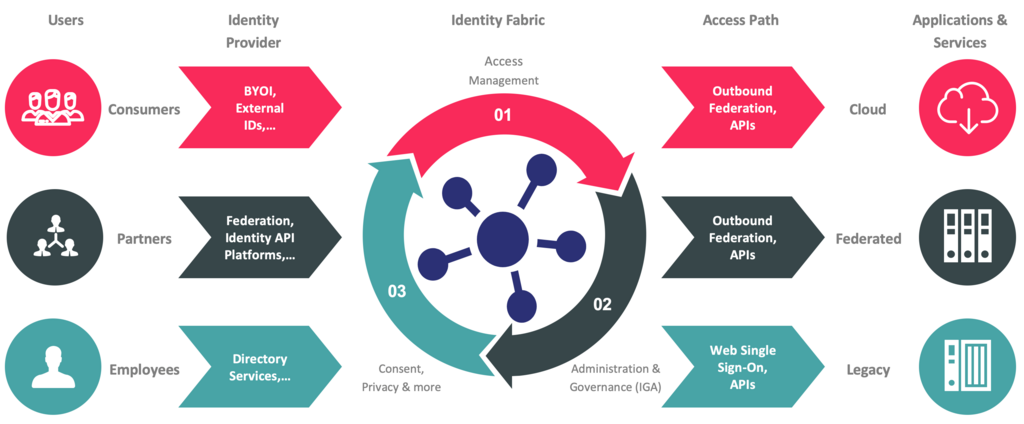
This complexity introduces significant challenges. One common problem is "privilege creep," where employees accumulate access rights as they change roles over the years, but their old, unnecessary permissions are never revoked. Each unnecessary permission is a potential security risk. Manually tracking who has access to what across hundreds of systems is nearly impossible, leading to security gaps and a compliance nightmare.
Governance Brings Control
This is where Identity Governance and Administration (IGA) comes in. Think of IGA as the central command center for all digital identities. It's a combination of policy and technology that provides a structured approach to managing access.
Identity Governance
noun
The policy-driven process of ensuring the right individuals have the right access to the right resources, and that access is compliant with regulations.
IGA answers the critical questions for every access request:
- Who are you? (Authentication)
- What are you allowed to do? (Authorization)
- Why do you need this access? (Business justification)
- How are you using this access? (Auditing and monitoring)
By automating processes like onboarding new employees, managing access requests, and revoking access when someone leaves, IGA platforms bring order to the chaos. They provide a single, clear view of who has access to what across the entire organization. This visibility is key to mitigating security risks. It allows security teams to spot and remove excessive permissions, enforce policies consistently, and quickly identify suspicious activity.
Furthermore, IGA is essential for compliance. Many regulations, like Sarbanes-Oxley (SOX) and GDPR, require organizations to prove they have strict controls over who can access sensitive data. IGA systems generate the reports and audit trails needed to demonstrate compliance, saving countless hours of manual work and reducing the risk of hefty fines.
Ultimately, a strong identity security foundation enables the business to move faster and more securely. When access is managed properly, employees are productive from day one, collaboration is seamless, and the organization is protected from the inside out.