Sacred Intimacy and Tantric Energy Mastery
Advanced Pranayama Mastery
Dynamic Breath Synchronization
You already know how to observe your breath. The next step is to actively shape it. Advanced pranayama isn't about passive watching; it's about conducting the orchestra of your internal energy. The goal is to create a rhythmic, powerful breathing pattern that harmonizes with your heartbeat and calms your nervous system.
Think of your breath as a wave. At first, you might consciously create the rhythm: a four-count inhale, a four-count exhale. But with practice, this conscious effort dissolves. Your breath finds its own powerful, steady cadence, much like a strong ocean tide. This synchronization is the engine for all deeper energetic work. It moves you from a state of simple relaxation into one of active energy cultivation.
Building the Internal Fire
To move energy, you first need to generate it. In yogic terms, we build Agni, the internal fire. This isn't just metaphorical heat; it's a tangible warmth that purifies the body's energy channels, or nadis. Two of the most effective techniques for stoking this fire are Kapalabhati and Bhastrika.
Kapalabhati, or
Kapalabhati
noun
A pranayama technique involving short, forceful exhalations and passive inhalations, aimed at cleansing the respiratory system and energizing the body.
Skull-Shining Breath," involves sharp, forceful exhales driven by the abdomen, with passive, automatic inhales. Imagine you're trying to blow a feather off your hand in short, quick bursts. Bhastrika, or
Bhastrika
noun
A pranayama breathing exercise, also known as "Bellows Breath," characterized by forceful and rapid inhalations and exhalations, which increases oxygen flow and generates internal heat.
Bellows Breath," is equally forceful on both the inhale and exhale, like fanning the flames of a forge. Both practices pump into your system, increasing vitality and preparing your body for more subtle work.
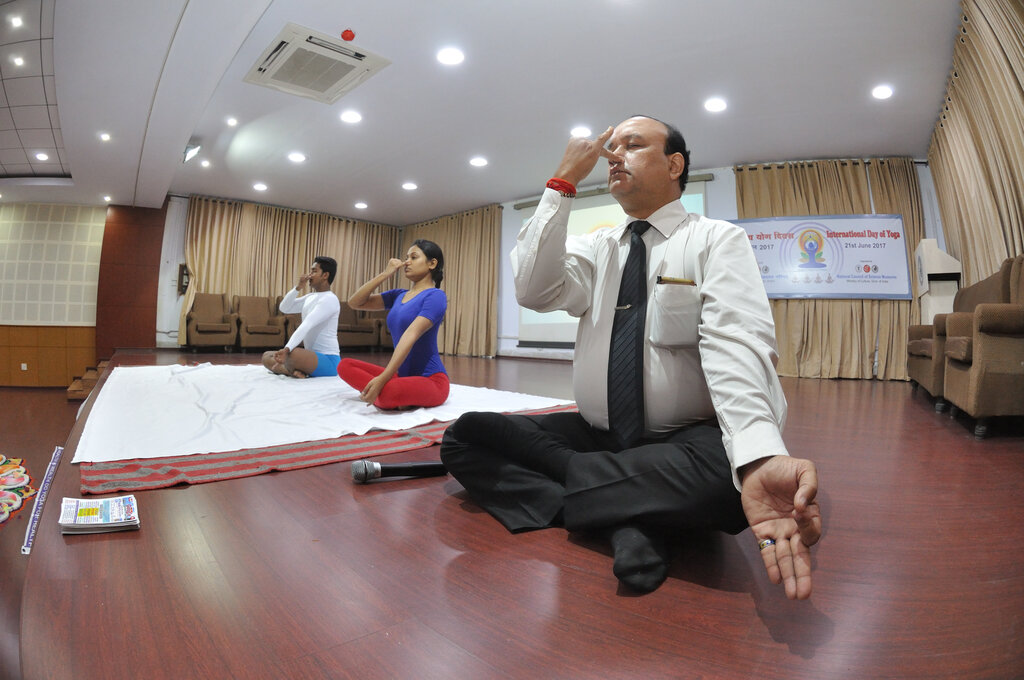
Dynamic breathing exercises like Kapalbhati and Bhastrika Pranayama greatly increase the brain’s compression and decompression rate.
The Power of the Pause
Generating energy is one thing; storing it is another. This is where , or breath retention, becomes essential. After several rounds of active breathing like Bhastrika, a deliberate pause allows the generated prana to accumulate and saturate your system, rather than dissipating.
There are two main types of retention. Antara Kumbhaka is the pause at the top of the inhalation, when the lungs are full. This is expansive and energizing. Bahya Kumbhaka is the pause at the bottom of the exhalation, with lungs empty. This is more grounding and introspective. By skillfully using these pauses, you learn to hold and contain energy, creating a reservoir of vitality you can draw upon.
From Doing to Being
The ultimate goal of these practices is to move from effortful control to effortless experience. Initially, you are doing the breathing. You are counting, forcing the exhale, and consciously holding the pause. This is a necessary stage of training the body and mind.
But as you practice, a shift occurs. The rhythm becomes ingrained in your nervous system. The breath starts to feel like it's happening to you. You are no longer breathing; you are being breathed. This is a profound state where the boundary between you and your energy dissolves. The breath becomes a self-sustaining wave of vitality, carrying you into deeper states of awareness without any conscious intervention. This is the foundation upon which true Tantric practice is built.
Now, let's test your understanding of these core concepts.
What is the primary goal of the advanced pranayama techniques described?
Which breathing technique is characterized by forceful exhales and passive inhales, like trying to blow a feather off your hand in short bursts?
Mastering these techniques establishes a new baseline for your energetic system, preparing you for the more subtle and powerful practices ahead.