SaaS Product Development Strategy
Scaling Architecture Trade-offs
Tenancy Models: The First Big Decision
When you build a Software as a Service (SaaS) application, one of the first and most critical architectural decisions is how you will host your customers. Will each customer get their own private, isolated version of the software, or will they share a single, unified system? This is the core of the single-tenant versus multi-tenant debate.
In a single-tenant model, each customer (or 'tenant') gets their own dedicated infrastructure stack: their own application instance, their own database, everything. It's like giving every family their own detached house. This provides maximum data isolation and security, but it's expensive to build and a nightmare to maintain. Imagine having to update thousands of separate houses every time you want to fix a leaky tap.
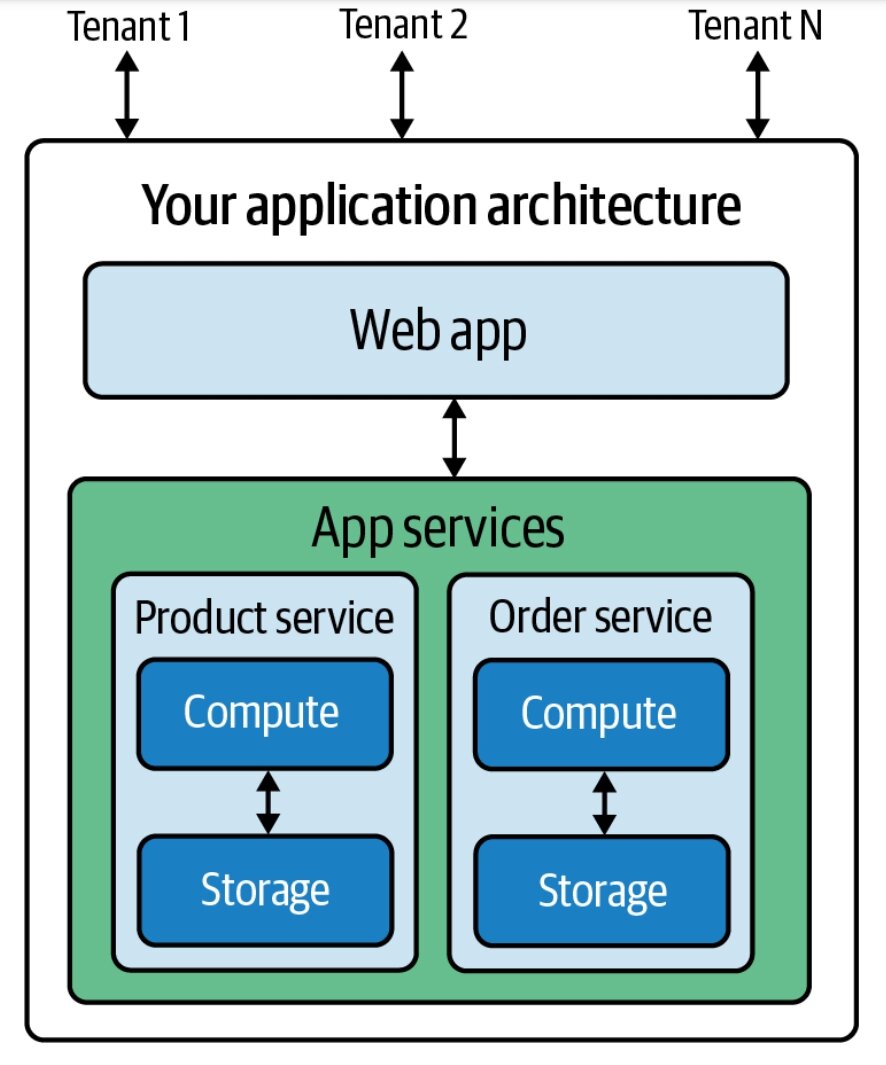
The alternative is a multi-tenant architecture, which is more like an apartment building. All tenants share the same application instance and underlying infrastructure, but their data is kept separate. This approach is far more cost-effective and scalable. A single software update benefits everyone, and resources are used much more efficiently. However, it introduces new challenges, particularly around ensuring one tenant's data is never visible to another and that no single tenant can hog all the resources.
Database Patterns for Multi-Tenancy
The choice of tenancy model directly shapes your database strategy. For multi-tenancy, there are three common patterns, each with its own set of trade-offs between isolation, cost, and complexity.
The most popular and cost-efficient pattern is a shared database with a shared schema. Here, all tenants' data resides in the same set of tables. To keep things separate, every table includes a special column, usually called tenant_id. Every single query your application makes must include a WHERE tenant_id = '...' clause to filter data for the correct customer.
A bug in your application code that forgets the
WHERE tenant_idclause could lead to a catastrophic data leak across tenants.
Because relying on application code alone is risky, many systems use Row-Level Security (RLS). This is a database feature that enforces data separation automatically. You define a security policy that links a database user to a specific tenant_id. The database then applies this filter to every query that user runs, providing a powerful safety net against application-level mistakes.
A second pattern is a shared database with a separate schema per tenant. In this model, each tenant gets their own dedicated set of tables within the same database instance, organised into a schema named for them (e.g., tenant_acme.invoices, tenant_globex.invoices). This provides stronger logical isolation than a shared schema and makes customising the schema for a specific tenant easier. However, it can become complex to manage as the number of tenants grows, and cross-tenant reporting becomes much harder.
The final and most isolated pattern is a separate database per tenant. This is the closest a multi-tenant application gets to a single-tenant setup. Each customer has a completely separate database instance. This offers the highest level of data isolation and eliminates the entirely. The downside is significant cost and operational overhead. Provisioning, managing, and backing up thousands of individual databases is a major engineering challenge.
Finding the Right Balance with a Hybrid Model
You don't have to choose just one model. A common strategy is to use a hybrid architecture. Most of your customers might be on a cost-effective shared-schema, multi-tenant stack. But for your large enterprise clients who have strict security requirements or demand guaranteed performance, you can offer a premium tier that provides them with a fully isolated, single-tenant instance or a dedicated database.
This approach allows you to capture the broad market with a scalable, low-cost offering while also meeting the demands of high-value customers. It acknowledges that there is no one-size-fits-all solution. The right architecture is one that aligns with your business goals, your customers' needs, and the trade-offs you are willing to make between cost, complexity, and isolation.