Rotordynamics of Overhung Rotors
Introduction to Rotordynamics
The Science of Spin
Nearly every complex machine has parts that spin. Think of a jet engine, a car's driveshaft, or the turbines in a power plant. The study of how these rotating parts behave is called rotordynamics. Its main goal is to understand and control vibrations in machinery. Unchecked, these vibrations can lead to noise, inefficiency, and even catastrophic failure.
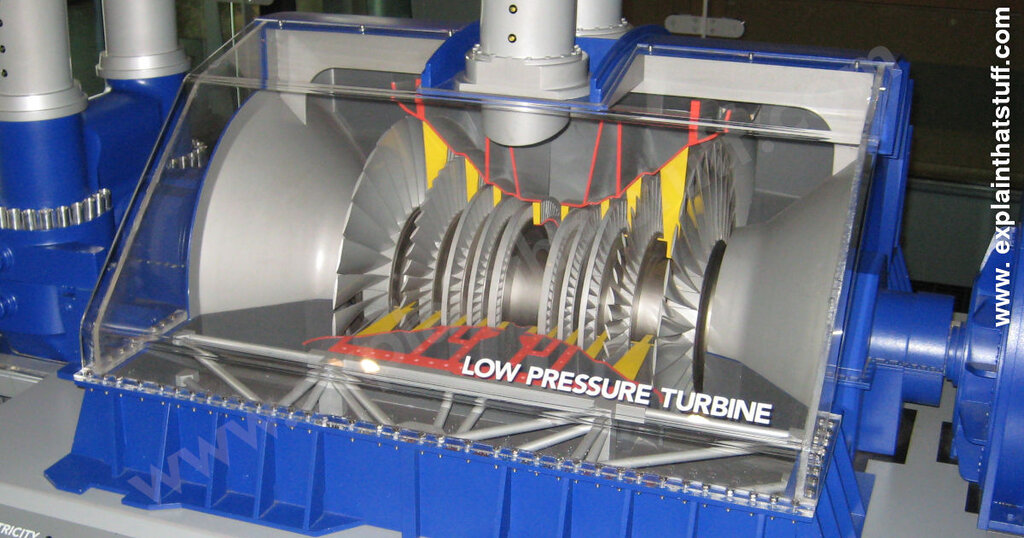
Rotordynamics helps engineers design systems that run smoothly and reliably. By analyzing how a spinning object, or rotor, will act under various conditions, they can prevent it from shaking itself apart. This involves looking at everything from the rotor's shape and material to its operating speed.
Rigid vs. Flexible Rotors
Engineers often simplify problems by starting with ideal models. In rotordynamics, the simplest model is the rigid rotor. This is a theoretical object that is perfectly stiff and doesn't bend or deform, no matter how fast it spins. It's a useful concept for analyzing heavy, stout components that rotate at low speeds, where bending is negligible.
In reality, every object flexes. A flexible rotor is a more realistic model that accounts for the fact that a shaft will bend and deform as it rotates. This bending might be microscopic, but at high speeds, even tiny imperfections can have major effects. Most modern rotordynamic analysis deals with flexible rotors, because high-performance machinery is all about being lightweight and fast.
The distinction is crucial. The behavior of a flexible rotor is much more complex. Its bending introduces new forces and vibrations that simply don't exist with a rigid rotor.
Critical Speed and Unbalance
Every physical system has a natural frequency—the frequency at which it prefers to vibrate if disturbed. Think of tapping a wine glass to hear it ring, or pushing a child on a swing. To get the swing higher, you have to push at just the right rhythm. That rhythm is its natural frequency.
A spinning rotor is no different. As its rotational speed increases, its vibration frequency increases too. When the speed of rotation matches one of the rotor's natural frequencies, something dramatic happens: resonance. The vibrations can grow dangerously large. This rotational speed is known as a critical speed.
resonance
noun
A phenomenon in which an external force or a vibrating system forces another system around it to vibrate with greater amplitude at a specific preferential frequency.
Operating a machine at or near its critical speed is like pushing the swing at the perfect moment every time. The rotor's bending will increase dramatically, causing severe vibrations that can damage bearings or even break the shaft. A key goal of rotordynamics is to predict these critical speeds so that engineers can design machinery to avoid them entirely or pass through them very quickly.
But what causes the vibration in the first place? Almost always, the answer is unbalance.
Unbalance occurs when the rotor's center of mass is not on its axis of rotation. No manufacturing process is perfect, so every real-world rotor has some slight imbalance—a tiny bit more mass on one side than the other. When the rotor spins, this off-center mass creates a centrifugal force that pulls the rotor outwards, causing it to wobble. The faster it spins, the stronger this force becomes.
At low speeds, this wobble might be minor. But as the speed approaches a critical speed, the unbalance force gets amplified by resonance, and the small wobble can turn into a violent vibration. This is why balancing is so important. Mechanics add or remove tiny weights from rotors, like the ones on your car's wheels, to shift the center of mass as close as possible to the axis of rotation.

Let's test your understanding of these core concepts.
What is the primary goal of rotordynamics?
A theoretical object that is perfectly stiff and does not bend or deform as it spins is known as a ________ rotor.
Understanding these fundamentals—the difference between rotor types, the danger of critical speeds, and the effect of unbalance—is the first step in designing rotating machinery that is safe, efficient, and durable.