Rotor Balancing Fundamentals
Introduction to Rotor Dynamics
The Science of Spin
Nearly everything that moves on a large scale, from a car's engine to a power plant's turbine, relies on something spinning. Rotor dynamics is the study of these rotating objects and the forces that act on them. It's the science that keeps our machines running smoothly, quietly, and safely.
Think about a spinning top. When it's perfectly balanced and spinning fast, it stands upright and seems almost still. But if it's slightly off-kilter, it wobbles. That wobble is the core of what rotor dynamics analyzes. In an industrial machine, a wobble isn't just a minor annoyance; it can lead to noise, damage, and inefficiency. Understanding these dynamics helps engineers design and maintain everything from tiny dental drills to massive jet engines.
Anatomy of a Rotating Machine
At its heart, a rotating system has two main parts. The rotor is the component that spins. The stator is the stationary part that houses and supports the rotor.
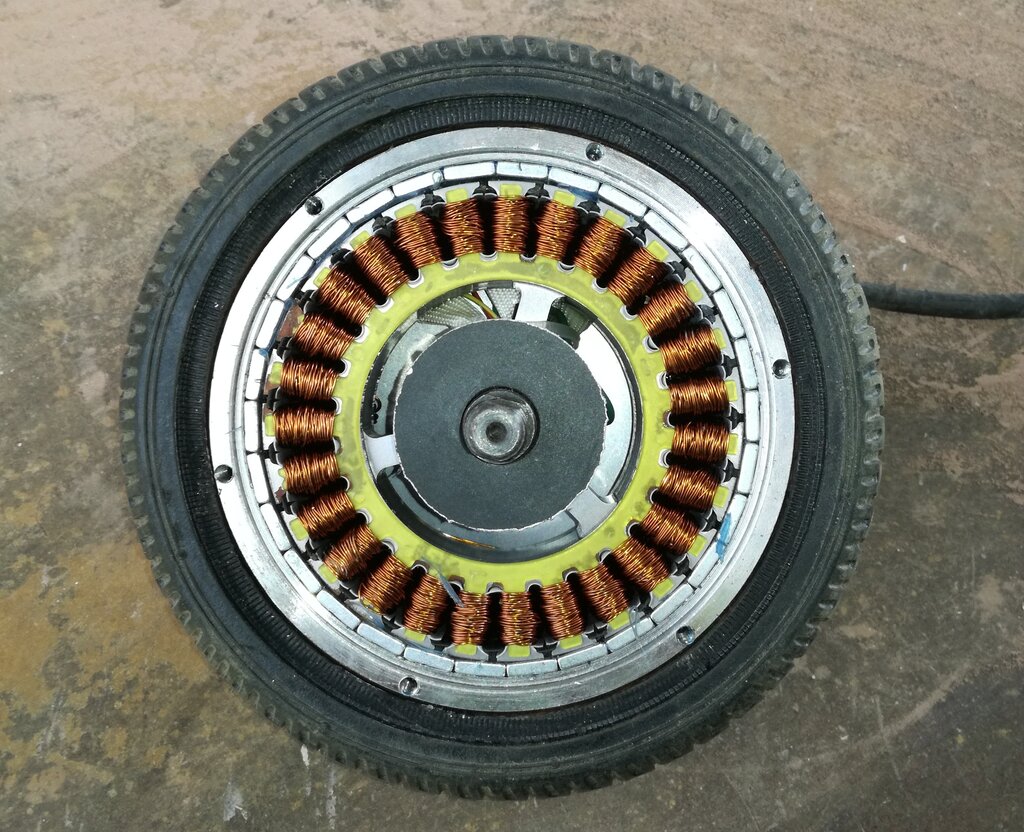
Every object has a center of mass, which is the single point where its entire weight can be considered to act. In a perfectly designed rotor, this center of mass lies exactly on the axis of rotation, the imaginary line it spins around. When these two align, the rotor spins smoothly. All the forces are balanced, and the rotation is stable.
This perfect alignment is the goal of all rotating machinery design. It ensures that the machine operates with minimal vibration and stress on its components, like bearings and shafts.
The Problem of Unbalance
In the real world, perfect balance is nearly impossible to achieve. Tiny imperfections in manufacturing, slight variations in material density, or even a small amount of dirt can shift the rotor's center of mass away from its axis of rotation. This condition is called unbalance.
The most common example of unbalance is a washing machine during its spin cycle. If the wet clothes clump together on one side of the drum, the machine thumps and shakes violently. You're witnessing an unbalanced rotor in action.
When an unbalanced rotor spins, the offset mass creates a centrifugal force that pulls the rotor away from its center. Since the rotor is spinning rapidly, this force changes direction continuously, creating a constant vibration. This vibration isn't just noisy and annoying; it has serious consequences for the machine.
| Effect | Description |
|---|---|
| Vibration & Noise | The most obvious symptoms. Can range from a slight hum to violent shaking. |
| Increased Wear | Vibration puts extra stress on bearings, seals, and shafts, causing them to wear out faster. |
| Reduced Efficiency | Energy is wasted creating vibration and heat instead of doing useful work. |
| Catastrophic Failure | In extreme cases, severe vibration can cause parts to break, leading to total machine failure. |
Because of these risks, identifying and correcting unbalance is a critical part of machine maintenance. Understanding the fundamentals of rotor dynamics is the first step in diagnosing why a machine might be shaking and how to make it run smoothly again.