Roman Political Constellation Shifts
Early Roman Monarchy
The First Kings of Rome
Rome's story begins not as a republic or an empire, but as a small kingdom on the Tiber River. According to tradition, the city was founded in 753 BCE by Romulus, its first king. While the tales of Romulus and his twin brother Remus are steeped in myth, they point to a real historical period when kings ruled Rome.
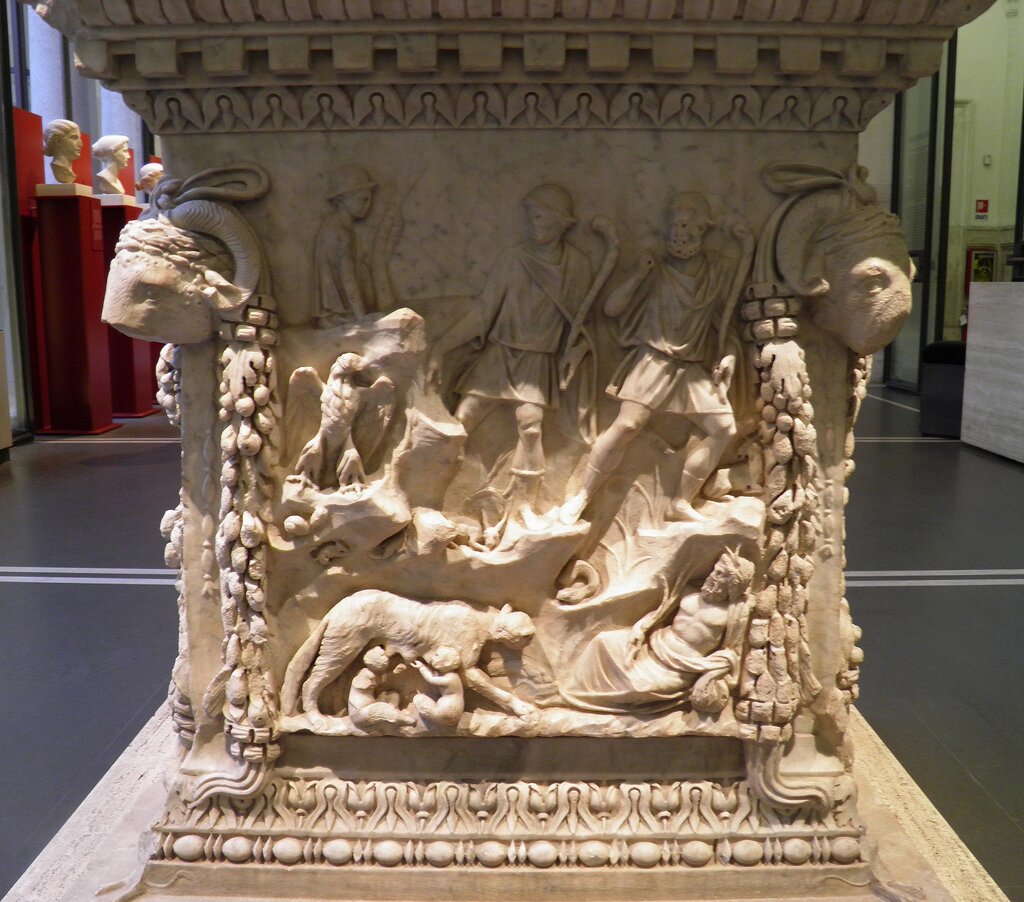
Ancient historians list a total of seven kings, starting with Romulus and ending with Lucius Tarquinius Superbus, or Tarquin the Proud. Unlike many monarchies, the Roman Kingdom was not strictly hereditary. When a king died, Rome entered a period called an interregnum, where a temporary ruler would oversee the selection of a new king. The Senate, a council of elders, would nominate a candidate, and an assembly of the people would vote to confirm him.
Power of the King
The Roman king held a powerful, all-encompassing authority known as imperium. This gave him supreme command in several key areas of Roman life. He was the commander-in-chief of the army, leading Rome's forces in war. He also served as the chief priest, responsible for maintaining peace with the gods on behalf of the city. Finally, the king was the ultimate lawmaker and judge, with the final say in legal disputes.
This concentration of military, religious, and judicial power in one person meant the king's authority was nearly absolute.
To assist him, the king had official attendants called lictors. These men carried the fasces, a bundle of rods bound around an axe. This symbol represented the king's power to enforce his laws, including the authority to punish and execute.
Roman Society
Early Roman society was divided into two main classes: the patricians and the plebeians. The patricians were the aristocracy, a small group of wealthy families who owned most of the land and held nearly all political influence. The plebeians, or plebs, were the common people, including farmers, merchants, and artisans. While they were citizens, they had far fewer rights and little say in government.
The Monarchy established a foundational legal system rooted in tradition, religious authority, and aristocratic control.
Two key institutions existed alongside the king. The first was the Senate, an advisory council made up of the heads of patrician families. The king was expected to consult the Senate on important matters, though he was not bound by its advice. The second was the Curiate Assembly (Comitia Curiata), which included all male citizens. Its role was limited, but it was responsible for formally conferring imperium on a new king and witnessing important legal acts like adoptions and wills.
The End of the Monarchy
The reign of kings ended abruptly around 509 BCE. The last king, Tarquin the Proud, was depicted by later Roman historians as a cruel tyrant who abused his power. The final straw was a scandal involving his son, which led a group of aristocrats led by Lucius Junius Brutus to rise up and expel Tarquin and his family from the city.
After driving out the king, the leading citizens of Rome swore an oath to never again be ruled by a single man. They replaced the monarchy with a new form of government: the Republic. This new system was designed to prevent any one individual from gaining absolute power, distributing authority among elected officials and assemblies. The transition was a pivotal moment, setting the stage for Rome's future growth and conquests.