Roman Imperial Governance and Expansion
Augustan Principate Transition
The Architect of the Empire
The Roman Republic was broken. A century of civil wars, political assassinations, and crumbling institutions had left it a shadow of its former self. After the death of his great-uncle, Julius Caesar, a young man named Octavian navigated the treacherous political landscape, defeated his rivals, and emerged as the sole ruler of Rome. But he faced a critical problem: Romans had a deep-seated hatred for kings. The very foundation of their Republic was built on overthrowing a monarchy. How could he rule with absolute power without being called a king and meeting a fate similar to Caesar's?
His solution was a political masterpiece of subtlety and power. Instead of declaring himself a dictator or monarch, he created a new system we call the Principate. He adopted the title 'Princeps', which simply meant 'first citizen'. It was a carefully chosen word, implying he was merely the first among equals in the Senate, not a master ruling over subjects. This gesture was the cornerstone of his new order, maintaining the illusion of the Republic while fundamentally changing its reality.
Augustus presented himself not as a revolutionary, but as a restorer of traditional Roman values and institutions. This public relations campaign was crucial for his political survival.
Rewriting the Rules
To legitimise his authority, Augustus enacted two major constitutional settlements. The first, in 27 BC, was a show of brilliant political theatre. He publicly relinquished all his powers to the Senate, symbolically 'restoring' the Republic. In a display of calculated gratitude, the Senate begged him to reconsider and granted him authority over several key provinces, including those with the largest military forces. They also bestowed upon him the honorific name 'Augustus', meaning 'revered' or 'majestic'.
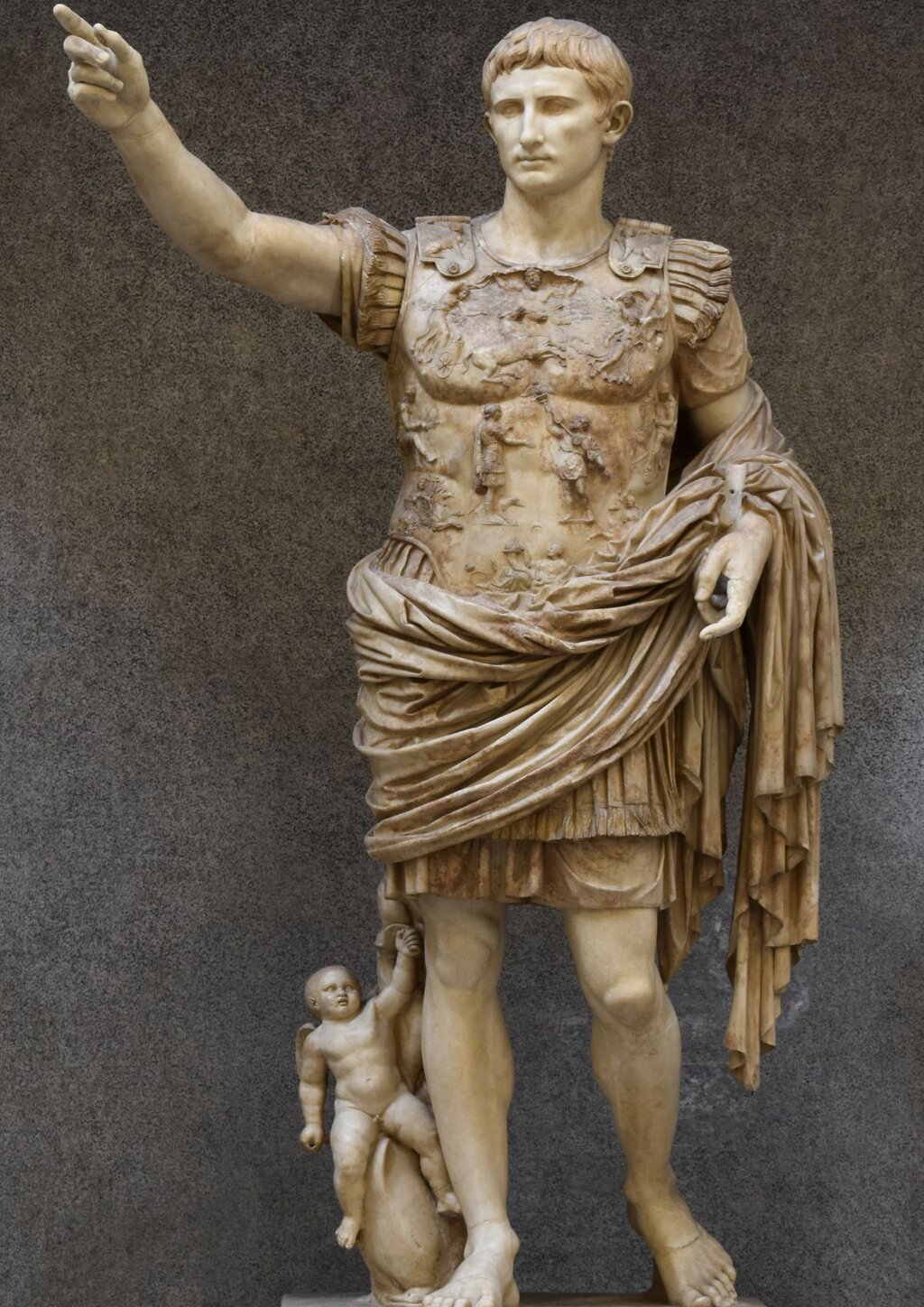
The Second Constitutional Settlement came in 23 BC. Augustus gave up the prestigious role of consul but in return received two crucial powers: 'maius imperium' (supreme military command) and 'tribunicia potestas' (the power of a tribune). The latter was a stroke of genius. Tribunician power gave him the ability to veto any magistrate or the Senate, convene the Senate, and propose legislation. Crucially, it made his person sacrosanct, meaning it was a capital offence to harm or obstruct him. He now had more power than any king, all under the guise of Republican tradition.
A Professional Military
The armies of the late Republic were loyal to their generals, not to the state. This was a primary cause of the civil wars. Augustus knew this had to change. He undertook a massive professionalisation of the Roman legions. Soldiers now swore an oath directly to the emperor and served a fixed term of 20-25 years. Upon retirement, they were guaranteed a pension, usually in the form of land or a significant sum of money. This created a standing, professional army whose loyalty was to Augustus and his successors, not to ambitious individual commanders. This reform stabilised the frontiers and removed the army as a rogue element in Roman politics, at least for a time.
He also created a new, elite unit: the s. These were his personal bodyguards, stationed in and around Rome. While their official purpose was to protect the emperor, their presence served as a powerful political tool. They were a constant, visible reminder of the emperor's military might and could quickly suppress any dissent in the capital. Over time, this guard would become a formidable political force in its own right, capable of making or breaking emperors.
Beyond politics and the military, Augustus also sought to be a moral reformer. After decades of social upheaval, he introduced laws to encourage marriage, reward families with children, and penalise adultery and celibacy among the elite. These laws were part of his broader programme to restore the 'mos maiorum', or ancestral customs, and bring back a sense of order and traditional virtue to Roman society. Through these interlocking reforms, Augustus built a system that blended autocracy with tradition, creating the administrative framework that would sustain the Roman Empire for centuries.
What was the primary political problem Octavian (later Augustus) faced after gaining sole power in Rome?
The title Augustus adopted, 'Princeps', translates to what?