Roman Art Through the Ages
Introduction to Roman Art
A Practical Art
Roman art wasn't just for decoration. It was a tool of power, a historical record, and a public statement. While the Greeks often pursued an ideal of perfect beauty, the Romans were master engineers and pragmatists. Their art reflected this mindset. It celebrated real people, documented military victories, and engineered massive public structures designed to impress and serve the people of the Empire.
From the early days of the Republic to the height of the Empire, Roman art absorbed and adapted styles from the cultures it conquered. It was a sponge, taking the best ideas from its neighbors and reshaping them into something uniquely Roman.
Borrowing from the Best
Before Rome was an empire, it was a small city-state on the Italian peninsula, surrounded by other cultures. Two of its most significant artistic influences were the Etruscans and the Greeks.
The Etruscans, who flourished in Italy before the Romans rose to prominence, gave the Romans their initial lessons in architecture and realistic portraiture. Early Roman temples, for example, adopted many Etruscan features.
But the most profound influence came from the Greeks. As Rome expanded and conquered Greek territories, Roman generals brought back countless Greek sculptures as spoils of war. The Romans fell in love with Greek art's elegance and idealized forms. Wealthy Romans commissioned copies of famous Greek statues to decorate their homes and gardens.
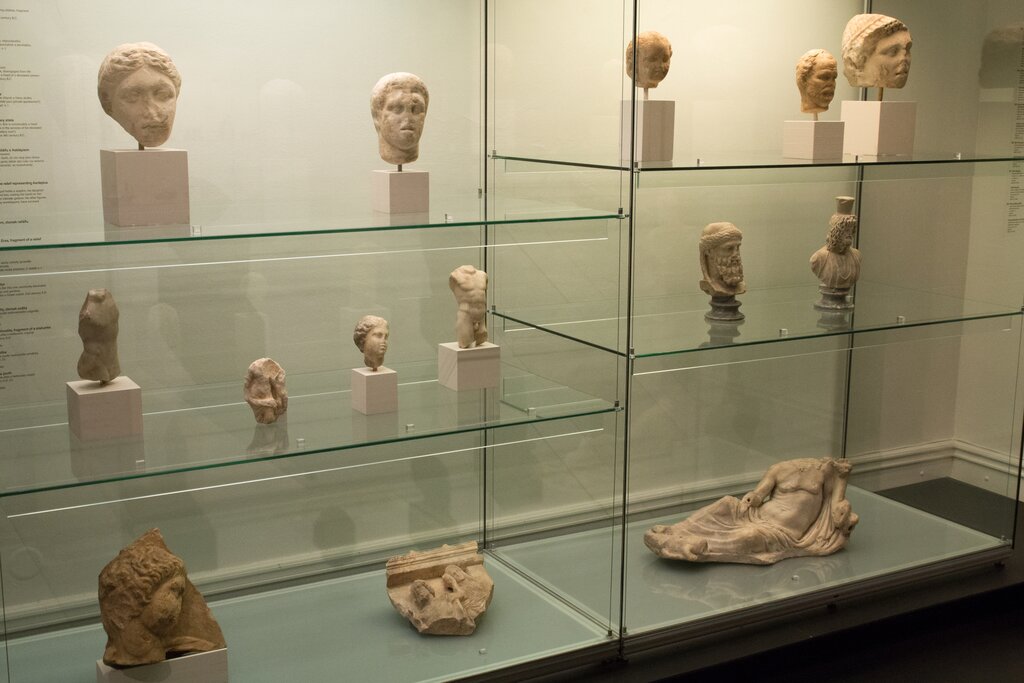
This wasn't simple plagiarism. The Romans adapted Greek styles for their own purposes, blending the idealized bodies of Greek gods with the realistic faces of Roman emperors. It was a way of connecting their leaders to the divine and legendary past.
The Roman Signature
Despite these influences, the Romans developed their own distinct artistic identity, especially in sculpture and architecture.
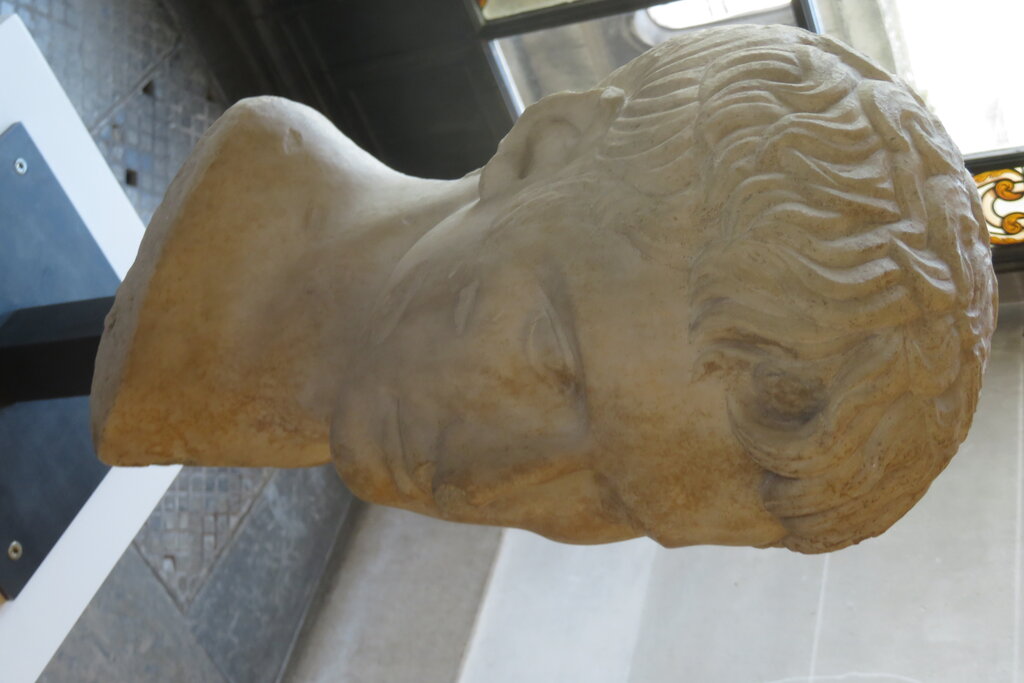
In sculpture, the key Roman innovation was a commitment to realism. While Greek statues often depicted flawless, idealized youths, Roman portraits showed every wrinkle, wart, and receding hairline. This style, known as verism, was rooted in the Roman tradition of honoring ancestors by displaying wax masks of their faces. For the Romans, a portrait had to be an honest likeness, capturing the subject's character and experience.
In architecture, the Romans were true revolutionaries. They moved beyond the Greek post-and-lintel system (two posts holding up a beam) by mastering the arch, the vault, and the dome. These innovations, combined with their pioneering use of concrete, allowed them to create vast, open interior spaces and build on a scale never seen before.
Think of the soaring dome of the Pantheon or the massive arches of the Colosseum. These weren't just buildings; they were engineering marvels that broadcasted the power and ingenuity of Rome.
Art as Power
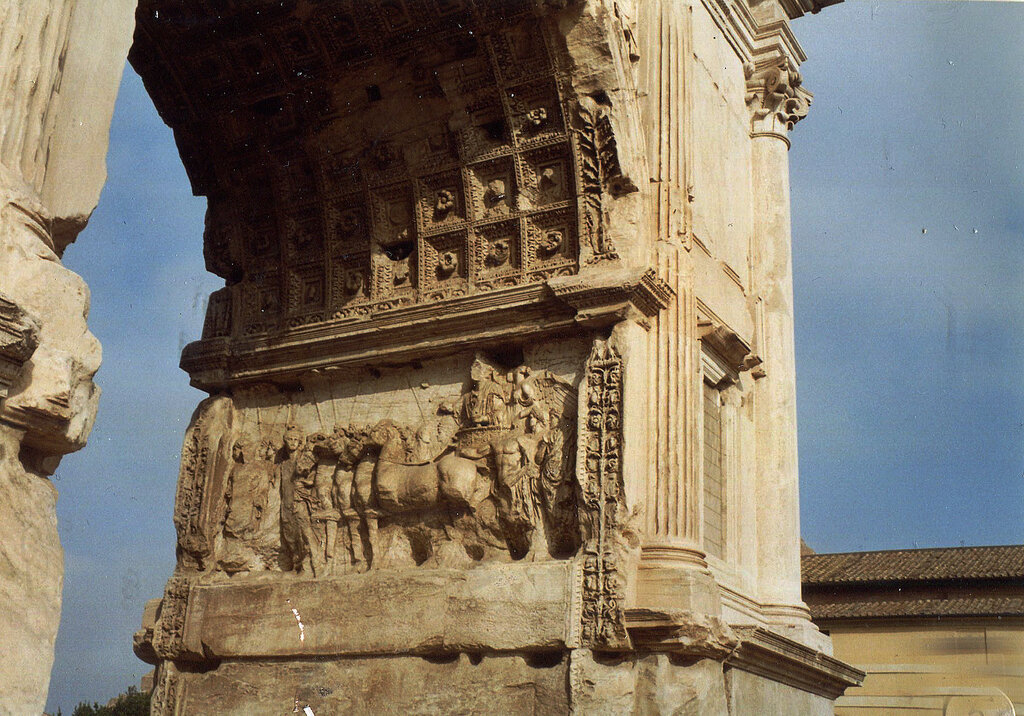
Ultimately, Roman art served the state. Emperors used portraits to craft their public image, distributing busts and statues across the empire so that citizens everywhere knew what their ruler looked like. Triumphal arches, like the Arch of Titus, were covered in relief sculptures that told the story of military victories, functioning like giant billboards for imperial success.
This fusion of Greek aesthetics, Etruscan realism, and Roman engineering created an artistic legacy that was both practical and powerful. It was an art form that documented history, honored individuals, and built an empire.
By understanding these foundations, we can see how Roman art was not just an imitation of what came before, but a purposeful and powerful expression of a civilization that changed the world.