ROI vs ROIC
Introduction to Financial Metrics
Checking a Company's Vitals
How do you know if a business is healthy? Just like a doctor checks your heart rate and blood pressure, investors use financial metrics to check a company's financial health. These metrics are simple calculations that turn complex financial statements into straightforward, comparable numbers.
They help answer basic but crucial questions: Is this company making money? Is it using its resources wisely? Is it a good place to put my money? Let's look at two of the most fundamental metrics that help answer these questions.
Return on Investment (ROI)
Return on Investment, or ROI, is one of the most common financial metrics. It's a simple way to measure the profitability of a specific investment. In short, ROI tells you how much money you made compared to how much money you spent.
Return on Investment (ROI)
noun
A performance measure used to evaluate the efficiency or profitability of an investment. It measures the amount of return on a particular investment, relative to the investment's cost.
Think of it this way: if you buy a classic car for $20,000 and sell it a year later for $25,000, your return is $5,000. Your ROI helps put that $5,000 gain into perspective relative to the initial cost.
The main purpose of ROI is to measure the direct financial gain from a single investment. It answers the question, "For every dollar I put in, how much did I get back?"
Return on Invested Capital (ROIC)
Return on Invested Capital (ROIC) is a bit broader than ROI. Instead of looking at one specific project, ROIC measures how well a company is using all of its money—both from investors and lenders—to generate profits. It gives you a big-picture view of the company's efficiency.
Return on Invested Capital (ROIC)
noun
A ratio used to assess a company's efficiency at allocating the capital under its control to profitable investments. It shows how well a company is using its money to generate returns.
A company might have a great ROI on one project, but if the rest of the business is inefficient, its ROIC might be low. This metric is especially useful for comparing different companies in the same industry. A company with a consistently high ROIC is likely well-managed and has a strong competitive advantage.
The purpose of ROIC is to gauge the overall operational efficiency of a company. It answers the question, "How good is the entire company at turning capital into profit?"
Why These Metrics Matter
Understanding metrics like ROI and ROIC is fundamental for making smart investment decisions. They cut through the noise of day-to-day news and provide a clear, standardized way to evaluate a company's performance. They allow you to compare an investment in a tech startup to one in a real estate property, using the same language of risk and return.
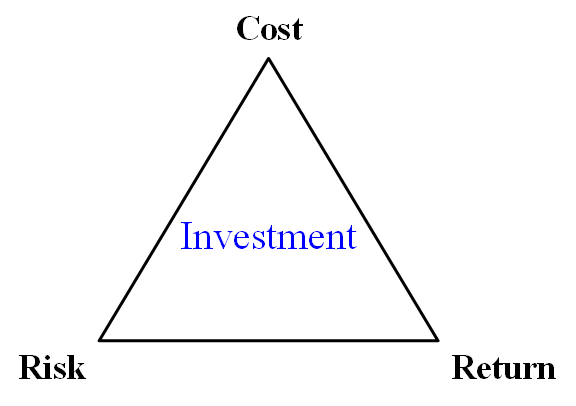
By getting comfortable with these basic vitals, you can move beyond gut feelings and start making decisions based on financial evidence. It's the first step toward building a solid understanding of how businesses create value.
Stick to core metrics like revenue growth, profit margins, ROI, and cash flow.
Let's review these key terms.
Now, check your understanding.
What is the primary purpose of using financial metrics like ROI and ROIC?
Which statement best describes the difference between Return on Investment (ROI) and Return on Invested Capital (ROIC)?
These simple metrics are powerful tools. They provide the foundation for analyzing any investment opportunity, helping you see which businesses are truly creating wealth.