Rocket Construction Basics
Introduction to Rocketry
How Rockets Fly
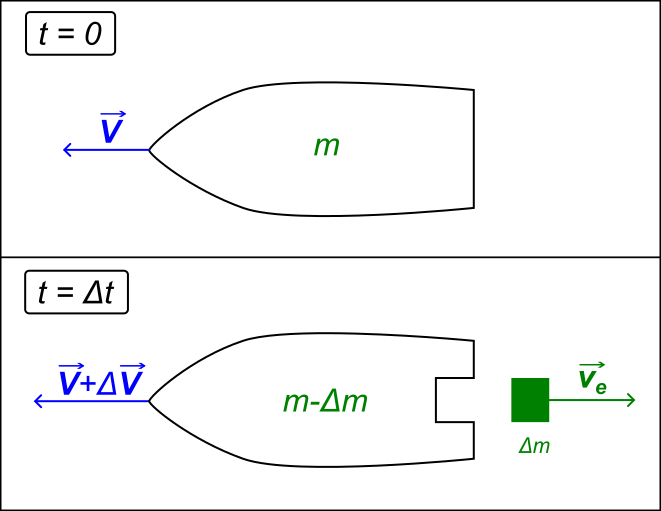
A rocket works by throwing stuff out its back end. That’s it. It might seem too simple, but it’s the fundamental principle. Imagine you’re stranded in the middle of a frozen, frictionless lake, and you have a bowling ball. If you throw the ball away from you, you'll slide in the opposite direction. A rocket does the same thing, but instead of a bowling ball, it throws a massive amount of hot gas out of its engines at incredible speeds.
This principle is neatly described by Newton's Third Law of Motion: For every action, there is an equal and opposite reaction. The "action" is the rocket pushing hot exhaust gases downward. The "reaction" is the exhaust gases pushing the rocket upward.
The rocket doesn't need to push against the air or the ground. In fact, it works even better in the vacuum of space where there's nothing to push against and no air resistance to slow it down.
The Laws of Motion
To truly understand rocketry, we need to look at all three of Isaac Newton's laws of motion. They are the rulebook for how things move.
Think of Newton's laws of motion as the instruction manual for the universe.
Law 1: Inertia An object at rest stays at rest, and an object in motion stays in motion unless acted upon by an external force. A rocket on the launchpad won't go anywhere until its engines ignite and provide an upward force greater than gravity. Once in space, it will coast forever in a straight line until it fires its engines again or is pulled by gravity from a planet or star.
Law 2: Force, Mass, and Acceleration This law is often written as the equation . It means the acceleration () of an object depends on two things: the force () applied to it and its mass (). To get more acceleration, you can either increase the force or decrease the mass.
This is why rockets are so powerful—their engines create a massive amount of force (thrust). It's also why rockets have stages. As the rocket ascends, it sheds empty fuel tanks and heavy engines, reducing its mass. With less mass to push, the remaining engines can accelerate the rocket much more effectively.
Law 3: Action and Reaction We've already seen this one. The rocket expels mass (hot gas) in one direction, creating a force that pushes the rocket in the opposite direction. This is the essence of propulsion.
A Quick History
The first rockets weren't aimed at the stars. Around the 13th century, Chinese engineers used gunpowder to create "fire arrows," which were more for startling enemies than causing damage. For centuries, rocketry was mostly used for fireworks and warfare.
The idea of using rockets for space travel didn't gain serious traction until the late 19th and early 20th centuries. A Russian schoolteacher named Konstantin Tsiolkovsky developed the key theories of rocketry, including the famous "rocket equation," but he never built a rocket himself.
The first person to build and launch a liquid-fueled rocket was the American professor Robert Goddard. In 1926, his small rocket flew for just 2.5 seconds and reached a height of 41 feet. It wasn't impressive by today's standards, but it proved the concept worked.
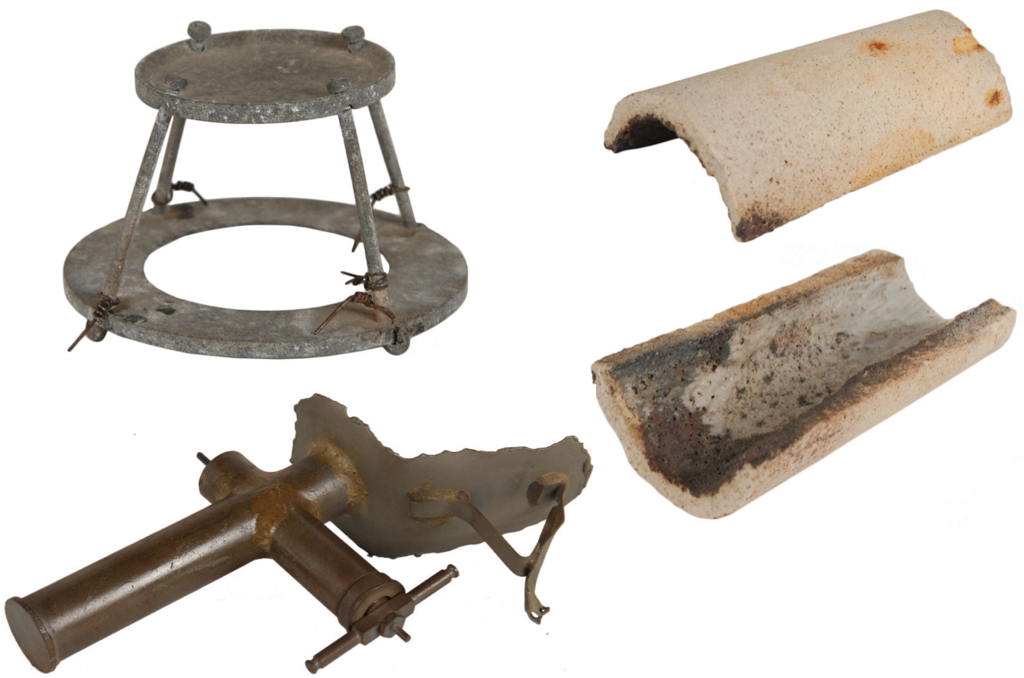
Rocket technology took a giant leap forward with the German V-2 rocket during World War II. It was a terrifying weapon, but its design laid the groundwork for the rockets that would later kick off the space race. Many of its lead engineers, including Wernher von Braun, later went to work for the United States, developing the rockets for NASA's Apollo program.
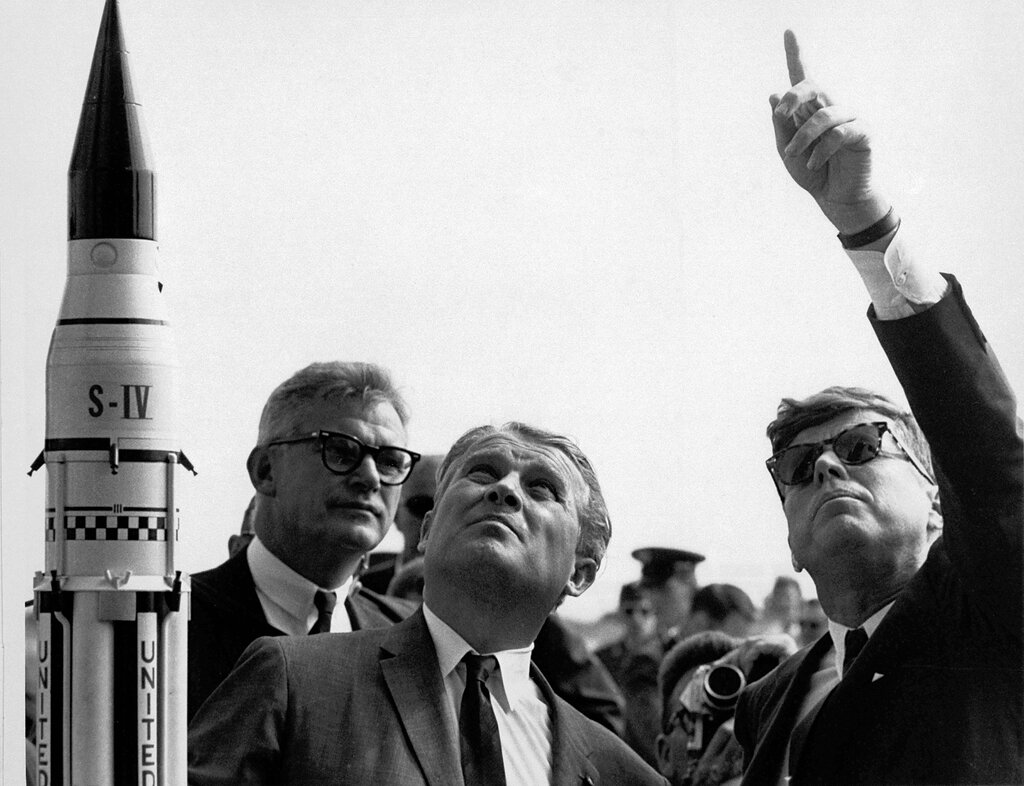
From fire arrows to the mighty Saturn V that took humans to the Moon, the core principle remains the same: action and reaction.
What fundamental principle allows a rocket to generate thrust?
According to Newton's Second Law, expressed as , why do rockets have stages that detach during flight?