Robotics Force and Torque Sensors Evolution
Introduction to Force and Torque in Robotics
The Push and Pull of Robots
At its core, a robot's job is to interact with the world. This interaction almost always involves a push or a pull. When a robotic arm picks up a box, it's applying a push. When a wheeled robot starts moving, its motors are pushing against the floor. This fundamental push or pull is what we call force.
Force is any interaction that, when unopposed, will change the motion of an object. In simpler terms, it's a push or a pull.
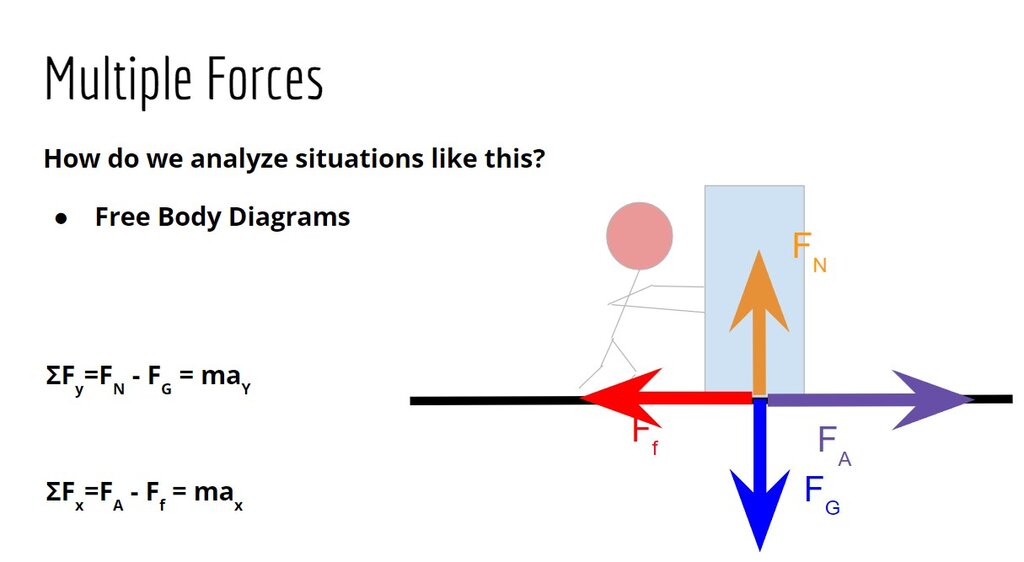
Force isn't just about whether you push, but how hard. We measure force in Newtons (N). One Newton is the force needed to make a 1-kilogram object accelerate at 1 meter per second squared. For a more down-to-earth reference, holding a small apple in your hand exerts a force of about 1 N on your palm.
This relationship between force, mass, and acceleration is captured in one of physics' most famous equations, Newton's Second Law.
Here, is force, is mass, and is acceleration. For a robot to lift a heavy object (large ), it needs to generate a large upward force. To make a robot move quickly (large ), its motors must produce a strong force.
The Force for Twisting
But robots do more than just push and pull in straight lines. They rotate, pivot, and turn. Think about opening a door. You don't just push on it randomly. You push on the handle, far from the hinges. Pushing on the hinge-side of the door won't do much at all, even if you push with the same amount of force. The force that causes rotation has a special name: torque.
torque
noun
A twisting force that tends to cause rotation. It's calculated by multiplying the force by the distance from the pivot point.
Torque depends on two things: how much force you apply, and where you apply it. The distance from the pivot point (like the door hinge) to where you apply the force is called the lever arm. A longer lever arm means you can generate the same amount of torque with less force. That's why wrenches have long handles.
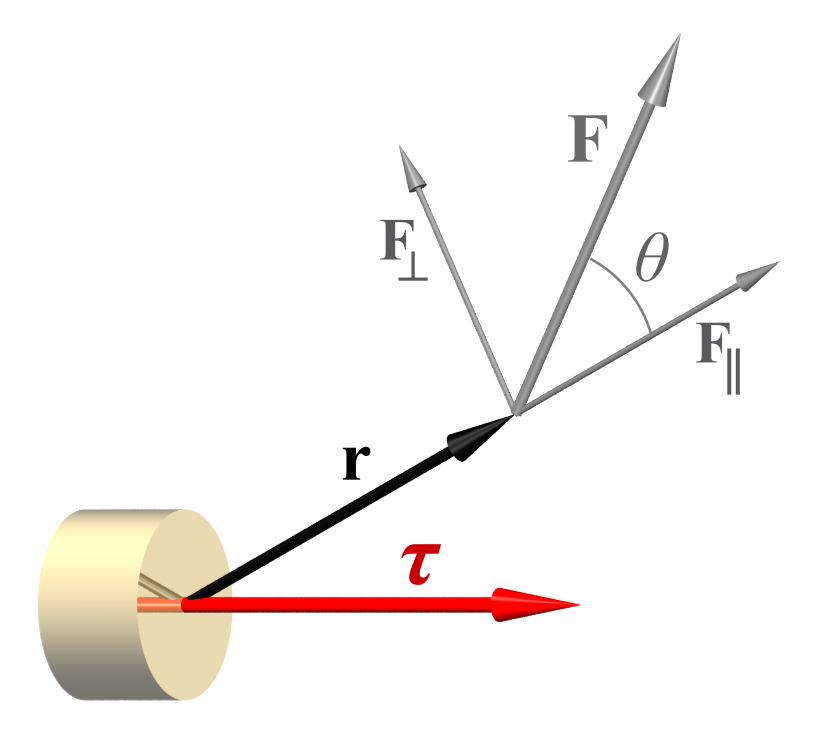
We measure torque in Newton-meters (Nm). If you have a wrench that is 1 meter long and you push on the end with 1 Newton of force, you've created 1 Nm of torque. Most robotic joints, like an elbow or shoulder, are driven by motors that produce torque to make the arm segments rotate.
Controlling the Interaction
Understanding force and torque is critical in robotics because robots need to control their interactions precisely. A factory robot needs to apply enough force to insert a part, but not so much that it breaks it. It needs to generate the right amount of torque at its joints to move a heavy car door smoothly and accurately.
How do robots know how much force or torque they're using? They use sensors. The most common way to measure these is with a device called a strain gauge. A strain gauge is a sensor whose electrical resistance changes when it's stretched or compressed. By attaching it to a robot's part, engineers can measure how much that part is deforming under a load. This tiny change in shape is directly related to the force or torque being applied.
Force and torque sensors allow a robot to "feel" its environment, enabling delicate tasks that require a sense of touch.
For example, a force-torque sensor might be placed in a robot's wrist, right before the gripper. This allows the robot's control system to get direct feedback on the forces of pushing, pulling, and twisting that the gripper is experiencing. With this information, the robot can perform complex tasks like sanding a surface with consistent pressure or carefully placing a fragile object.
What is the fundamental push or pull that a robot uses to interact with the world?
A robot needs to apply 10 N of force to accelerate a 2 kg box at . If the robot needs to move a new 4 kg box at the same acceleration, how much force must it apply?
By mastering the application of force and torque, robots can move from being simple machines that follow a path to sophisticated systems that can safely and effectively interact with the world around them.