Robotics Engineering and Autonomous Vehicles
Introduction to Robotics
What is a Robot?
At its heart, a robot is a machine designed to carry out a series of actions automatically. The word itself comes from the Czech word “robota,” meaning forced labor. But modern robots are much more than just mechanical workers. They are complex systems that can perceive their environment, make decisions, and take physical actions.
Robotics
noun
The branch of technology that deals with the design, construction, operation, and application of robots.
All robots, from a simple automated vacuum cleaner to a sophisticated Mars rover, operate on a fundamental loop: they sense the world around them, process that information, and then act upon it. This “sense-think-act” cycle is the core principle of robotics.
A Brief History
The idea of automated machines has captivated human imagination for centuries, from ancient myths of mechanical servants to Leonardo da Vinci's designs for a humanoid knight. However, the field of robotics as we know it began to take shape in the 20th century.
The 1950s and 60s were a pivotal time. In 1961, a one-armed robotic giant named Unimate joined the assembly line at a General Motors plant. It was the world's first industrial robot, and its job was to lift and stack hot pieces of metal, a dangerous task for humans. Unimate's success kicked off a revolution in manufacturing.
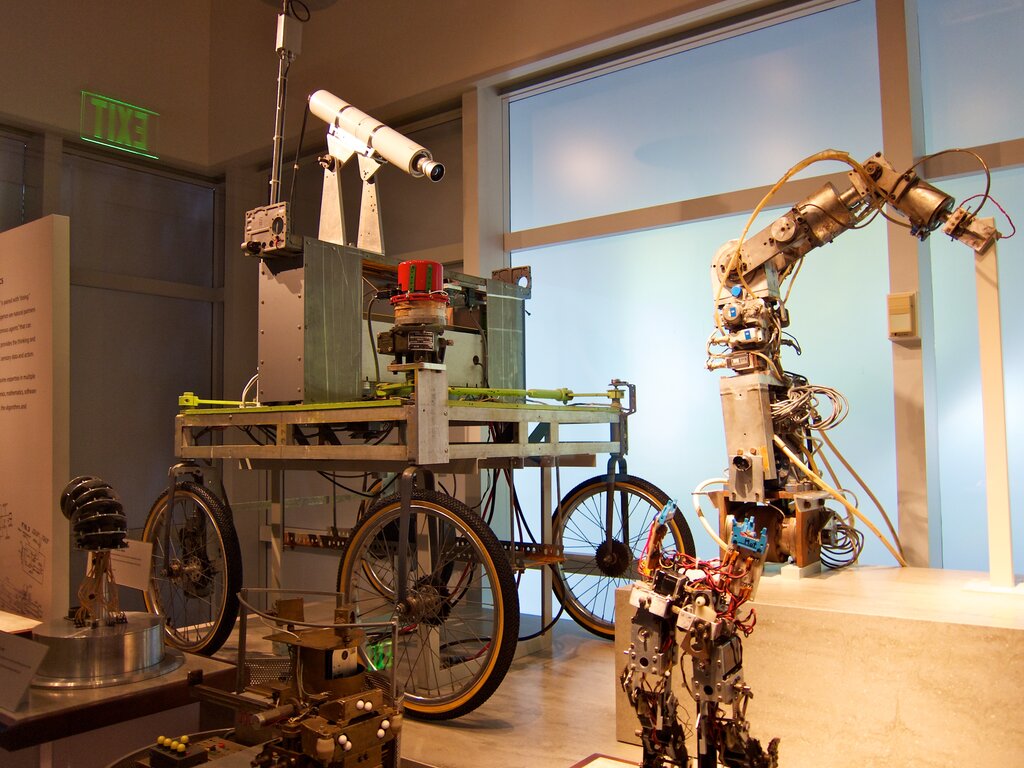
Early robots were pre-programmed to perform the exact same task over and over. They were strong and precise, but not smart. As computer processing power grew, so did the potential for robots. They started gaining sensors to see and feel, and more advanced brains to make decisions in unpredictable environments, paving the way for the autonomous machines we see today.
The Building Blocks of a Robot
Every robot is made up of a few key components that work together to enable the sense-think-act cycle. Understanding these parts helps demystify how a robot works.
-
Sensors: These are the robot's senses. They collect data about the robot itself and the world around it. Common sensors include cameras for vision, microphones for sound, and touch sensors to detect physical contact.
-
Controller (Processor): This is the robot's brain. It's a computer that takes the information from the sensors and uses its programming to decide what to do next. It runs the software that gives the robot its instructions.
-
Actuators: These are the parts that create movement. They are the muscles of the robot. Actuators include electric motors to spin wheels, gears to move limbs, and grippers to pick up objects. They turn the controller's decisions into physical action.
A robot sees a red light with its camera (sense), its controller identifies it as a stop signal (think), and it sends a command to the wheel motors to brake (act).
Types of Robots and Their Uses
Robots come in all shapes and sizes, designed for countless different tasks. While there are many ways to classify them, they often fall into a few broad categories based on their application.
| Robot Type | Description | Examples |
|---|---|---|
| Industrial Robots | Machines used in manufacturing and production. Often large, powerful robotic arms fixed in one place. | Assembly line arms, welders, packaging robots. |
| Service Robots | Assist humans, typically by performing repetitive or difficult jobs. Can be for professional or domestic use. | Robotic vacuums, automated warehouse clerks, delivery drones. |
| Medical Robots | Used in the healthcare industry to improve patient care and assist medical professionals. | Surgical assistants, robotic exoskeletons for rehabilitation. |
| Exploration Robots | Designed to go to places that are dangerous or inaccessible for humans. | Mars rovers, underwater submersibles for deep-sea research. |
| Educational Robots | Tools for teaching programming, engineering, and problem-solving skills in a hands-on way. | LEGO Mindstorms, robotics kits for students. |
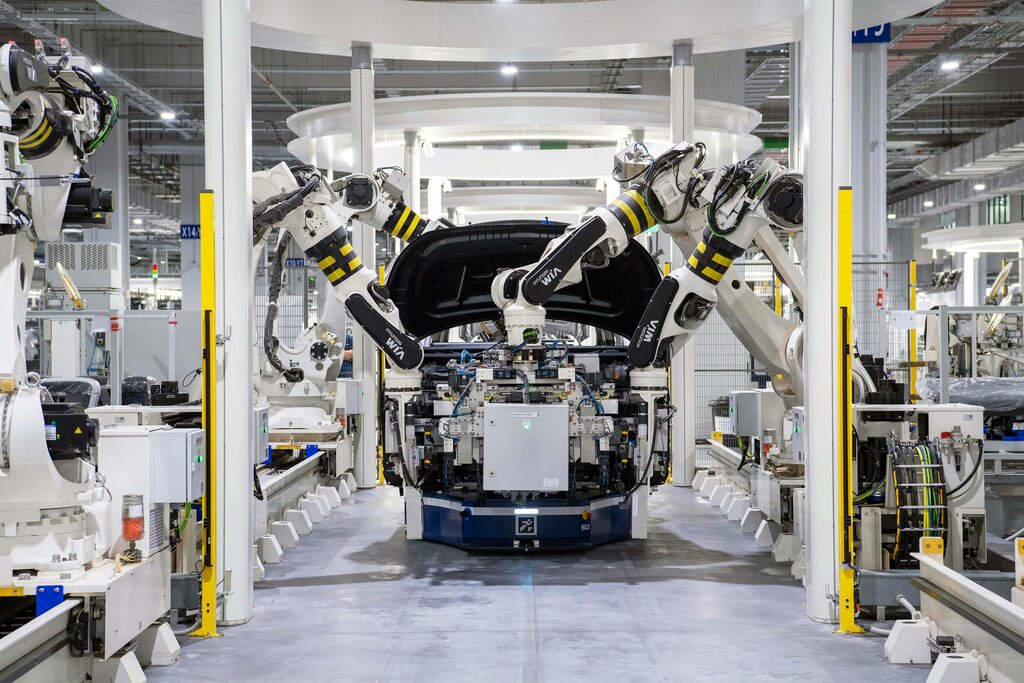
From the factory floor to the operating room and even the surface of another planet, robotics is a field that's constantly expanding. Understanding these fundamentals is the first step toward exploring more advanced applications, like the autonomous systems that power self-driving cars.
What is the fundamental operational loop that all robots follow?
What component of a robot is considered its 'brain,' responsible for processing data and making decisions?