Robotics Course Creation for High School Seniors
Introduction to 3D Printing
From Idea to Object
At its heart, 3D printing is simple. Imagine drawing a shape with a hot glue gun. Now imagine that glue hardens instantly. If you draw the same shape right on top of the first one, you've created a second layer. Repeat this hundreds of times, and you've built a three-dimensional object. That's the core idea behind 3D printing, also known as additive manufacturing.
Instead of carving a block of wood or stone away to reveal a shape, you build the shape from the ground up, one thin layer at a time. This process turns a digital file on your computer into a physical object you can hold in your hand.
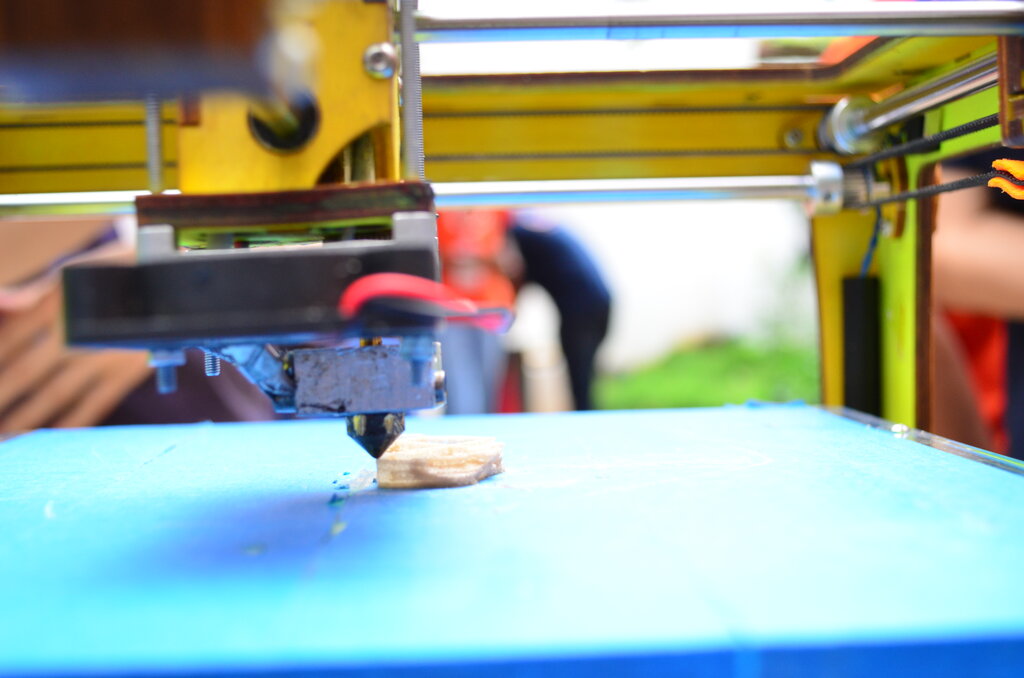
The technology first appeared in the 1980s, when it was called stereolithography. For decades, it was a niche tool used by large companies for creating prototypes. It was expensive, slow, and complex. But as patents expired and technology improved, smaller, more affordable printers became available. Today, 3D printers are found in workshops, classrooms, and homes around the world, making everything from custom tools to artistic sculptures.
How It Works
No matter what you're printing, the journey from a digital concept to a physical object follows three basic steps. You model it, slice it, and then print it.
The core process generally involves:
- Modeling: Designing the 3D object using CAD software
- Slicing: Dividing the model into thin cross-sectional layers
- Printing: Depositing or solidifying material layer-by-layer to construct the final part
First comes modeling. This is the design phase. Using Computer-Aided Design (CAD) software, you create a digital blueprint of your object. You can design something from scratch, scan a real-world object, or download a pre-made model from online communities. The final file is usually saved in a format like STL or 3MF.
Next is slicing. A 3D model is a complete whole, but a 3D printer can only think in flat layers. Slicing software takes your 3D model and, like a digital deli slicer, cuts it into hundreds or thousands of horizontal slices. It then generates a set of instructions, called G-code, that tells the printer exactly how to move and where to place material for each layer.
Finally, you print. You load the G-code file and your chosen material into the printer. The printer reads the instructions and begins building the object, layer by painstaking layer, until the final product is complete.
Types of Printers and Materials
While all 3D printers build objects additively, they use different technologies to do it. The most common types are Fused Deposition Modeling (FDM), Stereolithography (SLA), and Selective Laser Sintering (SLS).
| Printer Type | How It Works | Common Materials | Best For |
|---|---|---|---|
| FDM | Melts and extrudes a plastic filament through a nozzle. | PLA, ABS, PETG (Plastics) | Hobbyists, rapid prototyping, functional parts. |
| SLA | Uses a UV laser to cure liquid resin into hardened plastic. | Photopolymer Resins | High-detail models, jewelry, dental applications. |
| SLS | Fuses particles of polymer powder together with a powerful laser. | Nylon, other polymers (Powders) | Complex industrial parts, durable prototypes. |
For beginners and most hobbyists, FDM is the go-to technology. The printers are affordable, and the plastic filament is easy to work with. PLA (Polylactic Acid) is a popular starting material because it's biodegradable and prints reliably at low temperatures.
SLA printers offer incredible detail, creating objects with smooth surfaces right off the print bed. They are often used for making miniatures, jewelry molds, and dental models. SLS is an industrial powerhouse, capable of producing strong, functional parts from nylon powder without needing support structures, but the equipment is far more expensive.
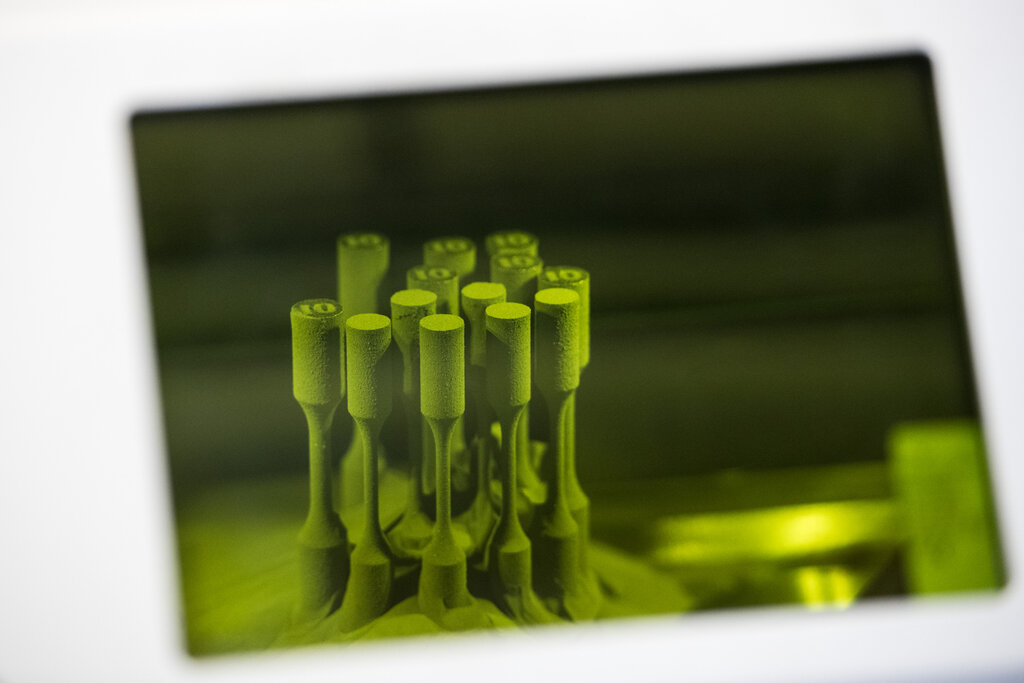
The range of applications for 3D printing is vast and growing every day. In medicine, doctors print custom surgical guides and prosthetic limbs. In aerospace, engineers create lightweight components for rockets and satellites. Architects print detailed building models, and chefs even experiment with printing food. It's a versatile tool that's changing how we make things.
Ready to check your understanding?