RoboSumo Robot Combat
Introduction to RoboSumo
The Spirit of Sumo, in Miniature
Robot-sumo, or RoboSumo, is a competitive sport where two autonomous robots attempt to push each other out of a circular ring. Just like its human counterpart, it's a test of strength, strategy, and skillful design. Instead of powerful wrestlers, you have clever machines battling for dominance.
The sport began in Japan in the 1980s, blending the ancient tradition of sumo with the modern excitement of robotics. It quickly became a popular way for students and hobbyists to dive into engineering, programming, and strategy. The idea is simple, but building a winning robot is a serious challenge.
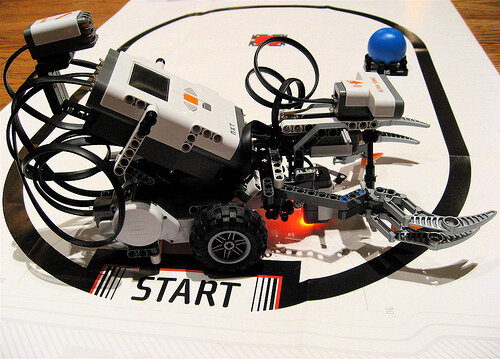
RoboSumo competitions have different classes based on the robot's size and weight. This keeps the matches fair and challenges builders to work within specific constraints. Common categories include Standard, Mini, Micro, and even Nano-Sumo, where robots can be as small as a sugar cube.
Rules of the Ring
The objective in RoboSumo is straightforward: force your opponent out of the circular arena, known as a dohyo. Before a match, the two robots are placed in the ring. Once the judge gives the signal, the robots must start automatically after a five-second pause. During this countdown, the builders step back. From that point on, the robots are on their own—no remote controls are allowed.
The first robot to have any part of it touch the floor outside the ring loses the round. A match is typically the best of three rounds.
The dohyo itself is a key part of the game. It is usually a black-painted wooden disk with a white border. This isn't just for looks; most sumo robots use sensors to detect this white line. When a robot sees the line, it knows it's at the edge and must turn back to avoid disqualifying itself. There are also specific starting lines where the robots must be placed before each round begins.
Design and Strategy
Winning in RoboSumo isn't just about raw power. A successful robot is a balance of clever design and effective strategy. Builders must consider several key factors.
| Consideration | Why It Matters |
|---|---|
| Weight & Center of Gravity | A low center of gravity makes a robot harder to tip over. Being heavy (but within the class limit) provides more traction and pushing force. |
| Speed & Torque | Fast robots can outmaneuver opponents, while high-torque motors provide superior pushing power. Finding the right balance is crucial. |
| Sensors | Robots need sensors to find their opponent and to detect the white edge of the dohyo to avoid falling off. Common choices are infrared or ultrasonic sensors. |
| Shape & Armor | A low, wedge-shaped design is popular because it can get under an opponent and lift their wheels off the ground, reducing their traction. Armor protects sensitive components. |
Beyond the physical build, strategy is what separates good robots from great ones. The robot's programming dictates its behavior. Will it aggressively seek the opponent? Will it spin in place, hoping the other robot comes to it? Some robots start with a search pattern, sweeping the ring until they detect their rival before charging forward.
A common starting strategy is a quick initial lunge. If your robot is faster off the line, you might be able to push the opponent out before they even have a chance to react. More complex strategies involve flanking maneuvers, where a robot tries to get to the side of its opponent to push it from a more vulnerable angle.
What is the primary objective in a Robot-sumo match?
True or False: During a RoboSumo match, builders are allowed to use remote controls if their robot gets stuck.
RoboSumo is a fantastic entry point into the world of robotics. It combines mechanical design, electronics, and programming into a single, exciting challenge. By understanding the basic rules and design principles, you're ready to start thinking about how you would build your own champion.