RNA: Structure, Function, and Biological Mechanisms
RNA Structure
The Architecture of RNA
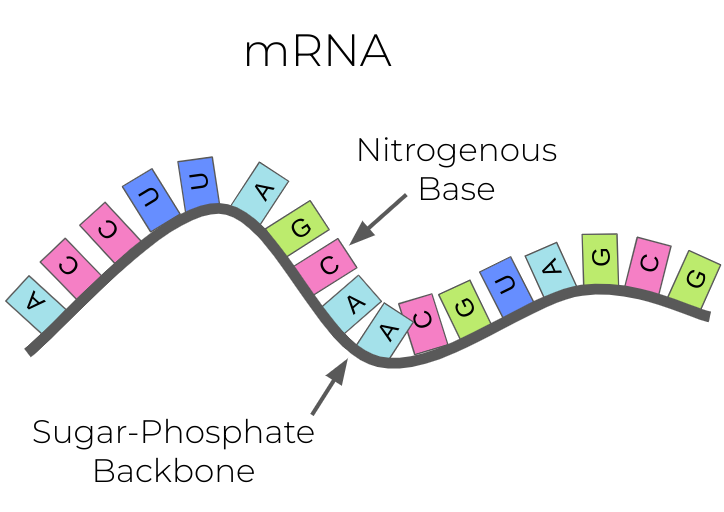
While DNA holds the master blueprint for life, ribonucleic acid, or RNA, is the versatile molecule that carries out the instructions. Its structure is key to its many roles. Like DNA, RNA is a nucleic acid made of repeating units called nucleotides. Each RNA nucleotide has three parts: a phosphate group, a sugar, and a nitrogenous base.
But here's where it gets different. The sugar in RNA is ribose, not deoxyribose like in DNA. This small change, the presence of an extra oxygen atom, makes RNA less stable than DNA. This makes sense for a molecule that's a temporary message, not a permanent archive.
Ribose
noun
A type of sugar that is a component of ribonucleic acid (RNA). It has one more oxygen atom than deoxyribose, the sugar found in DNA.
The bases in RNA are also slightly different. It uses adenine (A), guanine (G), and cytosine (C), just like DNA. However, RNA uses uracil (U) in place of thymine (T). So, in RNA, adenine pairs with uracil (A-U).
A Single Strand's Shape
The most striking structural difference is that RNA is usually a single-stranded molecule. It doesn't typically form the stable double helix that's characteristic of DNA.
The single-stranded nature of RNA allows it to fold into complex three-dimensional structures.
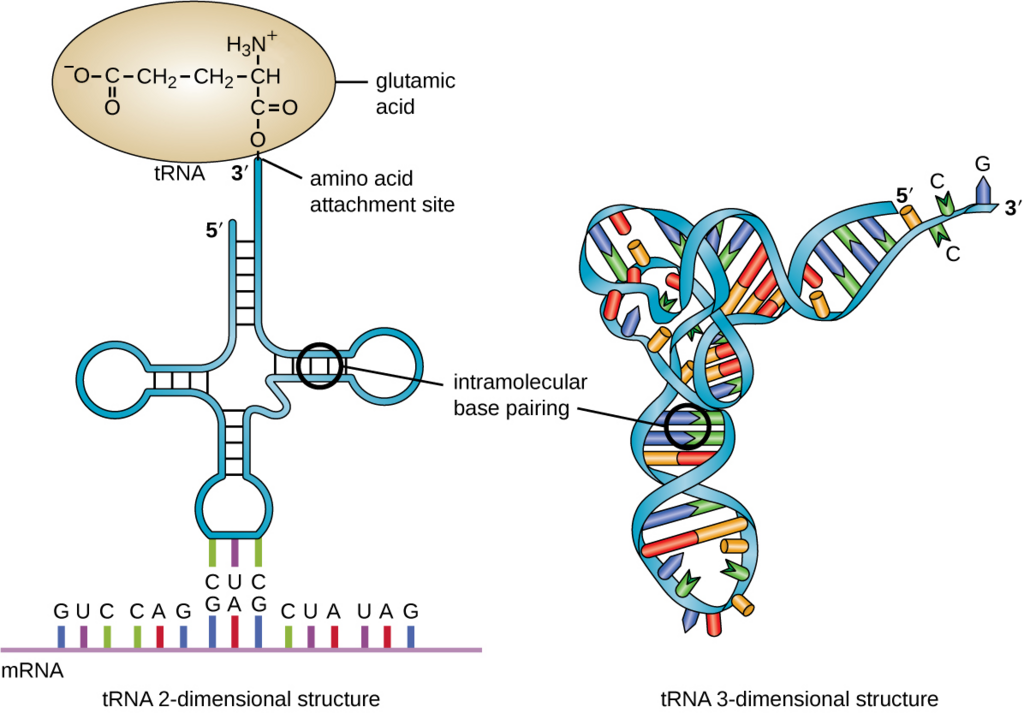
This single strand isn't just a loose thread. It has the remarkable ability to fold back on itself. Stretches of the strand with complementary base sequences (A pairing with U, and G with C) can stick together, forming short, double-stranded regions. This creates fundamental secondary structures, like hairpin or stem-loops.
These simple folds are just the beginning. They can interact with each other to form intricate, stable three-dimensional shapes, known as tertiary structures. This structural complexity allows RNA to act as an enzyme (a ribozyme), recognize other molecules, and perform a wide variety of functions within the cell. The shape of an RNA molecule is directly tied to its job.
RNA vs DNA
The differences between RNA and DNA are fundamental to their roles in our cells. DNA's stability makes it perfect for long-term genetic storage, while RNA's versatility and temporary nature make it an ideal molecular messenger and worker.
| Feature | RNA (Ribonucleic Acid) | DNA (Deoxyribonucleic Acid) |
|---|---|---|
| Sugar | Ribose | Deoxyribose |
| Bases | Adenine (A), Uracil (U), Cytosine (C), Guanine (G) | Adenine (A), Thymine (T), Cytosine (C), Guanine (G) |
| Structure | Typically single-stranded; can form complex folds | Typically a double helix |
| Stability | Less stable, more reactive | More stable, less reactive |
Let's check your understanding of RNA's unique structure.
What type of sugar is found in the backbone of an RNA molecule?
In RNA, which nitrogenous base pairs with adenine (A)?
Understanding these structural details helps explain how RNA carries out so many different tasks, from building proteins to regulating genes.