RISC Architecture Explained
Introduction to Computer Architecture
The Basic Blueprint
At its core, every computer, from a massive supercomputer to the smartphone in your pocket, follows the same fundamental design. It takes in information, processes it, and then produces an output. This model is often called the Von Neumann architecture, and it breaks down into four main parts.
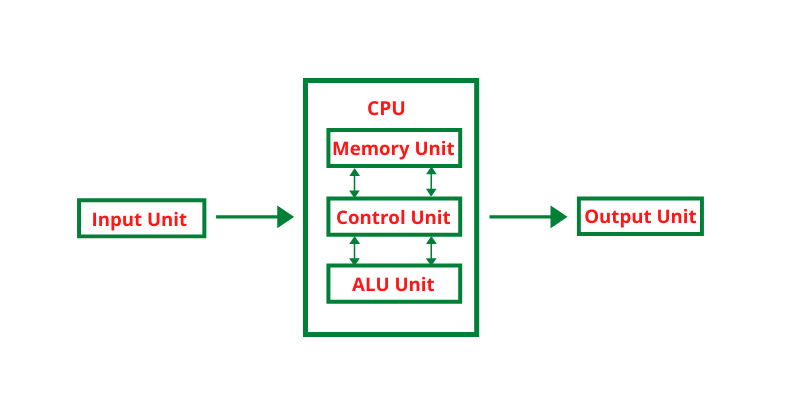
These components are:
- Input Units: Devices that get data into the computer. Think keyboards, mice, and microphones.
- Output Units: Devices that get data out of the computer. This includes your monitor, speakers, and printers.
- Memory: Where data and instructions are stored temporarily while the computer is working.
- Central Processing Unit (CPU): The brain of the computer. It performs all the calculations and directs the flow of information.
Everything a computer does involves these parts working together. When you type a message, your keyboard (input) sends signals to the CPU, which uses memory to process the text and then sends the result to your screen (output).
The Brains of the Operation
The CPU is where the real thinking happens. Its job is to read instructions from memory and execute them one by one. This process happens incredibly fast, often billions of times per second. The CPU has two main sub-components that help it do its work.
Control Unit (CU): This acts like a traffic cop. It fetches instructions from memory and directs the operations of the other components. It tells the memory, the ALU, and the input/output devices how to respond to a program's instructions.
Arithmetic Logic Unit (ALU): This is the calculator. The ALU performs all arithmetic operations (like addition and subtraction) and all logic operations (like comparing two numbers to see which is larger).
The CPU follows a constant, simple cycle to process every instruction: Fetch, Decode, and Execute. It fetches an instruction from memory, the control unit decodes what that instruction means, and then the ALU or another component executes it.
Computer Memory
A computer uses different kinds of memory, each with a different purpose, speed, and cost. This system of storage is called the memory hierarchy. The general rule is that faster memory is more expensive and has less capacity, while slower memory is cheaper and can hold more data.
| Memory Type | Speed | Capacity | Purpose |
|---|---|---|---|
| CPU Registers | Fastest | Very Small | Holds data the CPU is actively using. |
| Cache | Very Fast | Small | Stores frequently used data for quick access. |
| RAM | Fast | Medium | The main 'working' memory for active programs. |
| Storage | Slowest | Very Large | Long-term storage (SSD, HDD). Persists when power is off. |
When the CPU needs data, it first checks its own super-fast registers. If it's not there, it checks the cache, then RAM, and finally, the much slower main storage. By organizing memory this way, the computer can keep the most needed information close at hand, making the whole system much faster.
The Language of the CPU
CPUs don't understand Python, Java, or any other human-readable programming language. They only understand machine code, which is a stream of binary ones and zeros. An instruction set is the specific list of commands a particular CPU is designed to understand and execute.
Instruction Set
noun
The complete collection of commands that a CPU can execute. Each command performs a very simple task, like adding two numbers or moving data from one location to another.
Think of an instruction set as the vocabulary of the processor. Some processors have a very large and complex vocabulary, while others have a small, simple one. These different design philosophies lead to different types of CPU architectures.
When a programmer writes code in a language like C++, a special program called a compiler translates that code into the specific machine code instructions that the target CPU can execute. Every action your computer takes, from opening a file to displaying a video, is broken down into thousands or millions of these simple instructions.
According to the Von Neumann architecture, which group contains the four fundamental components of a computer?
When the CPU needs data, it checks the fastest, but smallest, level of the memory hierarchy first.