Rife Technologies Explained
Introduction to Rife Technologies
The Man Behind the Machine
Royal Raymond Rife was an American inventor with a passion for microscopy and bacteriology. Born in 1888, he didn't follow a traditional scientific path. Instead, he worked independently, fueled by a belief that he could find a single cause for many diseases, including cancer.
Rife was a tinkerer and a builder. He designed and constructed his own tools, which he believed were far superior to anything available at the time. His primary focus was on building microscopes that could overcome the limitations of the era.
A New Way of Seeing
In the early 20th century, microscopes had a major drawback. To see something as small as a virus, scientists had to use electron microscopes, which killed the specimen. This meant they could only study dead viruses. Rife wanted to see live microorganisms in their natural state.
To solve this, he developed a series of optical microscopes, culminating in what he called the "Universal Microscope." It was a complex instrument with thousands of parts. Rife claimed it could magnify objects up to 60,000 times their original size using a clever system of prisms and intense light.
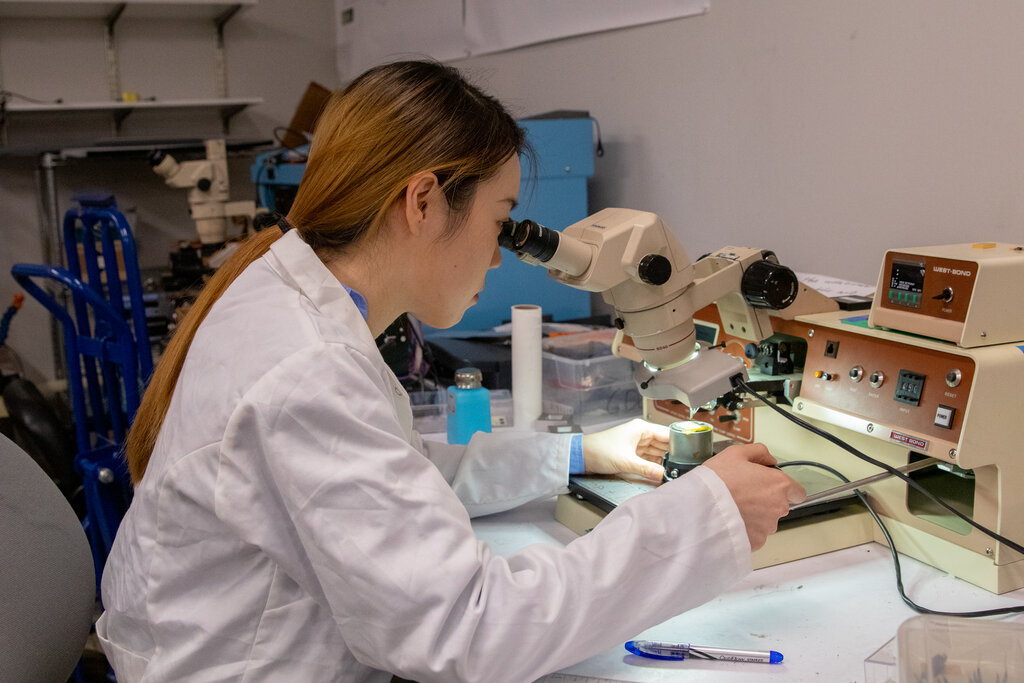
More importantly, Rife claimed his microscope allowed him to see living microbes by illuminating them with light of specific frequencies. He believed that by rotating prisms, he could stain the microbe with light, causing it to glow in a distinct color, making it visible even when it was still alive.
According to Rife, every microorganism had a unique color signature, visible only when illuminated by a specific frequency of light.
The Frequency Theory
From his observations, Rife developed a radical theory. He proposed that every microorganism had its own unique frequency, or Mortal Oscillatory Rate (MOR). He believed that if you could expose a disease-causing organism to a beam of energy tuned to its specific MOR, the organism would vibrate and be destroyed.
Think of it like an opera singer shattering a crystal glass by singing a single, sustained note. The glass has a natural resonant frequency. When the singer's voice matches that frequency, the vibrations become too great for the glass to handle, and it shatters. Rife claimed his machine could do the same thing to pathogens, but with electromagnetic waves instead of sound.
This idea led him to develop his most famous invention: the Rife frequency generator, often called the "Rife machine." It was designed to produce low-energy electromagnetic waves at various frequencies. The user would tune the machine to the specific MOR of a microbe, and the machine would then emit that frequency, supposedly destroying the pathogen without harming the surrounding healthy tissue.
Royal Raymond Rife utilized specific frequencies presented through a plasma tube (still radio waves) to destroy different types of cancer in the late 1930’s and early 1940’s.
This was the core purpose of his technology: to identify a pathogen with his microscope and then eliminate it with his frequency device. Rife's work combined optics, electronics, and biology in a way that was entirely his own.