Rhetoric and Ideology of Hitler's Speeches
Redemption Rhetoric
The Myth of Betrayal
How do you explain an unthinkable defeat? For Germany after World War I, the answer was a story. The German army, they claimed, hadn't been defeated on the battlefield. It was undefeated, heroic, and on the verge of victory. The loss came from a betrayal, a dagger plunged into its back by enemies at home.
This powerful, poisonous narrative became known as the —the Stab-in-the-back myth. It wasn't just a conspiracy theory; it was a carefully constructed story that re-framed national humiliation as a tale of treachery. It argued that while soldiers fought bravely at the front, corrupt and disloyal forces within Germany—pacifists, socialists, and especially Jewish people—had sabotaged the war effort and engineered the collapse.
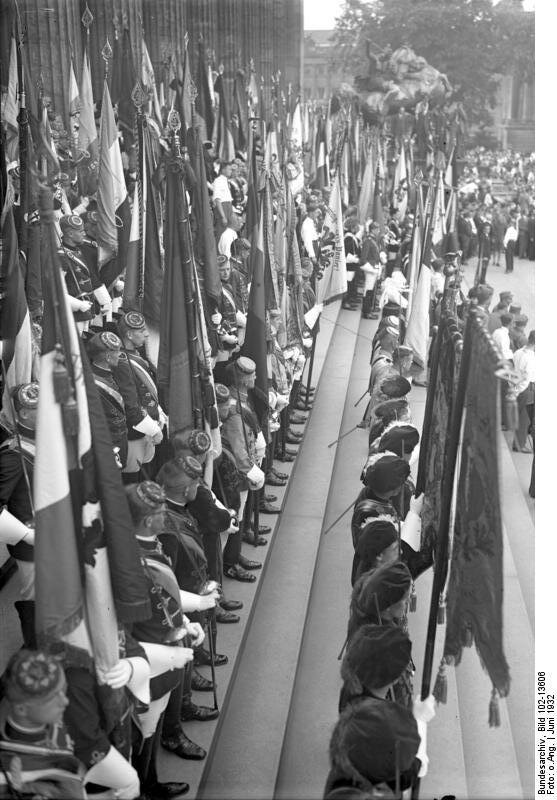
Victims and Villains
The power of the myth lay in its simplicity. It created a clear, binary world of heroes and villains. On one side was the German Volk (the people) and its army, portrayed as noble victims. They had sacrificed and endured, only to be robbed of their rightful victory. This narrative transformed the complex realities of war—attrition, strategic errors, and the sheer industrial might of the Allies—into a straightforward morality play.
On the other side were the traitors. By defining a set of internal enemies, the narrative provided a target for the nation's anger and shame. This wasn't just about losing a war; it was about being defiled from within. The story gave a confused and demoralized population a simple explanation and a group to blame for their suffering.
Furious at what they saw as a harsh “diktat” (a dictated peace), right-wing German politicians used the treaty as a nationalist rallying point.
Naming the Criminals
Every good villain story needs a name. Nazi rhetoric gave the traitors a title: the "". This label referred to the politicians of the new Weimar Republic who signed the armistice in November 1918. They were painted as weak, un-German, and in league with the nation's enemies.
This archetype was deliberately vague and easily expandable. Initially targeting the Social Democrats who led the new government, the term quickly grew to encompass anyone the Nazis opposed: communists, liberals, intellectuals, and, most centrally, Jewish citizens. They were accused of profiting from the war, spreading dissent, and orchestrating strikes that crippled the industrial heart of the war effort. The "November Criminal" was a phantom, a catch-all scapegoat for Germany's woes.
This constant repetition of victimhood and betrayal tapped into a deep well of wounded pride. National honor, a cornerstone of German identity, had been shattered. The Dolchstoßlegende offered a path to reclaim it. It promised that Germany's greatness wasn't lost, merely stolen. By identifying and purging the traitors, the nation could be purified and its honor restored.
In this story, the speaker—Adolf Hitler—positioned himself not as a politician, but as a prophet. He was the one who could see the
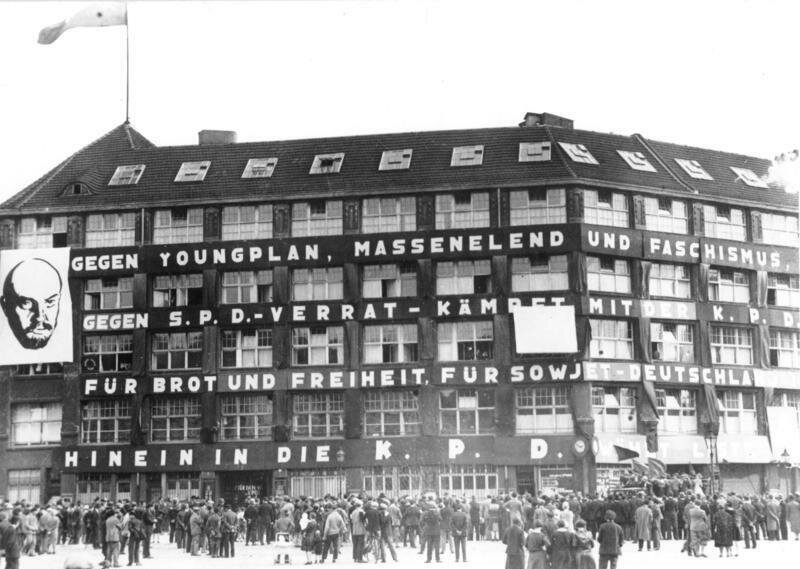
In this story, the speaker—Adolf Hitler—positioned himself not as a politician, but as a prophet. He was the one who could see the "truth" behind the lies of the Weimar Republic. His speeches weren't just political rallies; they were quasi-religious events promising Heil—a German word meaning salvation or healing. He offered to heal the wound of the stab-in-the-back, to redeem the nation's honor, and to lead Germany back to its rightful destiny. By accepting the myth, one also had to accept him as the sole interpreter of history and the only path to salvation.
Time to review what you've learned.
What was the central claim of the 'Dolchstoßlegende' (Stab-in-the-back myth)?
The Nazi party used the term 'November Criminals' to refer to which group?
This narrative framework, built on a foundation of perceived betrayal, was the engine of early Nazi propaganda. It turned a military defeat into a powerful tool for political mobilization.