Retrieval-Augmented Generation Explained
Introduction to Large Language Models
What Is a Large Language Model?
A Large Language Model, or LLM, is a type of artificial intelligence designed to understand and generate human-like text. Think of it as a super-powered autocomplete. While your phone might suggest the next word in a text message, an LLM can write entire paragraphs, articles, or even computer code.
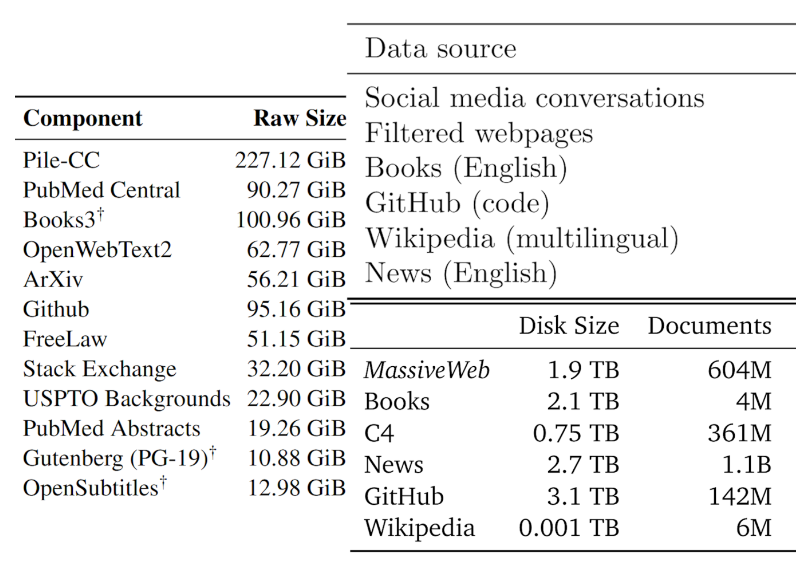
At its core, an LLM is a pattern-matching machine. It's trained on a massive amount of text data from the internet, books, and other sources. By analyzing this data, it learns the relationships between words, including grammar, context, facts, and even styles of writing.

The goal isn't just to mimic human writing, but to create a tool that can assist with a wide range of language-based tasks, from simple questions to complex problem-solving.
How Are They Built?
LLMs are built on a type of AI architecture called a neural network, which is loosely inspired by the human brain. Most modern LLMs use a specific architecture known as the Transformer, introduced in 2017. The Transformer is exceptionally good at handling long sequences of text and understanding the context of words, no matter where they appear in a sentence.
The training process is immense. An LLM is fed a vast library of text data—we're talking petabytes, the equivalent of millions of books. During training, the model's goal is to predict the next word in a sentence. It makes a guess, compares it to the actual word, and adjusts its internal connections, called parameters, to improve its accuracy. This process is repeated billions of times.
These parameters, often numbering in the hundreds of billions, store the learned patterns, grammar, and knowledge. The more parameters and the more high-quality data a model is trained on, the more capable it generally becomes.
What Can LLMs Do?
LLMs have a surprisingly wide range of applications because so many tasks can be framed as a language problem. They can act as powerful tools for creativity, productivity, and information access.
| Use Case | Description |
|---|---|
| Content Creation | Draft emails, write blog posts, or generate marketing copy. |
| Summarization | Condense long articles, research papers, or meetings into key points. |
| Translation | Translate text between dozens of different languages. |
| Code Generation | Write code snippets or entire functions in various programming languages. |
| Chatbots | Power sophisticated conversational agents for customer service or assistance. |
By providing a simple instruction, called a prompt, you can guide the LLM to perform these tasks. The more specific the prompt, the better the output.
The Limits of LLMs
Despite their power, LLMs have significant limitations. One of the biggest is their reliance on static training data. An LLM's knowledge is frozen in time; it knows nothing about events that occurred after its training was completed. If a model was trained on data up to 2022, it can't tell you who won the 2024 Super Bowl.
This knowledge cutoff means LLMs can quickly become outdated, especially for topics involving current events, recent scientific discoveries, or rapidly changing information.
Another major issue is the tendency for LLMs to "hallucinate."
Hallucination
noun
When an AI model generates false, nonsensical, or factually incorrect information but presents it as if it were true.
Hallucinations happen because the model's primary goal is to generate a plausible-sounding sequence of words, not necessarily a factually accurate one. It might invent statistics, make up historical events, or create fake quotes. This makes it crucial to fact-check any information generated by an LLM, especially for important tasks. Understanding these limitations is the first step toward using these powerful tools responsibly and effectively.
What is the primary function of a Large Language Model (LLM)?
What is the core task an LLM performs repeatedly during its training process to learn?