Retrieval Augmented Generation Explained
Introduction to Large Language Models
What Are Large Language Models?
Large Language Models, or LLMs, are a type of artificial intelligence designed to understand and generate human-like text. Think of them as incredibly advanced prediction engines. At their core, they work by calculating the probability of which word, or piece of a word, should come next in a sequence. This simple idea, when scaled up, allows them to do amazing things like write emails, answer questions, and even create computer code.
The foundation of an LLM is a neural network, a complex system of algorithms modeled loosely on the human brain. The “large” in their name refers to two things: the immense size of the neural network itself, which can have billions or even trillions of parameters, and the massive amount of text data they are trained on.
Parameter
noun
A value that a neural network can change on its own as it learns. Think of parameters as the knobs and dials the model tunes to improve its performance on a task.
These parameters are what the model adjusts during training to get better at predicting the next word. The more parameters a model has, the more nuance and complexity it can learn about language, grammar, and even concepts.
How an LLM Learns
Training an LLM is like giving it a library the size of the entire internet and asking it to read everything. The model processes this enormous dataset, which includes books, articles, websites, and more. Its main task during this phase, known as pre-training, is to predict the next word in a sentence.
For example, if the model sees the sentence, "The cat sat on the ___," it might predict "mat," "couch," or "floor." It then compares its prediction to the actual word in the text. If it's wrong, it adjusts its internal parameters to make a better prediction next time. This process is repeated billions of times, allowing the model to build a sophisticated internal representation of language.
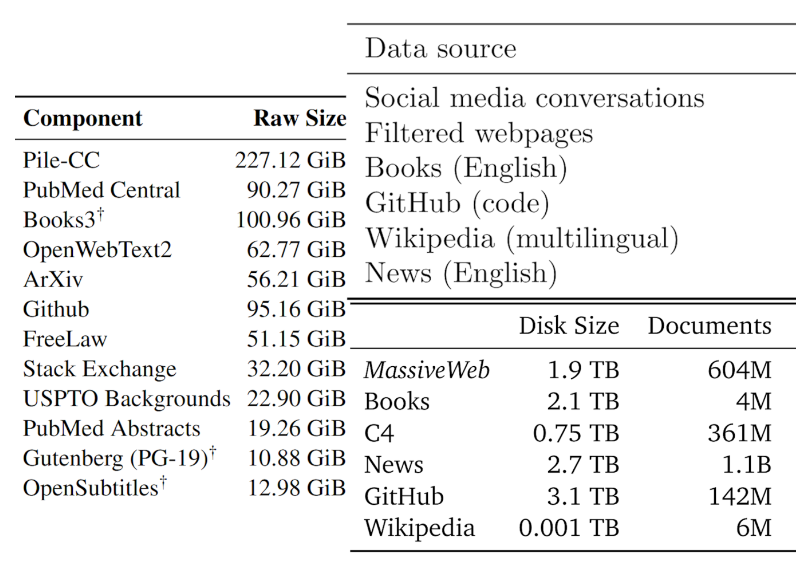
After pre-training, many models go through a fine-tuning phase. This is where they are trained on a smaller, more specialized dataset to become better at specific tasks, like holding a conversation or following instructions. This step often involves human reviewers who rate the model's responses, helping it learn what makes a good, helpful, and safe answer.
LLMs are probabilistic. They don't "know" things in a human sense. Instead, they generate text based on patterns learned from their training data.
What Can LLMs Do?
The capabilities of LLMs are broad and constantly expanding. Because they are fundamentally about understanding and generating text, they can be applied to a wide range of tasks.
| Application | Example |
|---|---|
| Text Generation | Writing marketing copy, drafting emails, creating stories. |
| Summarization | Condensing a long article or research paper into a short summary. |
| Translation | Translating text from one language to another with high accuracy. |
| Question Answering | Providing direct answers to questions based on context. |
| Code Generation | Writing code in various programming languages from a natural language prompt. |
| Sentiment Analysis | Determining if a piece of text (like a product review) is positive, negative, or neutral. |
These applications power tools we use every day, from chatbots and virtual assistants to more advanced systems that help scientists analyze research or programmers write code more efficiently.

Limitations and Challenges
Despite their power, LLMs have significant limitations. One of the most talked-about issues is their tendency to "hallucinate," which means they can generate text that is plausible and confident-sounding but factually incorrect or nonsensical. This happens because the model is always just predicting the next word based on patterns, not accessing a database of facts.
An LLM's primary goal is to be coherent, not necessarily truthful. This can lead to the creation of misinformation.
Another major challenge is bias. LLMs learn from data created by humans, which contains all sorts of biases. The model can inadvertently learn and amplify these biases in its responses. Furthermore, the knowledge of an LLM is frozen at the time of its training. It doesn't know about events that happened after its training data was collected unless it's specifically updated.
Finally, training these models requires enormous amounts of computational power, which has significant financial and environmental costs.
Ready to check your understanding? Let's try a few questions.
At its most fundamental level, what is the primary task an LLM is trained to do during its pre-training phase?
The "large" in Large Language Model refers to two main aspects. Which option best describes them?
Understanding these core concepts provides a solid foundation. You now know what LLMs are, how they learn, and what they're capable of, as well as their key limitations.