Retrieval-Augmented Generation Explained
Introduction to Large Language Models
What Are Large Language Models?
Large Language Models, or LLMs, are a type of artificial intelligence designed to understand and generate human-like text. Think of an LLM as an incredibly well-read student who has consumed a vast library of books, articles, and websites. By analyzing all this text, it learns the patterns, grammar, facts, and even reasoning styles of human language.
Large language models (LLMs) are AI systems that understand and create human language, doing tasks like summarizing articles, answering questions, writing code, and more.
At its core, an LLM's primary function is simple: predict the next word in a sequence. If you give it the sentence, "The cat sat on the...", it calculates the most probable next word based on the patterns it has learned. It might predict "mat," "couch," or "floor." By repeatedly predicting the next word, an LLM can generate entire sentences, paragraphs, and even articles.
This next-word prediction capability is the foundation for everything an LLM can do, from answering complex questions to writing poetry.
Training an LLM
Training an LLM is a massive undertaking. It involves feeding the model an enormous dataset of text and code, often scraped from the internet. This data can include everything from digital books and Wikipedia articles to websites and source code repositories. The sheer volume allows the model to learn the intricate relationships between words and concepts.
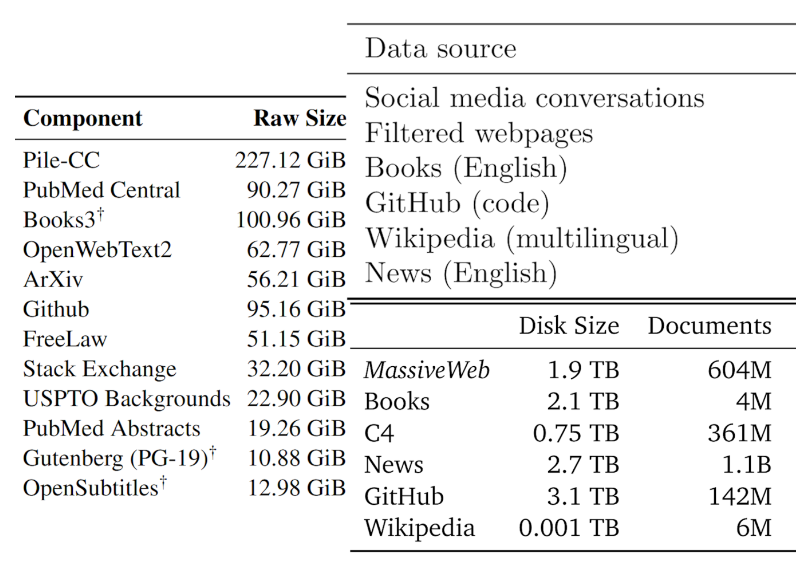
During training, the model is presented with text where some words are masked or removed. Its job is to predict these missing words. With each correct (or incorrect) guess, it adjusts its internal parameters to get better. This process is repeated billions of times, gradually refining the model's ability to understand context and generate coherent text. This is why the models are called "large"—they have billions of parameters that get tuned during training.
The Transformer Architecture
The technological breakthrough that enabled modern LLMs is an architecture called the Transformer. Introduced in 2017, the Transformer model revolutionized how machines process sequential data like text.
Its key innovation is a mechanism called self-attention. Attention allows the model to weigh the importance of different words in the input text when producing an output. For example, in the sentence "The robot picked up the heavy box because it was strong," the attention mechanism helps the model understand that "it" refers to the "robot," not the "box."
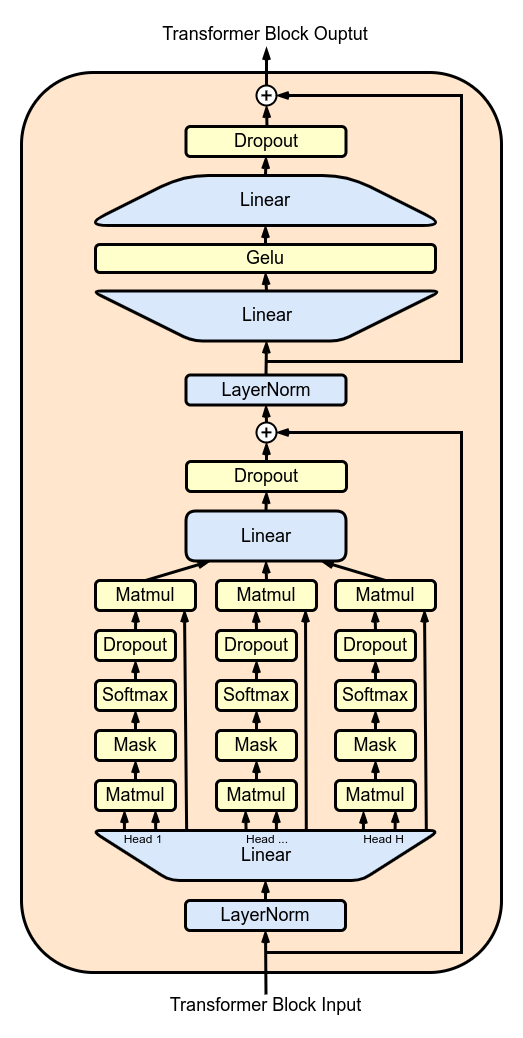
This ability to track relationships between words, even across long distances in a text, gives Transformer-based models a deep contextual understanding that was missing in earlier architectures. This is what allows them to generate text that is not only grammatically correct but also logically consistent and relevant to the prompt.
What Can LLMs Do?
Because of their powerful language capabilities, LLMs are used in a wide array of applications. They can act as sophisticated chatbots, write marketing copy, summarize long documents, translate between languages, and even generate computer code.

The versatility of LLMs has made them a foundational technology in many fields.
| Application | Example Use Case |
|---|---|
| Content Creation | Write a blog post about the benefits of exercise. |
| Summarization | Provide a bullet-point summary of a lengthy research paper. |
| Translation | Translate an email from English to Spanish. |
| Code Generation | Write a Python function to calculate a factorial. |
| Question Answering | Who was the first person to walk on the moon? |
Now that you have a foundational understanding of what LLMs are, how they're trained, and what they can do, let's test your knowledge.
At its most fundamental level, what is the primary function of a Large Language Model (LLM)?
The technological breakthrough that enabled modern LLMs is an architecture called the Transformer.
This core understanding of LLMs provides the necessary background for exploring more advanced AI concepts.