Retrieval Augmented Generation Explained
Introduction to Large Language Models
The Minds Behind the Words
A Large Language Model, or LLM, is a type of artificial intelligence designed to understand and generate human language. Think of it as an incredibly advanced autocomplete. It predicts the next word in a sentence based on the words that came before it. By doing this over and over, it can write emails, answer questions, and even create stories.
A Large Language Model (LLM) is a type of artificial intelligence program designed to understand, generate, and work with human language.
But how does it know which word to choose? The answer lies in its structure and training.
Digital Brains
At their core, LLMs are built on neural networks. These are computing systems inspired by the human brain. Just as our brains have billions of interconnected neurons that process information, neural networks have layers of artificial neurons, or nodes. Each node receives input, processes it, and passes the result to the next layer.
An LLM is a specific type of deep neural network, meaning it has many, many layers. This depth allows it to recognize complex patterns in language, from basic grammar to nuanced context and tone.
The input layer receives initial data, like the words in your prompt. The hidden layers perform complex calculations to find patterns. Finally, the output layer produces the result, such as the next word in a sentence.
Learning from the World's Library
An LLM isn't programmed with grammar rules. Instead, it learns them by analyzing enormous amounts of text data from the internet, books, and other sources. This process is called training.
During training, the model is shown a piece of text and asked to predict the next word. If it gets it right, the connections in its neural network that led to the correct answer are strengthened. If it's wrong, those connections are weakened. This trial-and-error process is repeated billions or even trillions of times.
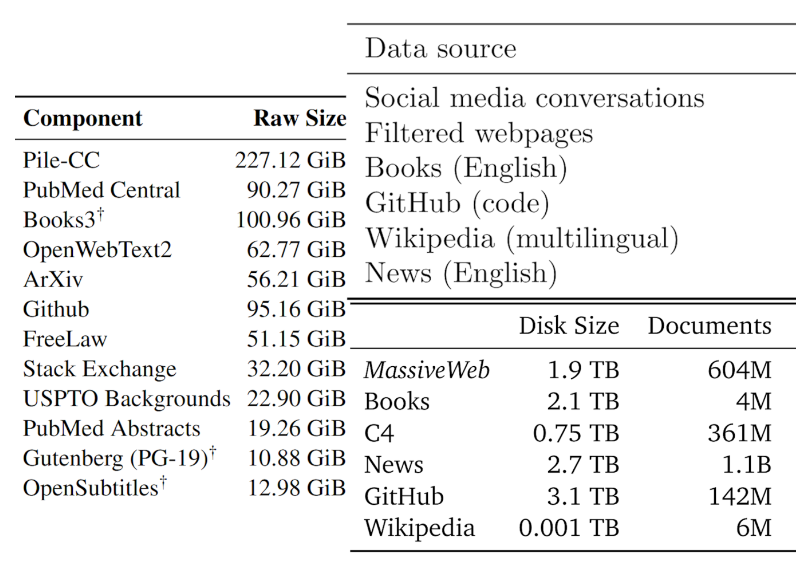
This massive-scale training allows the model to build an intricate statistical understanding of how words relate to each other. It learns that "sky" is often followed by "is blue," and that the tone of an email to a boss is different from a text to a friend. The quality and diversity of the training data are crucial for the model's performance.
Putting LLMs to Work
Once trained, LLMs can be applied to a wide range of tasks. Their ability to process and generate language makes them incredibly versatile.
Here are just a few examples of what LLMs can do:
| Application | Description |
|---|---|
| Content Creation | Writing articles, marketing copy, social media posts, and even poetry. |
| Customer Support | Powering chatbots that can answer customer questions 24/7. |
| Code Generation | Assisting programmers by writing code snippets or entire functions. |
| Translation | Translating text between different languages with increasing accuracy. |
| Summarization | Condensing long documents or articles into brief summaries. |
These models are not just repeating text they've seen before. They are generating new combinations of words based on the patterns they learned during training, allowing them to tackle novel problems and questions.
Ready to check your understanding? Let's see what you've learned about the fundamentals of Large Language Models.
What is the fundamental task an LLM performs to generate text?
The computing systems that form the basis of LLMs, inspired by the human brain, are called:
LLMs are powerful tools built on complex neural networks, trained on vast datasets to understand and generate human-like text for a growing number of applications.