Retrieval Augmented Generation Explained
Introduction to Large Language Models
What Are Large Language Models?
At its core, a large language model (LLM) is an AI program trained to understand and generate human language. Think of it like a super-powered autocomplete. You start a sentence, and it predicts the most likely next word, then the next, and the next, until it has formed a complete thought, paragraph, or even an entire essay.
Their purpose isn't just to mimic language, but to work with it. They can translate between languages, summarize long documents, answer questions, and even write computer code. They do this by recognizing patterns, context, and relationships in the text data they were trained on.
A large language model (LLM) is an AI model trained on massive amounts of text data that can understand and generate human-like text, recognize patterns in language, and perform a wide variety of language tasks without task-specific training.
The key is that LLMs don't "know" things in the way humans do. They don't have beliefs or understanding. Instead, they are masters of statistical probability. Based on the vast library of text they've processed, they calculate which words should logically follow one another in a given context.
How LLMs Learn
The "large" in Large Language Model refers to two things: the size of the AI model itself (billions of parameters, which are like internal knobs the model can tune) and, crucially, the enormous amount of data it learns from.
An LLM is trained on a massive dataset, often containing a significant portion of the public internet, digital books, and other text sources. This can amount to trillions of words. During this training process, the model has one primary goal: predict the next word in a sequence. It's given a snippet of text with a word missing and has to guess what that word is.
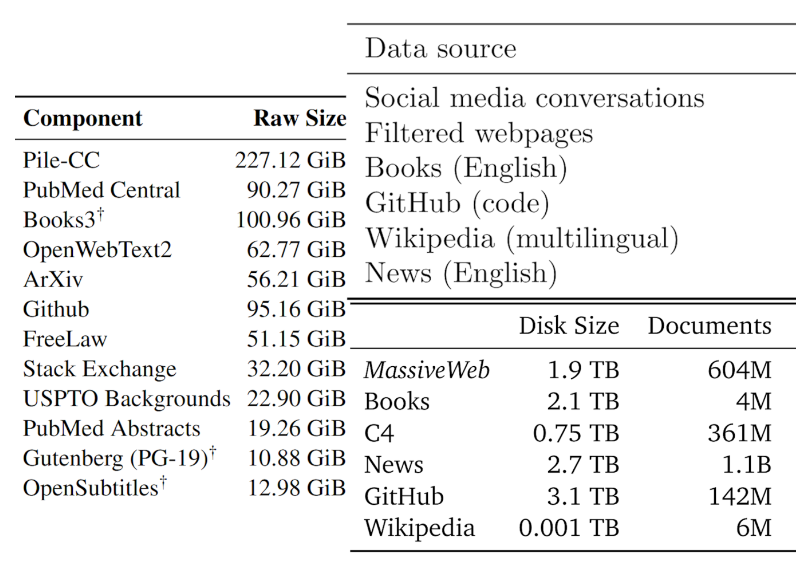
Every time it guesses, it checks its answer against the original text. If it's right, its internal connections are strengthened. If it's wrong, it adjusts its parameters to make a better guess next time. By repeating this process billions of times, the model develops a complex, nuanced understanding of grammar, facts, reasoning styles, and even artistic tones.
A Look Under the Hood
Most modern LLMs are built on an architecture called a Transformer. Before the Transformer, AI models struggled with long-term context. They might forget the beginning of a paragraph by the time they reached the end.
The Transformer's breakthrough innovation is called the attention mechanism. This allows the model to weigh the importance of different words in the input text when it's generating a response. It can "pay attention" to specific words that are most relevant to the task at hand, no matter where they are in the sentence.
For example, in the sentence "The cat sat on the mat because it was tired," the attention mechanism helps the model understand that "it" refers to the "cat," not the "mat." By focusing on the right words, the model can maintain a coherent thread of meaning, even across very long passages of text.
Applications and Limitations
LLMs power a wide range of applications that are becoming increasingly common. These include:
- Content Creation: Writing emails, blog posts, and marketing copy.
- Chatbots and Virtual Assistants: Powering sophisticated conversational AI like ChatGPT.
- Summarization: Condensing long articles or reports into key bullet points.
- Code Generation: Writing snippets of code in various programming languages based on natural language descriptions.
- Translation: Translating text between different languages with more nuance than older tools.
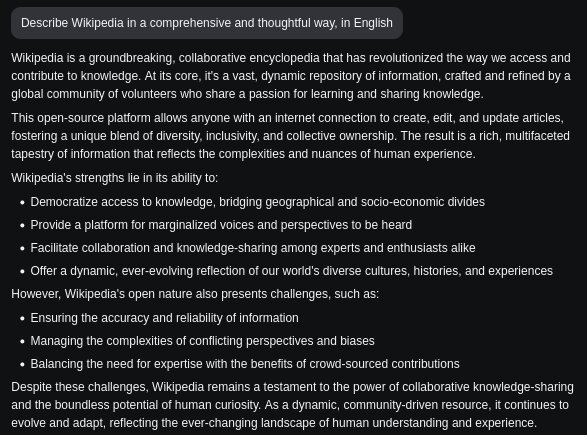
However, LLMs have significant limitations. Their knowledge is frozen at the point their training data was collected. They have no access to real-time information. If you ask an LLM about an event that happened yesterday, it won't know about it unless its training data has been recently updated.
More importantly, LLMs can "hallucinate," which means they can generate incorrect, nonsensical, or completely fabricated information. Because their goal is to produce statistically probable text, they might invent plausible-sounding details or sources that don't actually exist. They are not sources of truth, but generators of language. Always verify critical information from a reliable source.
An LLM's primary goal is to generate convincing text, not to be factually accurate. This can lead to confident-sounding but incorrect answers.
What is the fundamental task a large language model (LLM) performs during its training phase?
The "large" in Large Language Model refers to the model's physical size on a computer and the length of the documents it can read.