Retrieval Augmented Generation Explained
Introduction to Large Language Models
What Are Large Language Models?
A Large Language Model, or LLM, is an AI program designed to understand and generate human-like text. Think of it as a super-powered autocomplete. It learns the patterns, grammar, and facts from enormous amounts of text data, allowing it to predict the next word in a sequence with incredible accuracy.
At its core, an LLM is a complex pattern-matching machine for language. It doesn't 'understand' in the human sense, but it excels at calculating the most probable sequence of words to form a coherent response.
LLMs work by breaking down text into smaller pieces called tokens. A token can be a word, part of a word, or even just a punctuation mark. The model processes these tokens to 'read' an input and then generates new tokens one by one to form an answer.
token
noun
A fundamental unit of text that a language model uses for processing and generation. It can be a word, a sub-word, or a character.
How They're Built and Trained
Most modern LLMs are built using an architecture called the Transformer. Introduced in 2017, the Transformer architecture was a breakthrough because of its 'attention mechanism'. This allows the model to weigh the importance of different words in the input text when generating a response. It can pay closer attention to relevant context, even if it's far away in the original sentence or paragraph.
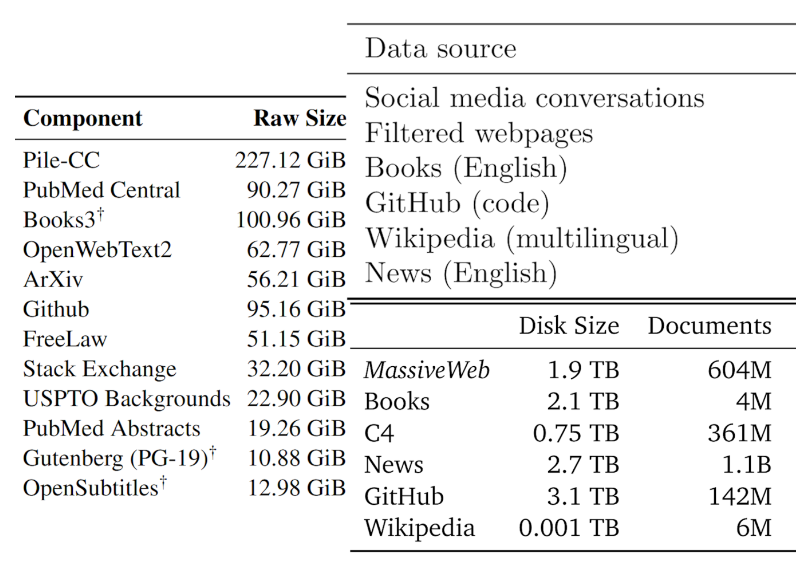
The training process involves feeding the model a massive dataset of text and code from the internet, books, and other sources. During this phase, the model learns grammar, facts, reasoning abilities, and even some biases from the data. The goal is simple: predict the next word in a sentence. By doing this billions of times, the model builds a complex internal representation of language.
What Can LLMs Do?
Because of their general-purpose training, LLMs are surprisingly versatile. They can be adapted for a wide range of tasks without needing to be retrained from scratch. Some common applications include:
- Content Creation: Writing emails, blog posts, poems, or marketing copy.
- Summarization: Condensing long articles or documents into key points.
- Translation: Translating text between different languages.
- Question Answering: Providing direct answers to questions based on its training data.
- Code Generation: Writing snippets of code in various programming languages.
Limitations and Challenges
Despite their power, LLMs have significant limitations. They don't possess true understanding or consciousness. Their knowledge is also frozen at the time their training data was collected, so they may not have information on recent events.
One of the biggest challenges is 'hallucination,' where the model generates text that sounds plausible but is factually incorrect or nonsensical. It's essentially making things up.
Additionally, since they learn from human-generated text, LLMs can inherit and amplify biases present in the training data. This can lead to outputs that are unfair, stereotypical, or offensive. Ensuring these models are used responsibly is a major focus of ongoing research.
Now, let's test your knowledge on the basics of Large Language Models.
What is the primary function of a Large Language Model (LLM)?
The Transformer architecture was a breakthrough for LLMs primarily because of its ____________, which allows the model to weigh the importance of different words when generating a response.
Understanding these core concepts is the first step. Next, we'll explore how these models can be made even more powerful and reliable.