Retirement Portfolio Planning
Investment Basics
Building Your Investment Foundation
Investing can feel complicated, but the core ideas are straightforward. It’s about putting your money to work today so it can grow into more money for tomorrow. Understanding a few key concepts is the first step toward building a solid financial future and a comfortable retirement.
The Main Ingredients
Think of building a portfolio like cooking a meal. You need different ingredients for flavor, substance, and balance. In investing, these ingredients are called asset classes. Each one has a different role and a different level of risk. The three most common are stocks, bonds, and cash.
Stock
noun
A type of security that signifies ownership in a corporation and represents a claim on part of the corporation's assets and earnings.
Owning a stock is like owning a tiny slice of a company, whether it's Apple or a local business. If the company does well, the value of your slice can go up. If it struggles, the value can go down. Stocks are the primary engine for growth in a portfolio, but they come with more volatility.
Bond
noun
A loan made by an investor to a borrower, which could be a company or a government. The borrower pays interest to the investor over a set period and returns the original loan amount at the end.
Bonds are simpler. When you buy a bond, you're essentially lending money. In return, the issuer pays you interest over a set period and returns your original investment at the end. They are generally safer than stocks and provide a steady stream of income, making them a stabilizing force in a portfolio.
Finally, there are cash equivalents. These are very safe, easily accessible investments like high-yield savings accounts or money market funds. They don't offer much growth, but they're great for money you might need soon or for keeping a portion of your portfolio protected from market swings.
| Asset Class | Primary Role | Typical Risk Level |
|---|---|---|
| Stocks | Growth | High |
| Bonds | Income & Stability | Low to Medium |
| Cash | Safety & Liquidity | Very Low |
The Big Trade-Off
In investing, there's one core principle that governs almost everything: the relationship between risk and return. Generally, to get a higher potential return, you have to be willing to take on more risk. There’s no reward without some level of risk.
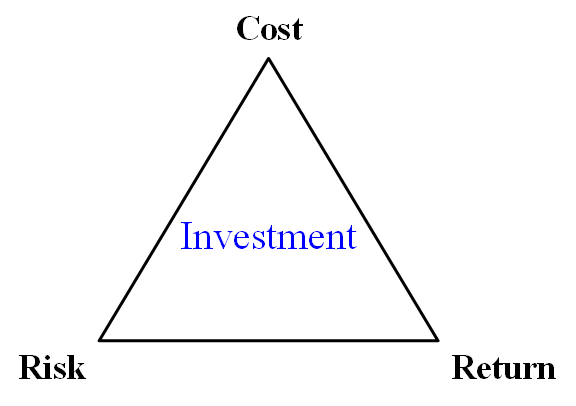
Imagine two investors. One puts all their money in government bonds. They can expect a small, steady return, and the chance of losing their initial investment is extremely low. The other investor puts all their money in a new tech startup. The company could become the next big thing, making them a fortune. Or, it could fail, and they could lose everything.
Most investors find a balance somewhere in the middle. The key is understanding that risk isn't just about losing money; it's also about the ups and downs you're willing to endure along the way. Your comfort with risk will help shape how you build your portfolio.
Higher potential returns usually come with higher risk. The goal is to find a balance you're comfortable with for your long-term goals.
Your Financial Superpower
The most powerful force in growing your wealth over time is compounding. It's the process where your investment earnings start generating their own earnings. Think of it as a snowball rolling downhill, picking up more snow and getting bigger and bigger at an accelerating rate.
Let's see how it works. Say you invest $1,000 and earn a 10% return in the first year. You now have $1,100.
In the second year, you don't just earn 10% on your original $1,000. You earn it on the full $1,100. That's a $110 gain, bringing your total to $1,210. The extra $10 came from the earnings on your previous earnings. It might not seem like much at first, but over decades, the effect is dramatic.
This formula shows the Future Value () of an investment based on its Present Value (), a rate of return (), and the number of time periods (). The exponent is where the magic of compounding lives. It shows that the longer your money is invested, the more powerful compounding becomes.
Ready to test what you've learned about these core investment concepts?
What is the primary role of stocks within a diversified investment portfolio?
In investing, the principle of 'risk and return' suggests that to get a higher potential return, you must be willing to accept a higher level of risk.
Understanding these fundamentals—asset classes, risk and return, and compounding—is all you need to get started. They are the building blocks for every investment strategy, from the simplest to the most complex.