Retirement Portfolio Planning
Investment Basics
The Building Blocks of Investing
Investing can feel complicated, but it's really just about putting your money to work to make more money. The tools you use are called assets. Different types of assets are grouped into categories called asset classes. Let's look at the three main ones.
Asset Class
noun
A group of financial investments that have similar characteristics and behave similarly in the marketplace. They are subject to the same laws and regulations.
Stocks When you buy a stock, you're buying a small piece of a company. You become a part-owner, or shareholder. If the company does well, the value of your piece can go up, and you can sell it for a profit. Some companies also share their profits with shareholders through payments called dividends. Stocks offer the potential for high growth, but they also come with more risk because a company's fortunes can change quickly.
Bonds A bond is essentially a loan you make to a government or a company. In return for your money, the issuer promises to pay you back the full amount on a specific date, plus regular interest payments along the way. Bonds are generally considered safer than stocks because their payments are more predictable. They provide stability and steady income to your portfolio.
Cash Equivalents This category includes things like high-yield savings accounts, certificates of deposit (CDs), and money market funds. They are very safe and you can access your money easily. The trade-off is that they offer very low returns, sometimes not even enough to keep up with inflation. Cash is useful for short-term savings or as a stable holding spot in your investment portfolio.
| Asset Class | What is it? | Primary Role | General Risk Level |
|---|---|---|---|
| Stocks | Ownership in a company | Growth | High |
| Bonds | A loan to an entity | Income & Stability | Medium |
| Cash | Savings & short-term debt | Safety & Liquidity | Low |
Risk and Return
Every investment decision involves a trade-off. In finance, the most fundamental trade-off is between risk and return. Generally, investments with the potential for higher returns also come with a higher level of risk. Think of it like a race car versus a family sedan. The race car can go incredibly fast and win a prize (high return), but it's also more likely to crash (high risk). The sedan is reliable and safe, but it won't be winning any races.
Understanding this relationship is key. If you want your money to grow significantly, you'll likely need to accept more risk. If your priority is protecting the money you have, you'll have to accept lower returns.
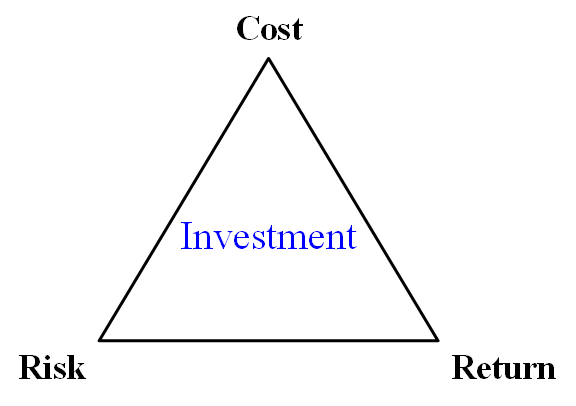
The different asset classes fall along a spectrum. Cash equivalents are very low-risk but offer minimal returns. Bonds have more risk but provide better returns. Stocks carry the highest risk of the three but also offer the greatest potential for long-term growth.
Start with Your Destination
Before you can build an investment strategy, you need to know what you're building it for. Setting clear financial goals is like plugging a destination into your GPS before you start driving. Without it, you're just wandering.
"Retiring someday" isn't a goal; it's a vague wish. A clear goal is specific and measurable. For example:
- "I want to retire by age 62 with $1.5 million."
- "I need my investments to generate $5,000 per month in income during retirement."
- "I want to have my mortgage paid off in 15 years."
Your goals determine your time horizon, which is the length of time you have to invest. Someone saving for a down payment on a house in three years has a very different time horizon than someone saving for a retirement that's 30 years away. A shorter time horizon usually means you should take less risk, while a longer one allows you to ride out the market's ups and downs.
How Much Risk Can You Handle?
Finally, you need to understand your personal risk tolerance. This is your emotional and financial ability to handle drops in the value of your investments. It's one thing to see the risk-return trade-off on a chart, and another to watch your account balance fall by 20% during a market downturn.
Ask yourself some honest questions:
- How would you react if your portfolio lost a significant amount of value in a short period? Would you sell everything in a panic, or would you stick to your plan?
- How stable is your income? Do you have other savings to fall back on?
- How much do you know about investing? People who are less comfortable with financial markets often have a lower tolerance for risk.
Your risk tolerance is a personal gut-check. There's no right or wrong answer. Understanding your comfort level helps you choose investments that you can stick with for the long haul, which is the key to success.
One of the keys to successful investing is learning how to balance your comfort level with risk against your time horizon.
Once you have a handle on these basic concepts, you're ready to start thinking about how to combine them.
Which of the following asset classes represents ownership in a company, making you a shareholder?
What is the fundamental trade-off in investing?