Retirement Portfolio Planning
Investment Basics
Building Your Investment Toolbox
Think of investing like building a house. You wouldn't use just a hammer for everything. You need a variety of tools, each with a specific purpose. In finance, these tools are called asset classes. They are the fundamental building blocks of any investment portfolio.
An asset class is a group of investments that behave similarly in the marketplace and are subject to the same laws and regulations. The three main ones you'll encounter are stocks, bonds, and cash equivalents. Each plays a different role in your financial strategy.
stock
noun
A type of security that signifies ownership in a corporation and represents a claim on part of the corporation's assets and earnings.
When you buy a stock, you're buying a small piece of a company. If that company does well, the value of your piece can go up. If it struggles, the value can go down. Stocks offer the potential for high growth, but they also come with higher risk. They are the power tools in your toolbox, capable of doing a lot of work quickly but requiring careful handling.
bond
noun
A fixed-income instrument that represents a loan made by an investor to a borrower (typically corporate or governmental).
Bonds are essentially IOUs. You lend money to a government or a corporation, and they promise to pay you back with interest over a set period. They are generally considered safer than stocks and provide a predictable income stream. Think of them as the reliable, sturdy wrenches in your toolbox, providing stability and steady performance.
Finally, there are cash equivalents. These are very safe, highly liquid investments that can be converted into cash almost instantly. Examples include money market funds and short-term government bills. They don't offer much growth, but they're great for stability and for money you might need soon. This is your measuring tape, essential for safety and planning.
Risk and Return
Every investment comes with a trade-off between risk and return. This is one of the most fundamental concepts in finance.
Risk is the chance that an investment's actual return will be different than expected. Return is the money you make or lose on an investment over a period of time.
Generally, the higher the potential return, the higher the risk. Stocks, for example, have historically provided higher returns than bonds over the long term, but they've also experienced more volatility and steeper downturns. A high-growth tech stock could double in value, but it could also lose half its value. It's a high-risk, high-potential-return investment.
Bonds offer lower potential returns, but with much less risk. The government is very unlikely to default on its loan, so the return is more predictable. Cash equivalents have the lowest risk and, consequently, the lowest return, sometimes not even keeping pace with inflation.
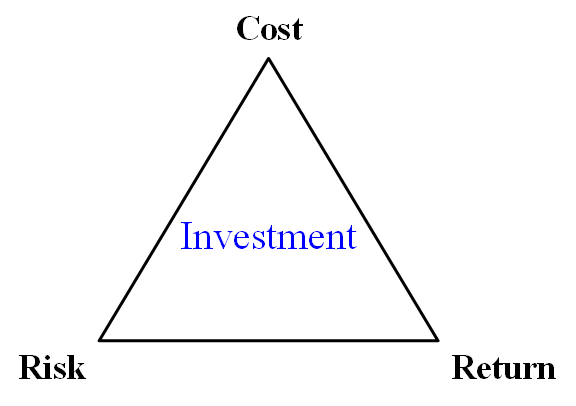
Understanding your own comfort level with risk, known as your risk tolerance, is crucial. Are you someone who can sleep at night knowing your portfolio value might drop 20% in a month, or would that cause you to panic and sell? Answering this question helps determine the right mix of asset classes for you.
Your Time Horizon
The final key concept is your time horizon. This is simply the length of time you expect to hold an investment before you need the money. It's a critical factor in deciding how to build your portfolio.
If you're investing for retirement in 30 years, you have a long time horizon. This means you can afford to take on more risk because your portfolio has plenty of time to recover from any market downturns. In this case, a larger allocation to stocks makes sense to pursue higher growth.
On the other hand, if you're saving for a down payment on a house you want to buy in two years, your time horizon is short. You can't afford a major loss right before you need the cash. A safer mix, heavy on bonds and cash equivalents, would be more appropriate. You sacrifice potential growth for stability.
Investors with a long time horizon may be more heavily weighted towards equities, whereas retirees may be more heavily weighted toward bonds and income-producing investments.
As a rule of thumb, the longer your time horizon, the more risk you can generally afford to take. As you get closer to your financial goal, it's often wise to gradually shift your portfolio toward safer investments to protect what you've earned.
Let's review the key terms we've covered.
Now, test your understanding of these core investment concepts.
Which of the following best defines an 'asset class' in investing?
Compared to bonds and cash equivalents, what is the primary advantage of investing in stocks?
By understanding asset classes, the relationship between risk and return, and your personal time horizon, you have the foundational knowledge to start building a thoughtful investment strategy.