Retirement Portfolio Mastery
Investment Basics
What Is an Investment?
Think of an investment as putting your money to work. Instead of letting cash sit idle, you use it to buy something you believe will grow in value over time. This could be a piece of a company, a loan to a government, or other assets. The goal is for your initial sum to generate more money, either through growth, income, or both.
Imagine planting a seed. With water and sunlight, it grows into a tree that produces fruit year after year. Investing works on a similar principle: you plant your money, and with time and good conditions, it can grow into a much larger sum.
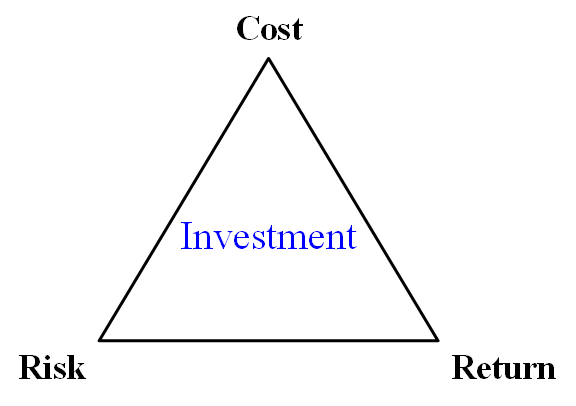
So why is this so important for retirement? The simple answer is inflation. Inflation is the gradual increase in the price of goods and services, which reduces the purchasing power of your money. A dollar today won't buy as much in 20 or 30 years. If your money is just sitting in a regular savings account, its value is likely shrinking over time.
Investing gives your money the potential to outpace inflation, ensuring you can afford the lifestyle you want when you stop working. It’s the engine that powers your savings from a small pile of cash into a nest egg capable of supporting you for decades.
Money sitting in a savings account is like a block of ice on a summer day. Inflation slowly melts its value away.
The Building Blocks
There are many types of investments, but most retirement portfolios are built from a few core components. Let's start with stocks.
stock
noun
A type of security that signifies ownership in a corporation and represents a claim on part of the corporation's assets and earnings.
When you buy a stock (also called a share or equity), you are buying a small piece of a public company. If that company performs well—its profits grow and its business expands—the value of your share will likely increase. If it performs poorly, the value can decrease. Stocks offer the potential for high growth, but they also come with higher risk compared to other investment types.
Next up are bonds.
bond
noun
A type of investment where you lend money to an entity (like a corporation or government) that borrows the funds for a defined period of time at a fixed interest rate.
A bond is essentially an IOU. You lend money to a government or a company, and in return, they promise to pay you back the full amount on a specific date, along with regular interest payments along the way. Because they offer predictable income and are generally more stable, bonds are considered safer than stocks. However, their potential for growth is also lower.
Finally, we have cash equivalents. These are investments that are very safe and can be converted into cash quickly. Think of high-yield savings accounts, money market funds, or short-term government bills. They offer low risk and low returns, making them a good place to park money you might need soon or want to keep safe.
| Investment Type | Primary Goal | Risk Level | Return Potential |
|---|---|---|---|
| Stocks | Growth | High | High |
| Bonds | Income & Stability | Low | Low |
| Cash Equivalents | Safety & Liquidity | Very Low | Very Low |
These three categories are the fundamental tools you'll use to build a financial future. Understanding how they differ in terms of risk and reward is the first step toward making smart decisions for your retirement.