Retirement Portfolio Construction
Investment Basics
Building Your Investment Foundation
Think of building a retirement portfolio like building a house. You need different materials for different jobs. You wouldn't build the entire structure out of just glass, nor would you use only heavy concrete. Each material has a purpose. In investing, these materials are called asset classes.
Asset Class
noun
A group of financial instruments that have similar characteristics and behave similarly in the marketplace.
Asset classes are the broad categories of investments you can choose from. Each one plays a different role in your portfolio. Let's look at the main ones.
Stocks: Also known as equities, buying a stock means you're buying a small piece of ownership in a company. If the company does well, the value of your stock can go up, and you might receive payments called dividends. Stocks offer the highest potential for growth over the long term, but they also come with more volatility and risk.
Bonds: When you buy a bond, you're essentially lending money to a government or a corporation. In return, they promise to pay you back the full amount on a specific date, plus regular interest payments along the way. Bonds are generally considered safer than stocks and provide a steady, predictable stream of income.
Real Estate: This includes direct ownership of physical property, like a rental home, or investing in funds that own large portfolios of commercial buildings (called Real Estate Investment Trusts, or REITs). Real estate can provide income from rent and has the potential to increase in value over time. However, it can be harder to sell quickly compared to stocks or bonds.
The Risk-Return Tradeoff
Every investment comes with a fundamental trade-off. To get a higher potential return, you typically have to accept a higher level of risk. This is one of the most important principles in finance.
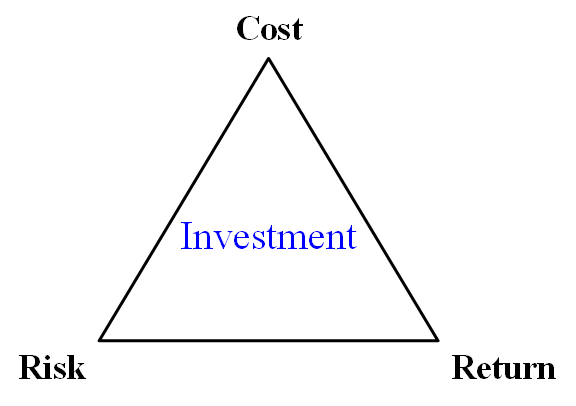
Think of it like a seesaw. On one end is risk, and on the other is potential return. When one goes up, the other tends to go up with it.
-
High Risk: Stocks have the potential for high returns because a company's value can grow significantly. But there's also a greater chance their value could fall sharply.
-
Low Risk: Government bonds are very safe because governments are very likely to pay back their debts. Because the risk is so low, the returns they offer are also modest.
Understanding your own comfort level with risk is key to choosing the right mix of investments. There's no single "best" investment, only what's best for your personal goals and timeline.
The Power of Diversification
You've probably heard the saying, "Don't put all your eggs in one basket." In investing, this is the core idea behind diversification. It's the practice of spreading your investments across various asset classes.
Diversification is a cornerstone of investment risk management, embodying the timeless wisdom of “don’t put all your eggs in one basket”.
Why is this so important? Because different asset classes often react differently to the same economic events. When stocks are doing poorly, for instance, bonds might be stable or even performing well. By owning a mix of assets, the poor performance of one part of your portfolio can be offset by the good performance of another.
Diversification doesn't eliminate risk entirely, but it's a powerful tool for smoothing out the inevitable ups and downs of the market. It helps protect your portfolio from major losses if one particular investment or asset class takes a hit.
These three concepts—asset classes, risk and return, and diversification—are the essential building blocks for creating a sound investment strategy for retirement. Mastering them will help you make more informed and confident decisions on your financial journey.